Navigating the GLP-1 Era: Seven Client Archetypes Every Health and Fitness Coach Must Understand

When GLP-1 receptor agonists first entered the mainstream pharmaceutical market around 2017 with the widespread adoption of semaglutide, many health and fitness professionals privately wondered if their profession had an expiration date. Initially viewed as a theoretical disruption confined to endocrinology clinics and specialized weight-loss centers, the landscape shifted dramatically over the subsequent decade. By 2026, epidemiological data indicates that more than one in ten American adults are actively utilizing a GLP-1 medication for metabolic health, chronic weight management, or type 2 diabetes. This widespread saturation has transformed how fitness coaches view these drugs. Rather than perceiving pharmaceuticals as a direct competitor, industry practitioners increasingly view pharmacotherapy as a powerful medical catalyst that requires robust lifestyle integration to prevent long-term complications such as lean muscle atrophy and nutritional deficiencies.
The Paradigm Shift: From Industry Threat to Collaborative Support
To understand the modern coaching ecosystem, industry experts emphasize a vital reframing of the target demographic. As Kate Solovieva, Director of Community at Precision Nutrition, notes, fitness professionals are no longer operating in a vacuum separated from medical interventions; instead, they occupy the vital "GLP-1 support world." This distinction is crucial for business sustainability and client retention. Coaches cannot realistically support every individual utilizing a GLP-1, nor can they successfully intervene with patients who harbor complete resistance to lifestyle modifications. Consequently, successful practitioners hone in on a specific psychological and behavioral subset: individuals utilizing pharmacotherapy who actively desire structured, evidence-based guidance to optimize their physiological outcomes.
The Chronology of GLP-1 Adoption and Coaching Integration
The trajectory of GLP-1 medications has evolved rapidly through distinct phases over the past ten years. Initially, low prescription volumes and high costs kept these medications on the fringes of the general fitness market. Between 2018 and 2022, rising awareness created widespread anxiety among personal trainers, who feared clients would simply rely on appetite suppression rather than traditional behavioral training. By 2024, as supply chains expanded and insurance coverage gradually broadened, fitness organizations began encountering clients experiencing severe side effects, rapid weight loss, and paradoxical nutritional deficits. By 2026, the discussion has matured from existential dread to clinical collaboration. Medical providers and fitness coaches now routinely coordinate care, recognizing that while pharmaceutical agents regulate appetite and glycemic control, they do not inherently teach sustainable nutritional habits or stimulate neuromuscular adaptations.
The Seven GLP-1 Client Archetypes and Strategic Interventions
Human readiness for behavioral change is dynamic, fluctuating according to physiological stressors, medication titration schedules, and psychological milestones. Based on aggregated insights from coaching over 175,000 clients, fitness authorities have categorized GLP-1 users into seven distinct behavioral archetypes. Each profile demands a tailored coaching approach rooted in motivational interviewing and clinical scope-of-practice boundaries.
Client Type 1: The Honeymooner
Characterized by low initial coaching readiness, the Honeymooner has recently initiated a GLP-1, experiences minimal adverse side effects, and observes rapid scale weight reduction on a low dosage. Because their physiological metrics are improving without conscious effort, they feel no internal motivation to alter their underlying dietary or exercise routines. Coaches are advised to avoid the "righting reflex"—the instinctive urge to lecture clients about impending muscle loss or dietary gaps. Such aggressive interventions frequently trigger psychological reactance. Instead, effective coaches celebrate the client’s current success, explicitly state their availability for future support, and maintain an open door.

Client Type 2: The Ambivalent Candidate
This demographic comprises individuals who meet the clinical criteria for a GLP-1 prescription and have received medical recommendations to start, yet remain frozen at the starting line. Hesitations often stem from deep-seated societal stigmas surrounding obesity treatment, fears of lifelong pharmaceutical dependency, or anxiety regarding their ability to maintain strength training regimens. Because prescribing medication falls outside a fitness coach’s scope of practice, professionals must avoid making medical recommendations. Instead, coaches can deploy evidence-based decision-making frameworks, such as structured pros-and-cons analyses, to help clients articulate the root causes of their ambivalence regarding both pharmacological intervention and status quo maintenance.
Client Type 3: The Ready-to-Quitter
Experiencing moderate readiness, this individual started a GLP-1 with high optimism but now suffers from debilitating side effects, including severe nausea, fatigue, and gastrointestinal distress. Approximately half of all GLP-1 users report nausea, while a third experience diarrhea and a fifth report vomiting. These physical challenges often trigger feelings of personal failure, especially when compared to peers experiencing asymptomatic success. Coaches must depersonalize the experience through neutral education, encourage close collaboration with prescribing physicians regarding dosage titration, and introduce gentle behavioral experiments—such as smaller, more frequent nutrient-dense meals—to mitigate symptoms without crossing diagnostic boundaries.
Client Type 4: The Muscle-Loss Risk
Visible aesthetic progress often masks a critical physiological danger: the extensive loss of lean body mass. Without protective nutritional and mechanical stimuli, up to 40 percent of total weight lost via GLP-1 therapy can originate from lean tissue, primarily skeletal muscle. Sedentary clients, particularly older adults and demographics historically excluded from resistance training, are acutely vulnerable. Coaches combat this risk by establishing objective baselines—such as DEXA scans or functional strength assessments—and implementing two non-negotiable behaviors: adequate protein intake (targeting 25 to 40 grams per meal) and scalable resistance training tailored to the individual’s baseline capacity.
Client Type 5: The Under-Fueler
In some instances, pharmacological appetite suppression is so pronounced that natural hunger cues are entirely eradicated. Under-fuelers experience severe caloric and protein deficits, frequently dropping below 1,000 calories per day without intentional restriction. This state can precipitate extreme fatigue, hair loss, and the unmasking or exacerbation of disordered eating patterns. Coaches must screen for historical eating disorders and maintain an active professional referral network. When addressing accidental under-fueling, coaches guide clients toward scheduled, mechanical eating routines every three to four hours, transforming nutrition from an intuitive desire into a structured physiological requirement.
Client Type 6: The Graduate
Graduates have successfully achieved their metabolic objectives using pharmacotherapy and are intentionally tapering off the medication. Far from being a clinical finish line, cessation initiates a critical vulnerability window where suppressed appetite pathways re-emerge. Data indicates that individuals who fail to build foundational habits during their pharmacological treatment phase experience near-universal weight regain within eighteen months. Conversely, those who consistently practice resistance training and optimized nutrition while medicated are four times more likely to maintain significant long-term weight loss. Coaching strategies for graduates focus on expectation management, redefining success beyond scale weight fluctuations, and reinforcing neural pathways through behavioral consistency.
Client Type 7: The Priced-Out
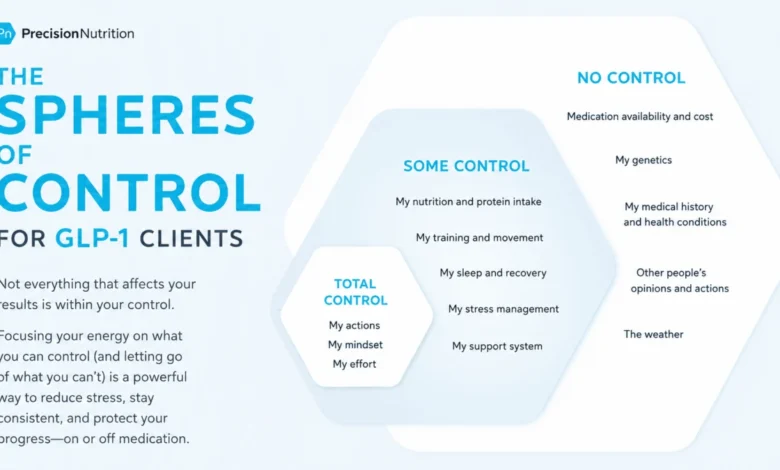
Accounting for approximately half of all early discontinuations, the priced-out client is forced to quit pharmacotherapy due to external economic shocks, such as lost insurance coverage or prohibitive out-of-pocket costs. These individuals frequently experience profound frustration and shame, attributing systemic healthcare failures to personal inadequacy. Coaches must reframe this dynamic, separating socioeconomic barriers from individual willpower. By utilizing structured frameworks like the "Spheres of Control" exercise, coaches help clients redirect their energy away from uncontrollable financial and systemic variables, funneling their agency directly into manageable lifestyle pillars such as sleep hygiene, dietary protein, physical movement, and stress management.
Implications for the Future of Fitness and Health Coaching
The integration of GLP-1 pharmacotherapy into modern wellness paradigms underscores a fundamental truth about human physiology: medications manage biochemistry, but behaviors construct identity. While fitness professionals cannot control pharmaceutical accessibility, medical dosing, or biological predisposition, they hold the unique capacity to forge deep behavioral ruts through structured lifestyle interventions. As the healthcare landscape continues to evolve, the most successful coaches will not compete with modern medicine; rather, they will serve as its indispensable behavioral foundation, ensuring that pharmacological success translates into lifelong vitality, functional independence, and sustainable metabolic health.