The Rise of the Quantified Self: Balancing Wearable Tech With Human Intuition in Modern Health

As the digital wellness landscape expands, contemporary society has experienced a profound shift in how individuals monitor their physical well-being. Historically, human ancestors relied strictly on internal sensory feedback—such as perceived fatigue, hunger levels, and breathlessness—to gauge health and physical readiness. Today, however, a rapidly growing segment of the global population relies on sleek, sophisticated wearable technology to quantify these experiences. Modern devices can seamlessly track heart rate variability, step counts, exercise intensity, sleep architecture, and caloric expenditure, often packaging these complex biological metrics onto a single wrist-mounted display.
At its best, this technology serves as a vital bridge connecting subjective human feelings with objective physical measurements. Humans are notoriously unreliable when attempting to quantify their internal behaviors and biological experiences with absolute precision. For instance, individuals frequently miscalculate their daily caloric intake or energy expenditure, often underestimating caloric consumption or overestimating the active calories burned during a workout. By offering empirical data, fitness trackers, smartwatches, and smart rings help correct these cognitive blind spots, enabling users to make more informed decisions regarding their long-term health and athletic performance.
The Evolution of Self-Tracking and Data Accuracy
The consumer tracking market has evolved significantly over the past two decades, transitioning from simple mechanical pedometers to advanced medical-grade wearables capable of continuous monitoring. This technological boom has been driven by advances in sensor miniaturization, artificial intelligence, and algorithmic data processing. However, industry analysts and exercise physiologists emphasize a fundamental caveat: not all tracking data is created equal.
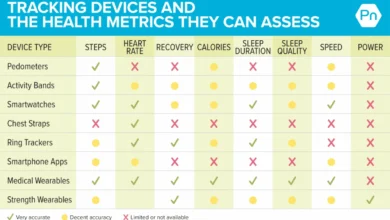
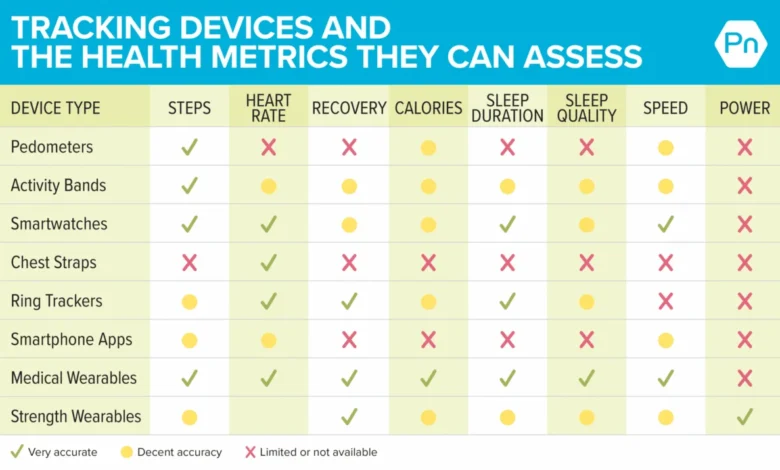
The accuracy of a given device depends heavily on both hardware quality and the underlying software datasets utilized by the manufacturer. While basic metrics such as step counts and heart rate measurements have achieved high levels of reliability across most major consumer brands, more complex metrics—including estimated active calories burned, movement velocity, and detailed sleep stages—frequently exhibit substantial margins of error. Chest strap monitors and medical-grade wearables generally offer higher precision for cardiovascular metrics, whereas casual smartphone applications and basic activity bands may provide estimations that serve merely as general guidelines rather than absolute clinical facts.
The Paradox of Information: The Inverted U-Curve of Decision-Making
While access to granular health data offers undeniable benefits, researchers note that it can also introduce psychological friction. Dr. Samantha Kleinberg, a computer scientist specializing in human decision-making, points out that even a marginal surplus of information can exert a negative effect on cognitive choices. This phenomenon illustrates the paradox of modern tracking: insufficient detail makes it difficult to make optimal health decisions, but an overwhelming abundance of data can lead directly to analysis paralysis.

This relationship between information volume and decision-making capacity can be mapped onto an inverted U-shaped curve. At the lower end of the curve, a lack of data leaves individuals guessing blindly. At the peak—the optimal "sweet spot"—users possess just enough relevant metrics to make clear, productive choices. However, at the far right of the curve, an overload of metrics creates mental fatigue, anxiety, and decision fatigue. When individuals track too many variables—ranging from daily macro-nutrients and continuous blood glucose levels to minute-by-minute sleep scores—the pursuit of optimization can paradoxically undermine overall well-being.
Identifying the Psychological Toll: When Tracking Helps Versus When It Harms
To determine whether wearable technology is genuinely improving health outcomes, behavioral scientists suggest evaluating tracking habits against three distinct psychological and physiological signs.
Sign #1: Validation versus Stress. For many high-performing individuals, objective data acts as a crucial corrective lens. Athletes who are accustomed to high-intensity training often struggle with lower-intensity recovery protocols, such as Zone 2 cardio, because physical exertion that feels easy can psychologically register as unproductive. However, when these individuals observe tangible data—such as a declining resting heart rate and shortened recovery times—their anxiety diminishes, and they learn to trust the recovery process. Conversely, when tracking metrics focus on variables entirely beyond an individual’s control, such as a poor sleep score caused by environmental factors or parenting a newborn, the data creates unnecessary psychological stress without offering a constructive path forward.
Sign #2: Motivation versus Burnout. Behavioral change theory suggests that successful habit formation requires three core elements: sufficient motivation, adequate ability, and a timely prompt. Fitness trackers excel at providing that timely prompt. For example, individuals who casually consume alcohol or maintain sedentary habits often alter their behavior immediately upon viewing objective evidence showing how these habits degrade their sleep quality or cardiovascular recovery. However, an over-reliance on performance metrics can backfire. When recreational athletes become overly obsessed with breaking digital trail records or maintaining strict numerical quotas, the intrinsic joy of physical movement can be entirely eroded, eventually leading to overtraining, under-recovery, and burnout.
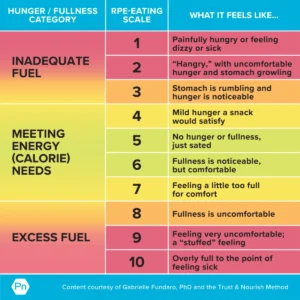
Sign #3: Self-Awareness versus Disconnection. Ideally, tracking technology should enhance an individual’s self-awareness, helping them accurately gauge their physiological limits. For instance, heart rate variability and real-time fatigue metrics can prevent athletes from falling into the trap of "junk volume"—accumulating physical fatigue without achieving performance gains. However, an unhealthy obsession with data can detach individuals from their internal sensory signals. A prominent cultural example of this occurred during technical outages of major macro-tracking applications, which triggered widespread anxiety among users who had become entirely dependent on software to dictate their daily nutritional intake. Over-reliance on external applications can sever an individual’s connection with natural internal cues of hunger, satiety, and physical energy.
Methodologies for Reclaiming Intuitive Health
To maximize the benefits of wearable technology while preserving mental health and mind-body connection, health and fitness experts recommend three practical strategies for integrating tracking devices into a balanced lifestyle.

First, practitioners should prioritize internal check-ins before consulting external data. Before viewing a smartwatch screen to check morning recovery scores, workout paces, or sleep durations, individuals should pause and consciously assess how their bodies feel. By systematically comparing these subjective internal assessments against the objective device outputs over time, users can progressively narrow the gap between their perceived state and reality, thereby sharpening their intuitive self-assessment skills.
Second, individuals should develop practical mental shortcuts, such as the Rate of Perceived Exertion (RPE), to complement digital metrics. While advanced sensors measure speed and power, cognitive scales that ask users to estimate their remaining physical capacity or effort level remain remarkably effective tools for self-regulation. Utilizing RPE alongside heart rate monitors trains the nervous system to recognize maximal and sub-maximal efforts intuitively.
Third, fitness consumers must actively cultivate their native sensory networks. The human body possesses an extraordinarily sophisticated array of proprioceptive, vestibular, and visceral receptors that provide continuous feedback regarding posture, balance, energy, and stress—sensory dimensions that no algorithm can fully replicate. Regularly tuning into these internal signals ensures that technology remains a supportive tool rather than a restrictive master.
Broader Implications for the Future of Digital Health
As wearable technology continues to advance, integrating artificial intelligence and predictive health algorithms, the societal debate surrounding data-driven wellness will only intensify. Industry analysts project that future health wearables will incorporate increasingly invasive or continuous biometric monitoring, raising critical questions about data privacy, psychological dependency, and the medicalization of everyday human behavior.
Public health advocates and behavioral psychologists emphasize that the ultimate objective of health technology should not be perpetual self-optimization at the expense of mental peace, but rather the empowerment of the individual. By learning to harmonize objective wearable data with ancient human intuition, consumers can navigate the digital wellness landscape effectively, ensuring that technology serves to enhance both longevity and the quality of daily life.