Navigating the New Era of Health Coaching: How Fitness Professionals Are Adapting to the GLP-1 Revolution

When medications like semaglutide, commercially known as Ozempic, first gained widespread commercial availability in 2017, health and fitness coaches largely viewed them through a theoretical lens. Prescription volumes remained modest, and the pharmaceutical intervention appeared to be a fringe phenomenon far removed from everyday gym floors. Fast forward to 2026, and the landscape has transformed dramatically. More than one in 10 United States adults are actively utilizing GLP-1 receptor agonists, making these medications a ubiquitous component of modern healthcare, weight management, and public wellness conversations.
As societal familiarity has deepened, the initial anxiety among fitness professionals—who once feared these medications would render personal training and nutrition coaching obsolete—has largely dissipated. Industry sentiment has evolved from apprehension to integration. Rather than viewing pharmacology as a direct competitor, forward-thinking coaches increasingly recognize GLP-1 medications as powerful clinical tools, positioning professional coaching as an essential, complementary support system.
The Paradigm Shift: From Market Saturation to Targeted Support
For the modern health and wellness professional, the target demographic has undergone a fundamental redefinition. Industry leaders emphasize that a coach’s market is no longer simply "people on GLP-1 medications," but rather "people on GLP-1 medications who actively desire and are ready for structured support." Attempting to intervene in every individual’s medical weight-loss journey is neither practical nor productive. Many users are either content with their independent trajectories or unready for behavioral intervention. Consequently, professional efficiency relies on identifying and engaging the distinct subset of clients who are ready, willing, and able to receive guidance.
Decoding Client Readiness: The Seven Profiles
Evaluating client readiness requires acute observational skills, as psychological and physiological states fluctuate throughout a medical weight-loss journey. Drawing from extensive data compiled from over 175,000 clients, fitness and coaching experts have categorized GLP-1 users into seven distinct profiles based on their phase of treatment and receptivity to behavioral coaching.
The Honeymooner represents individuals in the early stages of treatment who experience minimal side effects and rapid success on low dosages. Because the medication effortlessly curtails their appetite without requiring immediate lifestyle modifications, their motivation for coaching is exceptionally low. Pushing unsolicited behavioral warnings often triggers psychological reactance, making a respectful, open-door policy the optimal professional approach.
The Ambivalent Candidate encompasses prospective users who have been medically cleared and recommended for treatment but remain paralyzed by anxiety regarding lifelong dependency, side effects, moral identity, and perceived personal failure. Coaches operating within their legal scope of practice utilize structured decision-making tools—such as the "Four Crazy Questions" exercise—to help these individuals weigh the risks of both initiating and foregoing treatment without steering their ultimate medical choices.

The Ready-to-Quitter captures users experiencing severe adverse gastrointestinal reactions—such as persistent nausea, vomiting, and fatigue—who view their treatment as an unmitigated burden. Interventions for this group focus on neutral physiological education, coordinating with prescribing physicians regarding dosage titration, and implementing strategic nutritional adjustments, such as frequent, small-portion feeding to mitigate symptoms.
The Muscle-Loss Risk identifies sedentary individuals achieving rapid scale-weight reduction while inadvertently sacrificing lean body mass due to critically low protein intake and a lack of resistance training. Because abstract warnings often fail to resonate, evidence-based interventions prioritize objective metrics, such as DEXA scans and baseline functional strength assessments, coupled with targeted protein intake and scalable resistance training.
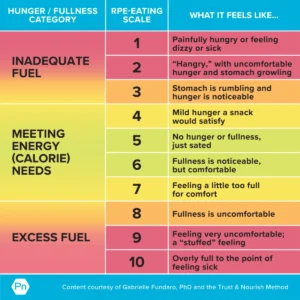
The Under-Fueler represents clients whose appetites are so severely suppressed that their daily caloric intake plummets to unsustainable levels, often accompanied by psychological aversion to food or unrecognized disordered eating patterns. Coaches must recognize red flags, establish structured eating routines every three to four hours, and maintain established clinical referral networks when deeper psychological support is required.
The Graduate comprises individuals who have achieved their target outcomes and elected to taper off medication independently. Because appetite regulation abruptly returns, the primary coaching objective shifts toward reinforcing sustainable behavioral habits—such as consistent resistance training and protein optimization—to mitigate the high statistical probability of weight regain.
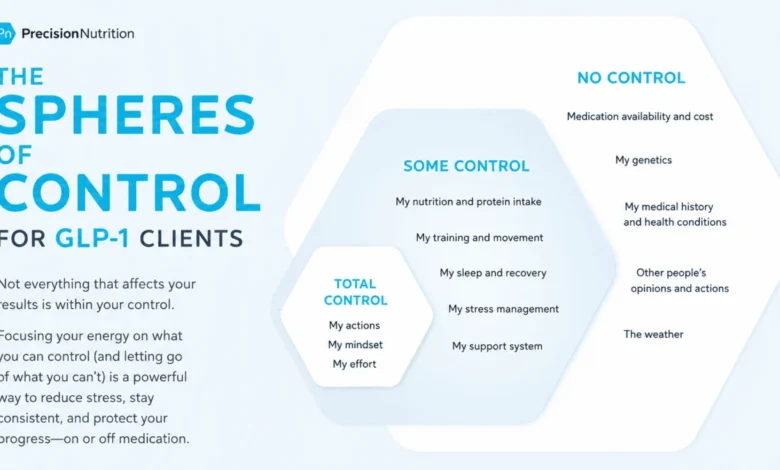
The Priced-Out encapsulates individuals forced to discontinue effective treatments due to external systemic failures, such as shifts in insurance coverage, employment status, or rising pharmaceutical costs. Addressing this cohort requires validating their frustration, identifying systemic barriers as distinct from personal shortcomings, and redirecting focus toward controllable variables within their immediate environment, such as sleep, stress management, and physical activity.
Clinical Implications and the Future of Integrated Care
The widespread adoption of GLP-1 receptor agonists has fundamentally altered the standard of care for obesity and metabolic health. Medical literature consistently demonstrates that while pharmacotherapy effectively drives initial weight reduction, the composition of that weight loss—and the long-term sustainability of results—depends heavily on concurrent lifestyle interventions. Clinical data indicates that patients who integrate structured resistance training and strategic nutrition while utilizing GLP-1 medications are significantly more successful at preserving lean muscle mass and sustaining long-term weight management compared to those relying on pharmacology alone.
As healthcare providers increasingly treat obesity as a chronic condition requiring long-term multidisciplinary management, the collaboration between medical practitioners and certified fitness professionals is expected to intensify. Specialized educational frameworks, such as the upcoming GLP Coaching Institute Certification developed in partnership with Precision Nutrition, reflect this industry maturation. By training professionals to assess client priorities across distinct functional domains—including strength, fueling, fitness, recovery, and results—the fitness sector is formally bridging the gap between clinical medicine and sustainable lifestyle behavior change.
Related posts: