The GLP Coaching Institute Certification Launches to Bridge the Gap Between GLP-1 Medications and Professional Health Coaching

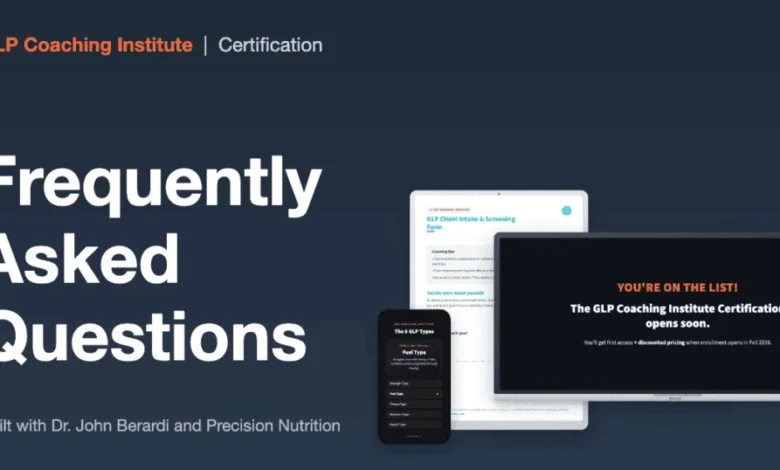
The landscape of modern health, fitness, and nutrition coaching is undergoing a profound transformation driven by the rapid rise of GLP-1 receptor agonist medications. As millions of individuals turn to pharmacotherapy for weight management and metabolic health, fitness professionals, personal trainers, registered dietitians, and medical practitioners find themselves facing complex client questions regarding appetite suppression, muscle preservation, and nutritional adequacy. To address this emerging educational deficit, the GLP Coaching Institute, founded by renowned exercise physiologist Dr. John Berardi in partnership with Precision Nutrition, has announced the upcoming launch of the GLP Coaching Institute Certification, slated to open for enrollment in January 2027.
The comprehensive professional education program is meticulously designed to equip health, fitness, and medical practitioners with the specialized knowledge required to safely and effectively guide clients utilizing GLP-1 medications. By merging advanced endocrinology and pharmacology with evidence-based behavior-change methodologies, the certification aims to establish a new industry standard for supporting clients undergoing medically assisted weight loss.
Background Context and the Evolution of Modern Coaching
For decades, the fitness and nutrition industries relied on traditional paradigms centered primarily on caloric deficits, structured exercise regimes, and behavioral habit formation. However, the advent of powerful GLP-1 medications—originally developed for type 2 diabetes management and subsequently approved for chronic weight management—fundamentally alters human physiology, appetite regulation, and energy homeostasis.
Clients utilizing these pharmacological interventions frequently experience drastic reductions in appetite, delayed gastric emptying, and significant shifts in energy availability. While these mechanisms successfully promote weight loss, they introduce unique secondary challenges. Many individuals struggle to consume adequate protein and micronutrients, experience rapid losses of lean muscle mass, face unprecedented exercise fatigue, and encounter metabolic plateaus.
Historically, standard fitness and nutrition certifications have omitted detailed instruction on pharmaceutical weight-loss agents, leaving practitioners ill-equipped to navigate the nuanced physiological and psychological changes experienced by clients. The GLP Coaching Institute Certification was conceived to close this critical knowledge gap, providing structured training that bridges clinical medicine and practical lifestyle coaching.
Industry Data and the Urgent Need for Specialized Training
The urgency for specialized education is underscored by surging utilization rates across the health and fitness sector. Internal survey data compiled by Precision Nutrition illustrates a dramatic shift in client demographics over recent years. In a comprehensive 2024 survey of health and fitness professionals, 45.8 percent of respondents reported actively working with clients using GLP-1 medications. By the 2026 survey, that figure escalated sharply to 65.1 percent, representing a massive year-over-year increase in market penetration.
This statistical reality indicates that GLP-1 utilization is no longer confined strictly to clinical endocrinology offices; it has permeated mainstream commercial gyms, private nutrition practices, and online coaching platforms. Consequently, trainers and coaches are routinely asked to adapt workout routines and design low-calorie nutrition plans for individuals whose metabolic profiles differ radically from traditional dieting populations. Without specialized guidance, well-intentioned coaches risk prescribing standard fitness protocols that may exacerbate fatigue, accelerate lean tissue loss, or fail to account for medication-induced side effects.
Curriculum Structure and Educational Methodology
Spanning approximately 80 hours of self-paced online instruction, the curriculum is structured into four distinct units comprising 30 comprehensive chapters. Hosted entirely on Precision Nutrition’s advanced digital learning platform, the program blends rigorous academic theory with practical application. Each chapter incorporates targeted readings, instructional video modules, interactive learning activities, and real-world client case studies designed to cultivate critical thinking.
Rather than relying on rote memorization, the program emphasizes practical judgment. Assessments throughout the course include open-book, multiple-choice chapter examinations—requiring a cumulative passing threshold of 75 percent—alongside a rigorous culminating practical project. In this final assessment, students are required to evaluate a complex GLP-1 client profile, identify primary clinical and behavioral challenges, formulate an individualized support strategy, and articulate the rationale behind their recommendations.
Upon successful completion of all coursework and assessments, graduates earn the professional designation of Certified GLP Coaching Specialist (CGCS). To ensure practitioners remain aligned with evolving medical research and clinical guidelines, the credential features a straightforward renewal mechanism requiring the completion of an online update exam every two years.
The Five GLP Types Framework

At the core of the curriculum’s practical toolkit is the Five GLP Types framework, an assessment and prioritization methodology developed by Dr. John Berardi. Recognizing that clients present with diverse needs and varying physiological responses, the framework categorizes client challenges into five distinct operational domains:
- Strength: Focuses on safeguarding skeletal muscle mass, overall strength, and physical functionality during periods of rapid weight loss.
- Fuel: Addresses strategies for meeting essential macronutrient—particularly protein—and micronutrient requirements despite severely suppressed appetite and early satiety.
- Fitness: Guides practitioners in modifying exercise intensity, volume, and modality when clients experience fluctuating energy availability and altered recovery capacities.
- Recovery: Tackles systemic fatigue, hydration optimization, sleep architecture, and psychological stress management unique to pharmacological weight management.
- Results: Explores the underlying causes of metabolic plateaus, addresses psychological barriers to continuous progress, and establishes frameworks for long-term weight maintenance after initial loss milestones are achieved.
By utilizing this structured taxonomy, coaches can systematically determine where to direct their immediate attention, prioritize interventions, and dynamically adjust their coaching strategies as a client progresses through different phases of treatment.
Leadership and Institutional Partnership
The development of the certification leverages the combined expertise of two industry powerhouses: Dr. John Berardi and Precision Nutrition. Dr. Berardi, who holds a Ph.D. in exercise physiology and nutritional biochemistry alongside a Certified Strength and Conditioning Specialist (CSCS) credential, brings over three decades of experience as a scientist, educator, and coach. As the co-founder of Precision Nutrition, Dr. Berardi has played a pivotal role in shaping global standards for nutrition coaching education.
Complementing his leadership is Precision Nutrition’s extensive institutional history. Over the past two decades, the organization has educated and certified more than 350,000 health professionals, coaches, and clinicians worldwide. Their proven behavioral-change methodology provides the pedagogical backbone for the new certification, ensuring that complex scientific concepts are translated into actionable, empathetic coaching habits.
Scope of Practice and Interprofessional Collaboration
A foundational tenet emphasized throughout the curriculum is strict adherence to professional scope of practice boundaries. The GLP Coaching Institute Certification is explicitly designed as a professional coaching education program, not a medical qualification.
The coursework provides thorough instruction on the pharmacology, mechanisms, and side effect profiles of GLP-1 medications to ensure coaches can converse intelligently with clients and recognize signs that warrant medical attention. However, the curriculum firmly maintains that medication management—including initiating, discontinuing, or altering dosages—remains exclusively within the purview of licensed medical prescribers.
Graduates are trained to operate as vital members of an interdisciplinary care team. By understanding the medical landscape, certified specialists can effectively communicate with physicians, support clients in implementing lifestyle recommendations prescribed by their medical teams, and recognize when client symptoms require immediate clinical escalation. This collaborative model fosters greater safety and ensures integrated care for the consumer.
Program Accessibility, Prerequisites, and Launch Timeline
To ensure broad accessibility across the allied health sector, the certification maintains an open-door enrollment policy with no formal prerequisites. Prospective students do not need a clinical medical degree, nor are they required to hold prior Precision Nutrition certifications, though existing qualifications naturally complement the curriculum. Target participants include registered dietitians, personal trainers, athletic coaches, nurses, physicians, and dedicated health and wellness coaches.
Enrollment for the inaugural cohort is officially scheduled to open in January 2027. Early applicants will be granted access via an advance waitlist, which offers priority registration and introductory pricing structures. Additionally, the institute has integrated a 45-day money-back guarantee, allowing enrolled professionals ample time to evaluate the curriculum’s depth and applicability to their respective practices. Continuing education credit applications are currently underway with major professional organizations, with formal approvals expected ahead of the official launch.
Broader Implications for the Health and Fitness Industry
The introduction of the GLP Coaching Institute Certification signals a mature evolution in the commercial health and fitness sector. As pharmaceutical interventions become an entrenched pillar of metabolic and weight-related healthcare, the traditional dichotomy between medical treatment and lifestyle coaching is rapidly dissolving.
By equipping fitness and nutrition professionals with rigorous scientific literacy and standardized coaching tools, programs like the Certified GLP Coaching Specialist credential help safeguard consumer health, elevate industry standards, and foster a collaborative ecosystem where medicine, nutrition, and exercise work in concert to achieve sustainable long-term health outcomes.