Scientific Breakthrough Challenges Three Decades of Established Thinking on Rare Inflammatory Disease Mevalonate Kinase Deficiency

For decades, the scientific community has operated under a specific paradigm regarding the origin of mevalonate kinase deficiency (MKD), a rare and potentially fatal genetic disorder characterized by recurring, systemic inflammation. Long-held consensus pointed to macrophages—the immune system’s primary cleanup cells—as the central culprits behind the disease’s debilitating inflammatory cascades. However, a landmark study published in the journal Immunity by researchers at the Garvan Institute of Medical Research has dismantled this 30-year-old dogma. By identifying a critical malfunction in natural killer (NK) cells, the research team has not only rewritten the understanding of MKD’s pathogenesis but has also uncovered a promising pathway for therapeutic intervention using existing pharmaceutical classes.
The Clinical Reality of MKD
Mevalonate kinase deficiency is a rare autoinflammatory disorder caused by mutations in the MVK gene, which encodes the enzyme mevalonate kinase. While the exact global prevalence remains difficult to ascertain due to the frequency of misdiagnosis, it is estimated that hundreds of individuals worldwide live with the condition. The clinical presentation is notoriously unpredictable, often beginning in early childhood. Patients endure episodic attacks of high fever, painful joint swelling, severe abdominal distress, and distinct skin rashes.
In its most aggressive form, MKD can lead to amyloidosis, a condition where abnormal proteins deposit in organs, potentially resulting in organ failure. For years, the medical community has relied on treatments designed to suppress interleukin-1 (IL-1), a pro-inflammatory cytokine believed to be overproduced by macrophages. Despite these efforts, roughly 50% of patients show an inadequate response to current therapies, leaving them vulnerable to chronic inflammation and its long-term systemic damage.
Chronology of a Scientific Shift
The narrative of MKD research has been defined by three distinct eras. From the early 1990s through the mid-2010s, the focus was primarily metabolic; scientists sought to understand how the deficiency of the MVK enzyme affected cholesterol and isoprenoid biosynthesis. This period established the "macrophage-centric" view, as these cells were found to be particularly sensitive to metabolic shifts.
In the last decade, the limitation of this model became increasingly apparent as clinical trials for IL-1 inhibitors produced mixed results. The recent study at the Garvan Institute, led by Professor Mike Rogers and Dr. Marcia Munoz, began with a fundamental question: if macrophages were the primary drivers, why did half of the patient population fail to achieve clinical remission?
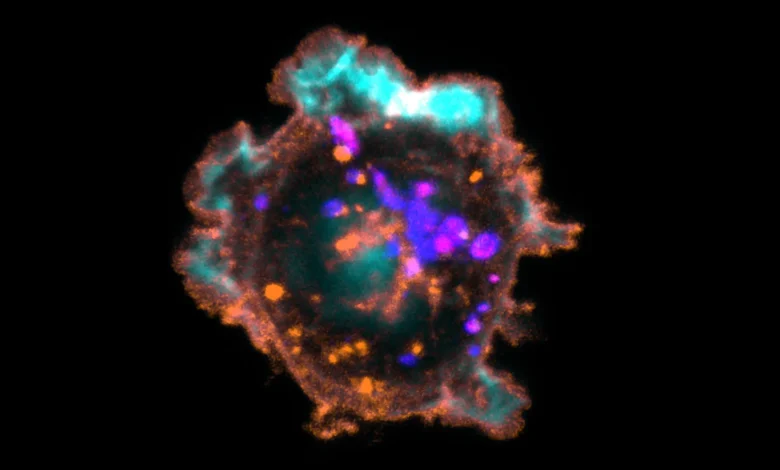
By employing advanced imaging and flow cytometry on patient-derived blood samples and preclinical disease models, the team discovered that the metabolic defect caused by the MVK mutation profoundly impacts the maturation of NK cells. These cells, which serve as the immune system’s frontline against viral infections, were found to be physically and functionally compromised.
The Mechanics of Immune Misfiring
The core of the discovery lies in the internal architecture of the natural killer cell. Under normal conditions, NK cells are "armed" with granules containing toxic proteins. When they encounter a cell infected by a virus, they release these granules to destroy the threat.
The researchers found that in MKD patients, these granules are effectively "stuck" due to the underlying metabolic deficiency. Unable to execute their primary mission of killing infected targets, the NK cells enter a state of hyper-activation. Because they cannot purge the infection through standard cytotoxic means, they compensate by releasing massive quantities of interferon-gamma. This cytokine acts as a distress signal that "shouts" to the rest of the immune system, causing widespread, uncontrolled inflammation. This explains the paradox of MKD: a disease defined by both a deficient immune response to pathogens and an overactive, damaging systemic inflammatory state.
Bridging the Gap: The Role of JAK Inhibitors
The identification of interferon-gamma as the primary driver of inflammation in MKD patients opens a new door to precision medicine. The Garvan Institute team collaborated with clinicians at the Royal Children’s Hospital in Melbourne to test this hypothesis in a real-world setting. They utilized baricitinib, a drug belonging to the Janus kinase (JAK) inhibitor class.
JAK inhibitors function by blocking the signaling pathways that interferon-gamma uses to transmit its instructions to other cells. In a notable case involving a severely affected infant, the administration of baricitinib led to a marked reduction in the frequency of inflammatory flares and supported the healing of gastrointestinal tissues. While clinical case studies do not constitute a phase-three clinical trial, the rapid and positive response in this patient provides a compelling proof-of-concept for larger, controlled studies.
Broader Implications and the Concept of Prenylopathies
The impact of this discovery extends well beyond the narrow scope of MKD. Researchers are increasingly grouping MKD with other genetic conditions under the umbrella term "prenylopathies." These disorders all involve disruptions in the mevalonate pathway—the same biological highway affected in MKD.
If, as the Garvan team suspects, NK cell dysfunction is a common thread across all prenylopathies, this research could be the key to unlocking treatments for a broader range of rare genetic diseases. By targeting the interferon-gamma pathway, clinicians may be able to standardize treatment protocols that have previously relied on guesswork or broad-spectrum immunosuppressants.
Expert Perspectives on the Path Forward
Dr. Marcia Munoz, who spearheaded the laboratory efforts, emphasized the weight of these findings during a recent press briefing. "Turning 30 years of dogma on its head is not something we take lightly," she stated. "However, the data is unequivocal: the primary pathology is not where we thought it was. By shifting our focus from the macrophage to the NK cell, we are finally seeing a way to address the symptoms that have long eluded our current standard of care."
Professor Mike Rogers, senior author of the study, highlighted the significance for the "diagnostic odyssey"—a term used to describe the years of tests and misdiagnoses that many patients with rare diseases endure. "Confirming this link between metabolic deficiency and NK cell malfunction could streamline the diagnostic process, moving patients away from symptomatic management and toward targeted, molecular-based therapies."
Future Outlook
The path forward will involve a multi-pronged approach. First, the medical community will need to validate these findings through larger, multi-center clinical trials to determine the safety and efficacy of JAK inhibitors in a diverse cohort of MKD patients. Second, the research team at the Garvan Institute plans to investigate whether other existing drugs—specifically those that specifically neutralize interferon-gamma—might offer a more surgical, less broad-acting treatment option than current JAK inhibitors, which can have wider systemic effects.
As the scientific community digests these findings, the case of MKD serves as a potent reminder of the importance of revisiting foundational assumptions in medicine. The transition from a macrophage-focused model to an NK-cell-focused model represents the iterative nature of science, where even deeply held beliefs must eventually yield to the rigor of modern cellular analysis. For the patients and families living with the uncertainty of MKD, this shift in understanding represents more than just an academic update; it offers the first real hope for a targeted treatment that could effectively silence the biological "shouting" that has defined their illness for generations.
Related posts: