
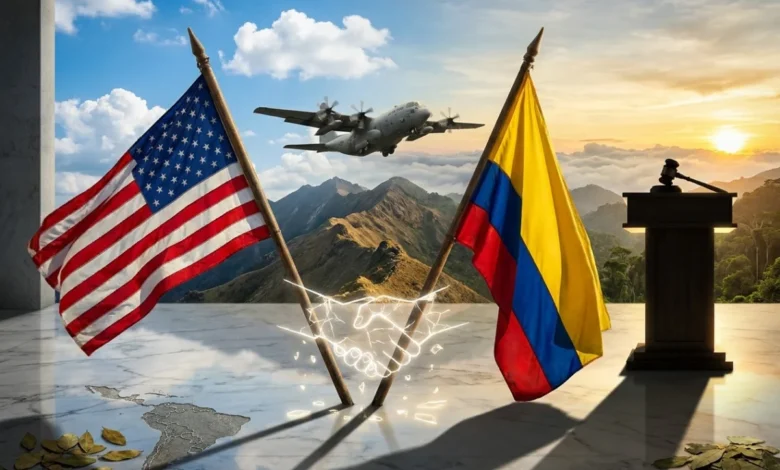
Colombian President Abelardo De La Espriella issued a definitive denial on Thursday regarding reports that his administration had rejected a high-level proposal from the United States for joint military operations against transnational drug cartels. The controversy, which briefly strained the long-standing security partnership between Washington and Bogota, originated from a report published by The New York Times citing unnamed U.S. officials who claimed the Colombian head of state had turned down a specific operational framework designed to intensify the regional counter-narcotics campaign.
In a formal statement disseminated via his official channel on the social media platform X, President De La Espriella characterized the allegations as fundamentally false. He emphasized that the Colombian government has not issued any formal rejection of proposals emanating from the administration of U.S. President Donald Trump. This public clarification serves as a critical attempt to stabilize the diplomatic narrative, as the Trump administration continues to pivot toward a more aggressive, militarized posture in its hemispheric approach to drug trafficking.
The Genesis of the Diplomatic Friction
The report that triggered the current dispute suggested that the United States had approached the Colombian government with a plan for joint military missions intended to dismantle the operational capacity of powerful drug trafficking networks. While the specifics of the proposal remained opaque—lacking details on troop numbers, jurisdictional authority, or mission objectives—the implication was that such a plan would represent a significant escalation in U.S. direct involvement on Colombian soil.
For the Trump administration, the proposal is consistent with its broader regional strategy, which includes the designation of powerful criminal entities like the Clan del Golfo as foreign terrorist organizations. By framing the drug trade as a national security threat rather than purely a criminal justice matter, the White House has signaled an intent to leverage the full suite of military and intelligence assets at its disposal. However, reports in Colombian media outlets quickly framed the alleged rejection as a substantial setback for the White House’s, and by extension the Pentagon’s, regional ambitions.
Chronology of Events and Diplomatic Posturing
The timeline of this incident reveals a rapid escalation and subsequent containment of a potentially damaging diplomatic rift.
- Mid-December 2025: The Trump administration officially designates the Clan del Golfo as a foreign terrorist organization, escalating the pressure on Colombian criminal networks.
- Wednesday, November 2026: The New York Times publishes an account alleging that President De La Espriella rejected a U.S.-led plan for joint military operations.
- Thursday Morning, November 2026: Domestic Colombian news outlets amplify the report, discussing the implications for sovereignty and the legal hurdles facing the administration.
- Thursday Afternoon, November 2026: President De La Espriella issues his denial on X, asserting that cooperation with Washington remains robust and ongoing.
- Concurrent Developments: Defense officials confirm that U.S. War Secretary Pete Hegseth is scheduled to visit Bogota, underscoring the persistence of the bilateral security relationship.
The speed at which the administration corrected the record suggests a concerted effort to prevent the narrative of "rejection" from solidifying into a long-term perception of defiance. In diplomatic circles, such perceptions can be as damaging as actual policy shifts, particularly when both nations rely on the appearance of total alignment to discourage cartel activity.
The Legal and Legislative Landscape
At the core of the friction lies a complex legal framework. Under the Colombian Constitution, the executive branch does not possess unfettered authority to permit the entry of foreign troops. Any such arrangement requires legislative authorization, a process that is subject to rigorous oversight by the Colombian Constitutional Court.
Reports from outlets such as Colombia One suggested that the president’s hesitation might be rooted in a pragmatic assessment of his legislative capital. If the administration believed that a proposal for joint operations would fail a floor vote in Congress, a quiet refusal—or a request for modification—would be a politically prudent maneuver. The sensitivity of this issue cannot be overstated; the presence of foreign military personnel on Colombian territory has historically been a flashpoint for nationalist political movements and remains a sensitive topic for the country’s legislative body.
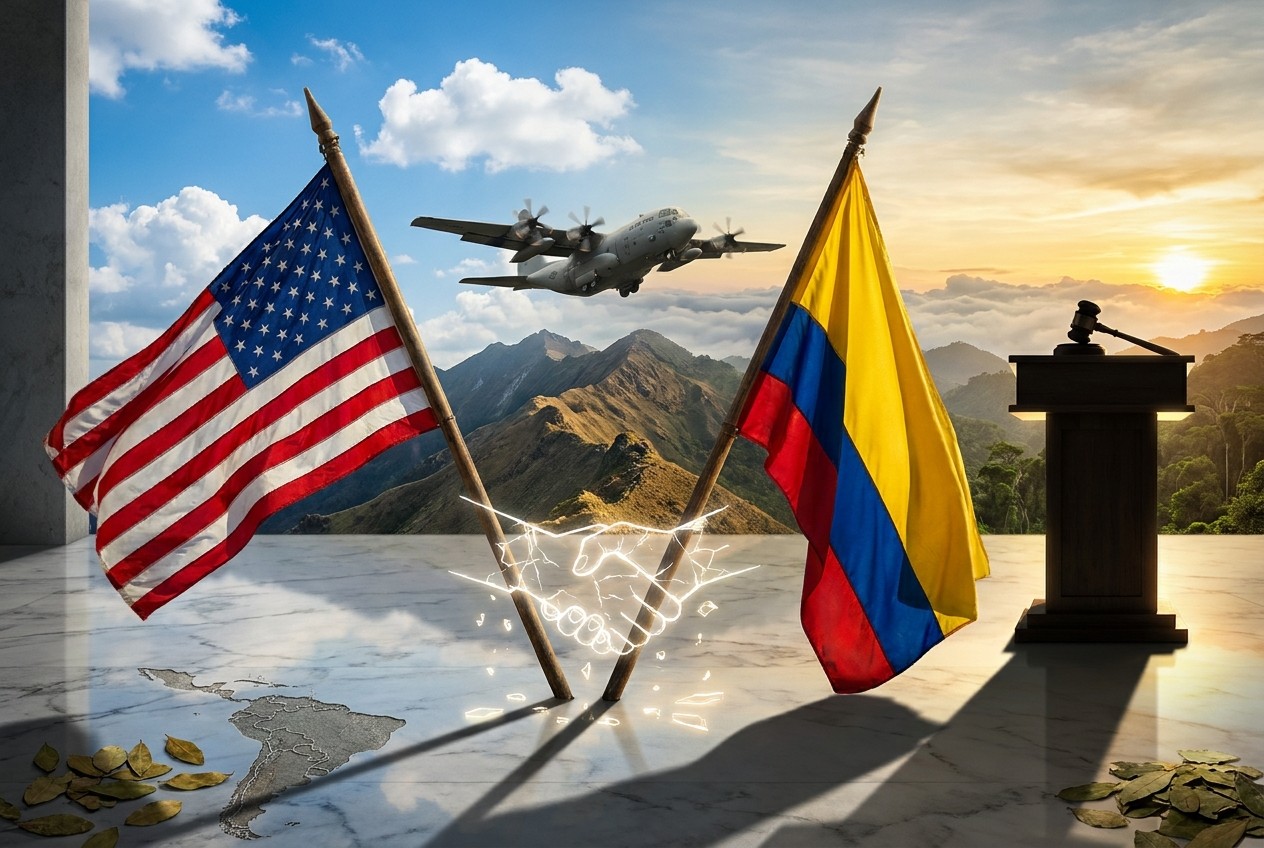
Comparatively, this dispute mirrors broader regional tensions regarding U.S. military reach. In January 2026, the Mexican government explicitly sought and received written assurances that American military aircraft would not operate within its sovereign airspace. This growing caution among Latin American partners highlights the thin line between necessary security cooperation and the perceived erosion of national sovereignty.
Strengthening Capabilities Over Foreign Intervention
In his response, President De La Espriella clarified that Colombia’s strategic requests to the White House have been focused on military, technological, and intelligence support rather than the direct integration of foreign boots on the ground. This distinction is vital for understanding the current state of the U.S.-Colombia relationship.
The strategy currently favored by Bogota prioritizes the enhancement of the Colombian armed forces’ own capabilities. This includes the acquisition of advanced transport and surveillance platforms—such as the Hercules C-130 transport plane set to be delivered during War Secretary Hegseth’s upcoming visit. By focusing on equipment and intelligence sharing, the two countries can continue to pursue shared objectives without triggering the domestic political crises associated with the stationing of foreign military units.
Analytical Perspective: The Pattern of Cooperation
Historically, the U.S.-Colombia relationship has been characterized by cycles of intense public scrutiny followed by periods of pragmatic reconciliation. The 1997 "de-certification" crisis, in which the U.S. suspended support for Colombia due to a campaign-finance scandal, serves as a historical benchmark for how quickly these ties can fray. However, even in that instance, the two nations eventually returned to a state of quiet accommodation.
The current situation suggests that while the Trump administration is pushing for a more kinetic and interventionist approach to the war on drugs, the government of Colombia is exercising caution to preserve its internal legislative and social stability. The lack of a published text regarding the proposed joint operations leaves significant gaps in the public record. Without full disclosure of the proposal’s parameters, observers are left to reconcile the White House’s desire for rapid, decisive action against cartels with Bogota’s need to navigate its own legal and political constraints.
Broader Implications for Latin American Security
The tension over this proposed plan serves as a microcosm of the larger struggle for security, sovereignty, and influence in the Western Hemisphere. As the Trump administration continues to expand its military pressure on drug trafficking networks, it is increasingly testing the boundaries of its partnerships with regional allies.
The reliance on independent reporting and cryptic official statements underscores a transparency deficit that complicates public trust. For the time being, the security architecture between the two nations appears to be holding, albeit under the weight of heightened expectations from Washington and increased legal caution in Bogota. Moving forward, the effectiveness of the anti-cartel campaign will likely depend on whether the U.S. can successfully integrate its resources into the existing legal structures of its partners, rather than attempting to force a model that relies on the direct, and politically volatile, presence of U.S. personnel.
As the situation evolves, the focus will remain on the upcoming diplomatic exchanges between the two administrations. Should the U.S. continue to press for operational models that circumvent traditional legislative processes, the frequency of such public disputes is likely to increase. Conversely, if Washington adapts its approach to focus on the technical and intelligence-based support requested by Bogota, the two nations may find a sustainable path forward in their decades-long effort to curb the influence of transnational criminal organizations.