Putin and Iran’s Security Chief Hold High-Stakes Kremlin Talks Amidst Escalating Regional Tensions


Russian President Vladimir Putin hosted Mohsen Rezaei, a top Iranian security official and representative of the Supreme Leader, at the Kremlin this week for a series of high-level discussions that underscore the deepening geopolitical entanglement between Moscow and Tehran. The meeting, which was confirmed by both Russian and Iranian official channels, focused on the increasingly volatile security landscape in the Middle East, the future of energy infrastructure, and the ongoing diplomatic impasse between Iran and the United States. While the Kremlin remained characteristically tight-lipped regarding the granular details of the dialogue, the encounter signals a significant synchronization of strategy as both nations navigate the consequences of the ongoing conflict in the Strait of Hormuz.
The meeting serves as a pivot point in the broader diplomatic theater, arriving at a moment when traditional mediation efforts—most notably those led by Qatar—have struggled to yield a definitive breakthrough. According to reports from Tehran, Rezaei delivered a personal message from Supreme Leader Ali Khamenei to President Putin, though the exact contents of this communication remain classified. Rezaei noted in subsequent press briefings that the meeting was originally intended to occur weeks prior but was postponed due to the "special circumstances" of the military situation in the region, where tactical developments are shifting on a daily basis.
The Strategic Partnership and Energy Diplomacy
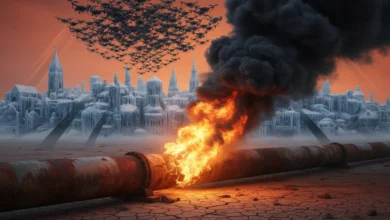
Central to the discussions was the proposed development of a Russia-Iran gas pipeline, a project that carries profound implications for global energy markets. The proposal, as described by Rezaei, is designed to serve a dual purpose: addressing acute domestic energy shortages within Iran and providing Moscow with a critical infrastructure bridge to export natural gas to regional markets.
From an economic perspective, the project represents a significant move to circumvent the impact of international sanctions that have crippled both nations’ energy sectors. By integrating their pipeline networks, Russia and Iran could theoretically create a unified energy bloc, insulating their exports from Western maritime restrictions. However, the technical and financial hurdles remain substantial. Experts suggest that such a project would require billions of dollars in infrastructure investment and would likely face intense scrutiny from international oversight bodies. While the Kremlin has not yet issued a formal commitment to the project, the mere discussion of it reflects the deepening "strategic partnership" codified by the 20-year treaty signed by Putin and Iranian President Masoud Pezeshkian on January 17 of last year. That treaty, which solidified military, intelligence, and economic cooperation, has become the bedrock of the two countries’ efforts to establish a multi-polar order capable of challenging Western hegemony.
The Strait of Hormuz: A Global Economic Chokepoint
The urgency of the Moscow talks is largely dictated by the crisis in the Strait of Hormuz. As one of the world’s most vital maritime arteries, the Strait handles approximately 20 percent of global oil consumption, and its closure—or even the threat thereof—has triggered a surge in global energy prices. For the United States and its allies, the disruption of this corridor has exacerbated domestic fuel costs and created a precarious situation for global supply chains.
Rezaei’s public statements following the Kremlin meeting provided the most explicit articulation of Iran’s position to date. He outlined seven non-negotiable conditions that Tehran has presented to Washington as the price for de-escalation. These demands include a comprehensive cessation of all hostilities, including in Lebanon; the immediate termination of the naval blockade surrounding Iranian ports; the total lifting of international sanctions; the release of frozen Iranian financial assets; and a commitment to war reparations.
The scale of these demands suggests that the diplomatic gap between Washington and Tehran remains cavernous. By tying the reopening of the Strait of Hormuz to these conditions, Iran is effectively leveraging its geographic advantage to force the United States into a policy shift. Whether Washington, currently engaged in indirect talks mediated by Doha, will view these terms as a basis for negotiation or a non-starter remains the primary question for global observers.

Chronology of Recent Escalations
The diplomatic push occurring in Moscow is the latest chapter in a rapidly evolving crisis. A brief chronology of the current escalation includes:
- January 17: Russia and Iran formalize a 20-year comprehensive strategic partnership, binding their military and economic interests.
- Last Month: U.S. Vice President J.D. Vance sends a formal letter to Iranian leadership proposing direct peace talks, specifically aiming to address nuclear proliferation and regional stability.
- Late Last Month: President Putin holds talks with U.S. presidential envoy Steve Witkoff in St. Petersburg, where the Kremlin signals that diplomatic options are "far from exhausted."
- Early This Week: Putin and Rezaei hold preliminary discussions via telephone, setting the stage for the formal Kremlin meeting.
- Thursday: Rezaei meets with President Putin in Moscow to discuss the "post-war" regional security architecture and the gas pipeline proposal.
Analysis: Implications for Regional Stability
The meeting between Putin and Rezaei serves as a stark reminder that the resolution of the U.S.-Iran conflict will not be determined in a vacuum. Russia’s emerging role as a mediator, or at least a facilitator of dialogue, shifts the balance of power. By engaging directly with Tehran on security issues, Moscow is signaling that it remains a key stakeholder in Middle Eastern affairs, regardless of its own domestic and European commitments.
Furthermore, the lack of a joint statement following the Kremlin meeting should not be interpreted as a failure of diplomacy, but rather as an indication of the complexity of the ongoing negotiations. In international statecraft, the absence of a communiqué often suggests that the parties are engaged in a "soft diplomacy" phase, where the primary objective is to maintain lines of communication while testing the resolve of opposing blocs.
For the United States, the alignment of Russia and Iran poses a significant strategic challenge. If Russia provides the necessary technological and economic support to sustain the Iranian economy through a prolonged period of blockade, the effectiveness of U.S. sanctions will continue to erode. Moreover, if Moscow provides intelligence or logistical support to regional actors, the theater of conflict could expand further, potentially drawing in other regional powers who are currently hedging their bets.
The Path Forward: Uncertain Diplomacy
As the situation stands, multiple tracks of diplomacy are moving in parallel. Qatar continues to host representatives from the U.S. and Iran, focusing on the minutiae of the nuclear file and potential de-escalation protocols. Simultaneously, the Moscow-Tehran track is focusing on the "big picture" of regional security arrangements—specifically what a post-war Middle East should look like.
The lack of a public breakthrough suggests that all parties are currently in a period of intense bargaining. The U.S. remains committed to the principle of "peace through strength," while Iran’s insistence on the seven conditions indicates that they feel emboldened by their strategic partnerships and their control over the Strait of Hormuz.
Looking ahead, the international community will be closely watching for signs of movement on any of these fronts. Key indicators of progress will include:
- Normalization of Shipping: Any reduction in the intensity of the naval blockade or a decrease in threats to tankers in the Strait of Hormuz.
- Energy Agreements: Any formal signing of infrastructure memoranda between Moscow and Tehran that would bypass existing sanctions.
- Direct Dialogue: Whether the letter sent by Vice President Vance results in face-to-face meetings between U.S. and Iranian negotiators.
In the final analysis, the Kremlin meeting has reinforced the fact that the conflict is no longer merely a regional dispute, but a core component of a wider, global restructuring of alliances. With Russia positioning itself as a central node in this new, non-Western-centric diplomatic network, the resolution of the U.S.-Iran crisis has become intrinsically linked to the broader, systemic competition between the world’s major powers. For now, the world waits to see if the messages delivered in the Kremlin will lead to a cooling of tensions or a further hardening of positions in one of the world’s most critical regions.
Related posts: