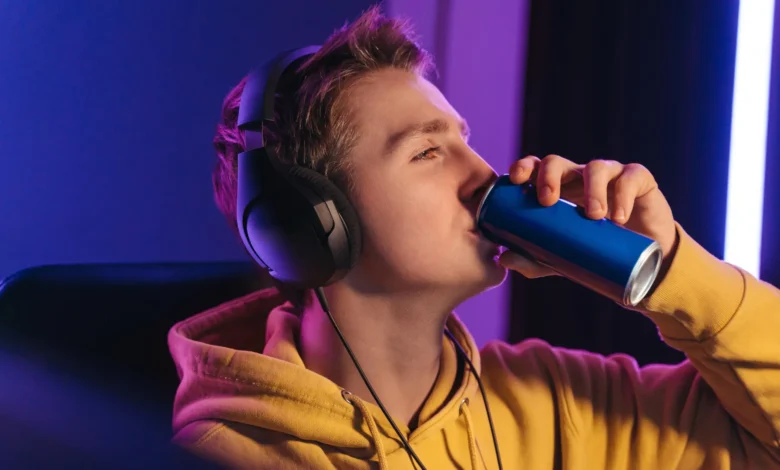
The modern landscape of consumer beverages and nutritional enhancements has undergone a sweeping transformation over the past decade, characterized by a relentless surge in the popularity of energy drinks and highly concentrated stimulant supplements. However, this commercial boom is now shadowed by growing apprehension within the medical community. A striking pattern has emerged from federal safety databases, revealing an alarming frequency of severe cardiovascular emergencies—including cardiac arrests and myocardial infarctions—associated with products containing caffeine and various stimulants.
Unveiled at the American Heart Association’s Scientific Sessions 2026, preliminary and independent research has brought this critical public health issue to the forefront. The findings indicate that caffeinated beverages and specialized stimulant supplements appear exponentially more often in adverse event reports concerning acute heart problems when compared to non-stimulated consumables. Most notably, a substantial portion of these harrowing medical incidents heavily concentrates on a demographic traditionally considered at low risk for severe heart complications: young adults aged 18 to 34.
While investigators and cardiologists are quick to emphasize that these observational findings do not establish a direct causal link, the sheer volume and nature of the safety reports demand rigorous scientific scrutiny. As regulatory frameworks struggle to keep pace with an industry that crossed the $20 billion threshold in 2024, public health officials, clinicians, and consumers are forced to reevaluate the safety profile of products that have long been marketed as harmless everyday pick-me-ups.
The Rapid Expansion of the Energy Drink Market and Regulatory Oversight
To understand the gravity of the recent findings, one must examine the meteoric rise of the energy drink and supplement industry. Over the past ten years, market sales have more than doubled, driven by aggressive marketing campaigns, ubiquitous placement in retail environments alongside bottled water and soft drinks, and a cultural embrace of hyper-productivity.
Despite their widespread integration into daily routines—particularly among high school students, college undergraduates, and young professionals—scientific understanding of the long-term and acute cardiovascular consequences of these formulations remains surprisingly limited. Part of this knowledge gap stems from the unique regulatory classification governing these items.
Within the United States, the Food and Drug Administration (FDA) categorizes energy drinks and dietary supplements under the regulatory umbrella of foods rather than pharmaceutical drugs. Consequently, unlike prescription or over-the-counter medications, these products are not subjected to mandatory pre-market clinical trials to evaluate their safety, efficacy, or potential for adverse cardiovascular interactions. Manufacturers bear the responsibility of ensuring their products are safe before marketing them, but the absence of rigorous pre-market screening leaves a significant safety blind spot.
Furthermore, the concentration of active ingredients varies wildly across the market. While a standard 8-ounce cup of brewed black coffee contains roughly 80 milligrams of caffeine, certain commercial energy drinks pack up to three times that concentration per fluid ounce. More concerning still are specialized pre-workout powders and extreme stimulant supplements, some of which boast caffeine concentrations up to twelve times greater than standard coffee. When consumers unknowingly or casually combine these high-potency products throughout the day, exceeding recommended daily thresholds becomes remarkably easy.
Dissecting the Federal Safety Database: Methodology and Findings
To investigate potential cardiovascular risks, the research team led by Sai Samayamanthula, a fourth-year medical student at the University of Virginia School of Medicine, conducted a comprehensive retrospective analysis of a federal repository. They utilized the FDA’s adverse event reporting system, examining spontaneous reports submitted between 2017 and 2025 concerning suspected adverse reactions to foods and dietary supplements.
The study design compared two distinct categories: products containing caffeine and other active stimulants versus a control group of non-stimulated consumables. The control group encompassed a wide array of commonly ingested items, including traditional soft drinks, fruit smoothies, multivitamins, protein bars, and standard meal replacement shakes. The analysis focused on reports involving individuals aged 13 and older, filtering through tens of thousands of individual records to isolate cardiovascular endpoints.
Out of 28,345 total adverse event reports reviewed across the eight-year span from 2017 through 2025, exactly 854 records specifically involved energy drinks or dietary supplements containing caffeine or related stimulants. The remaining 27,491 reports comprised the non-stimulant comparison group.
The researchers categorized the investigated products based on their active chemical profiles. The stimulant category was not limited to caffeine alone; it encompassed methylxanthines—such as theobromine, guarana, yerba mate, and green tea or coffee extracts—as well as various sympathomimetic agents, including synephrine, yohimbine, ephedra, 1,3-dimethylamylamine (DMAA), and higenamine.
Importantly, the research team grouped products by their constituent ingredients rather than targeting specific commercial brands. This methodological approach ensures that the findings reflect broad categories of caffeinated and stimulant formulations rather than implicating single corporate entities.
The analysis revealed stark disparities in how frequently certain severe medical emergencies appeared within the database. The proportional representation of cardiac arrests, acute myocardial infarctions, and dangerous cardiac arrhythmias was vastly higher in the stimulant-containing product cohort than in the control group. However, methodologists and study authors underscore a vital distinction: these ratios describe reporting frequency within a voluntary database, not the absolute statistical risk faced by the general population. They do not imply, for example, that an individual consuming an energy drink faces a fixed mathematical multiplication of their personal heart attack risk.
Vulnerability Among Young Adults: Exploring Potential Explanations
One of the most perplexing and alarming dimensions of the data is the heavy representation of young adults. Individuals between the ages of 18 and 34 accounted for a disproportionately large share of the reported heart problems associated with caffeinated and stimulant-containing products.
Medical science has yet to definitively decode why this specific age cohort bears such a prominent footprint in the adverse event reports. Several hypotheses are currently under evaluation by clinical researchers:
- Consumption Frequency and Volume: Younger demographics statistically consume higher volumes of energy drinks, pre-workout supplements, and specialized caffeinated beverages than older populations, naturally increasing their representation in safety databases.
- Behavioral Context: The circumstances surrounding consumption often involve high-intensity physical exertion, such as intense weightlifting or endurance sports, or concurrent ingestion with substances like alcohol, illicit drugs, or prescription medications. These combinations can synergistically stress the cardiovascular system.
- Undiagnosed Pathologies: A subset of young adults may harbor congenital or previously undetected heart conditions—such as hypertrophic cardiomyopathy, long QT syndrome, or subclinical arrhythmias—making their hearts acutely sensitive to sudden surges in sympathetic nervous system activity induced by high-dose stimulants.
Study author Sai Samayamanthula noted the psychological barrier that complicates public safety awareness. "These products are marketed as everyday pick-me-ups and sold next to soda and bottled water, so most people assume they carry no real risk," Samayamanthula explained. "For many healthy people, if these products are consumed occasionally, the risk is probably small. However, individuals who consume energy drinks or other stimulant-containing supplements regularly can quickly exceed the recommended daily limit for caffeine, so it’s important for people to know that there may be a risk of cardiovascular harm with these products."
Expert Perspectives and the Limits of Voluntary Data
To contextualize these findings within broader cardiovascular science, it is helpful to look at concurrent guidelines issued by the American Heart Association (AHA). A 2026 AHA Scientific Statement on caffeine and cardiovascular disease established that most healthy adults can generally consume up to 400 milligrams of caffeine daily—roughly equivalent to five 8-ounce cups of regular brewed coffee—without experiencing significant adverse safety effects.
However, crossing that 400 mg threshold with concentrated commercial products can happen in a single serving. Medical literature has long documented sporadic cases of acute arrhythmias, tachycardia, and sudden cardiac death following excessive stimulant consumption, occasionally occurring in otherwise healthy youths.
Despite these biological plausibilities, prominent cardiologists urge caution against misinterpreting observational database studies as definitive proof of direct causation.
Dr. Gregory M. Marcus, a professor of medicine at the University of California, San Francisco School of Medicine, and associate chief of Cardiology for Research at UCSF Health, served as the chair of the 2026 AHA scientific statement on caffeine. Dr. Marcus, who was not involved in the current research, provided critical perspective on the study’s implications.
"This study raises concerns that products with very high amounts of caffeine may be harmful to the cardiovascular system," Dr. Marcus stated. "Although there are biological reasons why that connection could be possible, the study does not prove that caffeine products cause these events, because other factors may have influenced the results found in this analysis. More research is needed to understand whether these stimulant products are truly responsible for the reported heart-related events."
Dr. Marcus highlighted the inherent limitations of spontaneous, voluntary reporting systems like the one maintained by the federal government. Because reports are submitted voluntarily by consumers, family members, healthcare providers, and manufacturers, the database is subject to reporting biases. It does not capture a complete census of every adverse event that occurs nationwide, nor does it track the vast denominator of individuals who consume these products daily without experiencing adverse health effects. Without knowing the exact total consumption figures across the population, calculating a true epidemiological incidence rate remains impossible.
Broader Implications for Clinical Practice and Public Health
The release of these findings at the American Heart Association’s Scientific Sessions 2026 serves as an urgent call to action for both the medical community and public health policymakers.
For practicing physicians, cardiologists, and emergency room clinicians, the study underscores the necessity of taking detailed dietary and supplement histories from younger patients. Clinical guidelines increasingly suggest that healthcare professionals should actively inquire about the regular use of energy drinks, pre-workout powders, and herbal stimulant supplements when evaluating younger patients who present with unexplained heart palpitations, atypical chest pain, pre-syncope, or sudden fainting spells.
For the regulatory landscape, the data provides momentum for advocates pushing for more systematic, proactive safety monitoring of products containing high-potency caffeine and synthetic or botanical stimulants. While outright bans or restrictive federal mandates remain unlikely in the near term, public health agencies face mounting pressure to mandate clearer warning labels regarding maximum daily intake limits and potential cardiovascular risks, particularly for adolescents and young adults.
Ultimately, as the commercial market for functional beverages and performance-enhancing supplements continues to evolve, bridging the gap between aggressive commercial marketing and rigorous scientific safety data remains a paramount challenge. Until comprehensive prospective clinical trials can definitively isolate the direct physiological toll of these formulations, heightened clinical vigilance and consumer education regarding the potency of modern stimulants stand as the primary lines of defense in protecting public heart health.