Navigating the Crisis: Deepening Workforce Shortages and Payment Rate Challenges in Medicaid Home Care Programs

Severe workforce shortages and mounting financial pressures continue to plague Medicaid home- and community-based services (HCBS), directly impacting the care delivered to more than 5 million Americans. A comprehensive, national analysis based on the 24th KFF survey of state Medicaid officials—conducted between April and August 2026—reveals a compounding crisis driven by high turnover rates, low wages, and demanding work conditions. While states grapple with the imperative to recruit and retain direct care workers, a tightening fiscal environment, shifting federal policies, and evolving administrative mandates under the 2024 Medicaid Access Rule are complicating state-level responses.
The Background of HCBS and Long-Standing Workforce Pressures
Home- and community-based services provide vital long-term care supports, enabling older adults and individuals with physical or intellectual disabilities to live independently in their homes and communities rather than in institutional settings. Despite the critical nature of these services, the direct care workforce has historically suffered from systemic undervaluation. Home care workers—a subset of direct care providers—frequently face low wages, lack of benefits, and intense physical and emotional job demands. These factors have fostered chronic recruitment and retention challenges, culminating in high turnover rates that destabilize provider agencies and compromise care continuity for enrollees.
The modern crisis is further complicated by demographic and labor market shifts. Nearly one in three home care workers in the United States are immigrants. Intensified federal immigration enforcement and restrictive policy measures have heightened anxiety among immigrant workers across all statuses, with recent survey data indicating that some individuals are stepping away from the workforce out of fear. Looking ahead, future federal policy changes, including provisions tied to the 2025 reconciliation law and mounting pressure on states to curb Medicaid expenditures, threaten to exacerbate these labor shortages.
How States Are Responding to Escalating Shortages
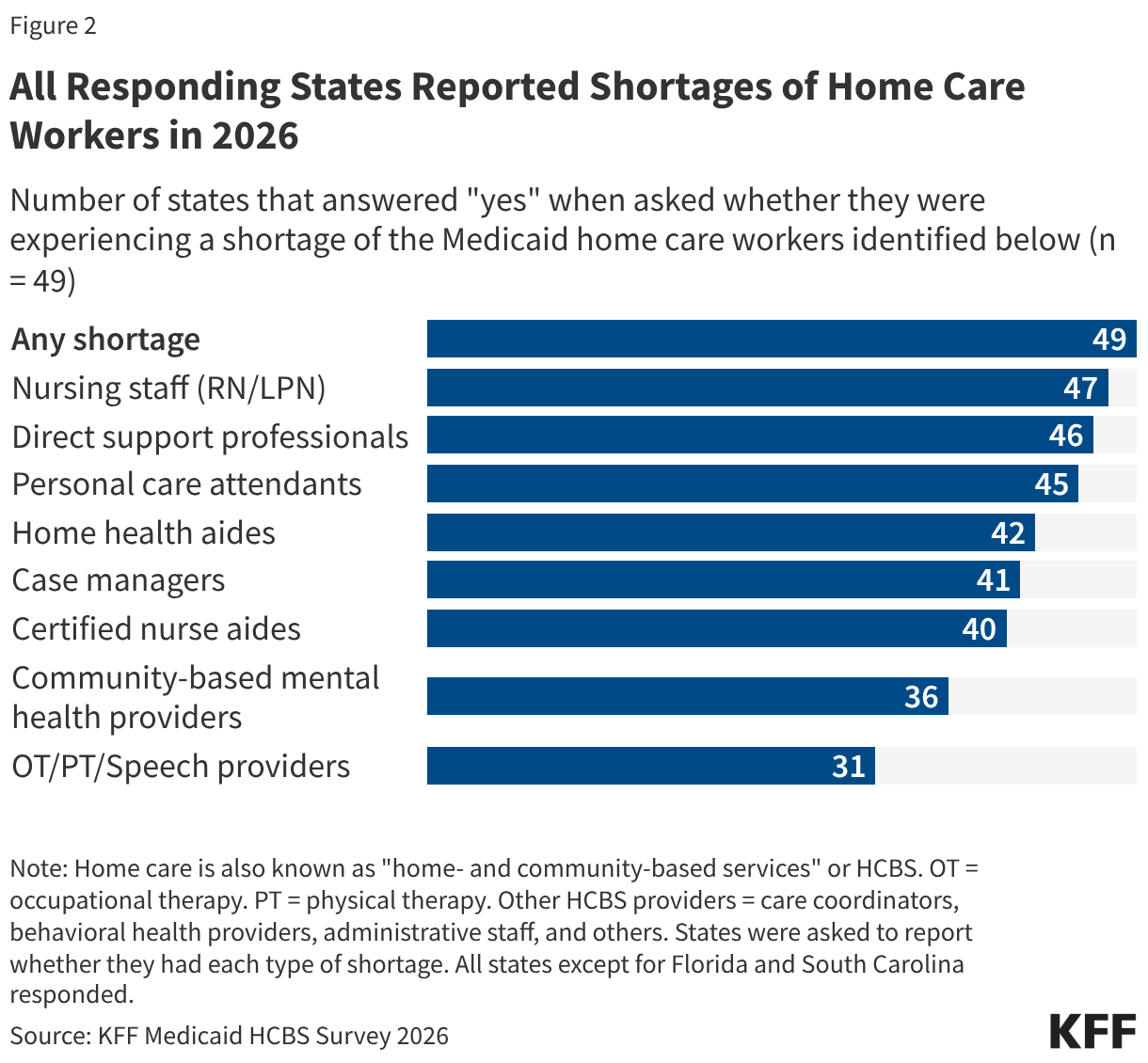
Data from the 2026 KFF survey underscore the universality of the workforce crisis. All responding states reported experiencing workforce shortages in 2026. The most widespread deficits were identified among nursing staff (reported by 47 states), direct support professionals (46 states), and personal care attendants (45 states). Furthermore, 42 states noted shortages of home health aides, 41 reported deficits in case managers, and 40 cited shortages of certified nurse aides. Nearly all responding states (48) experienced shortages across multiple provider categories, with 45 states noting deficits in five or more provider types.
Compounding the problem, 43 states reported that home care shortages worsened in 2026 relative to the previous year. High employee turnover (cited by 38 states), uncompetitive wages relative to other sectors (36 states), and surging consumer demand for home care (30 states) emerged as the primary drivers. State officials offered candid assessments of the situation:
- "With inflation rising and low reimbursement rates for providers, it is difficult for agencies to offer competitive salaries for workers to retain qualified professional staff."
- "There is a high HCBS employee workforce turnover rate, ranging from 29% to 48% for direct support workers alone, compounded by a lack of benefits, with roughly only a quarter of providers offering benefits to their employees."
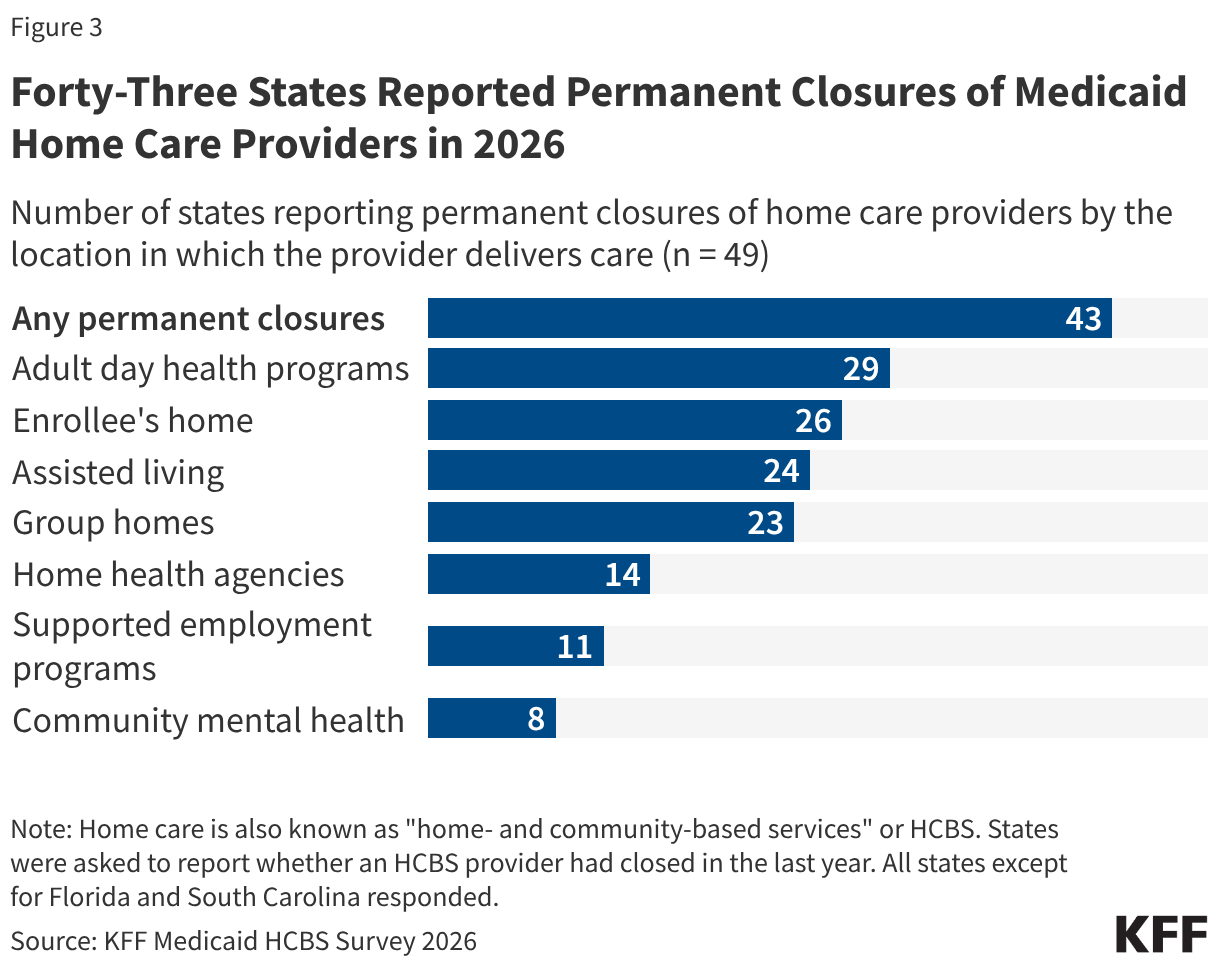
The strain on the provider network has manifested in permanent business closures. Over the past year, 43 states reported permanent closures of home care providers. These closures were most frequently observed among adult day health programs (29 states), care delivered in enrollees’ homes (26 states), assisted living facilities (24 states), and group homes (23 states).
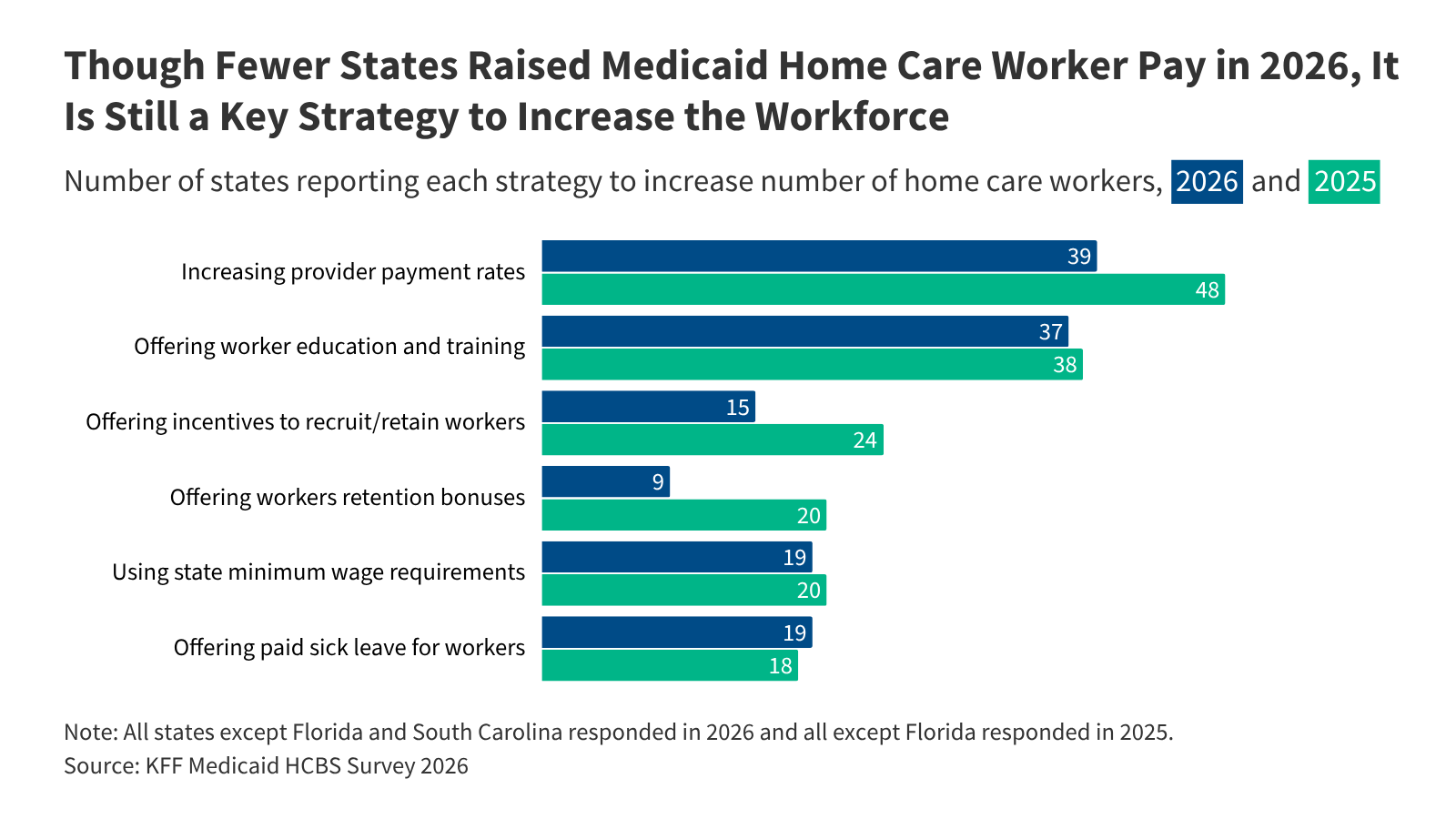
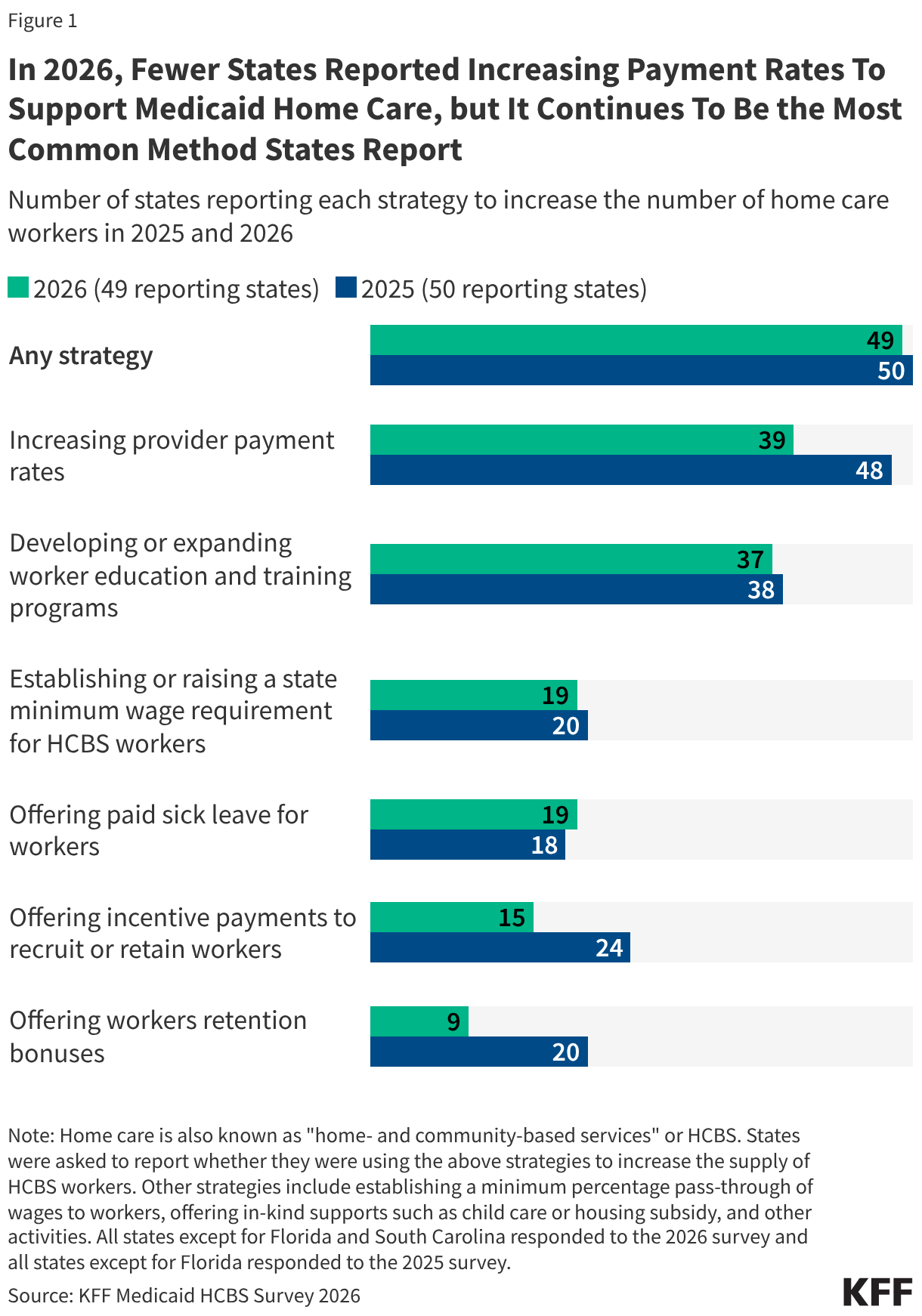
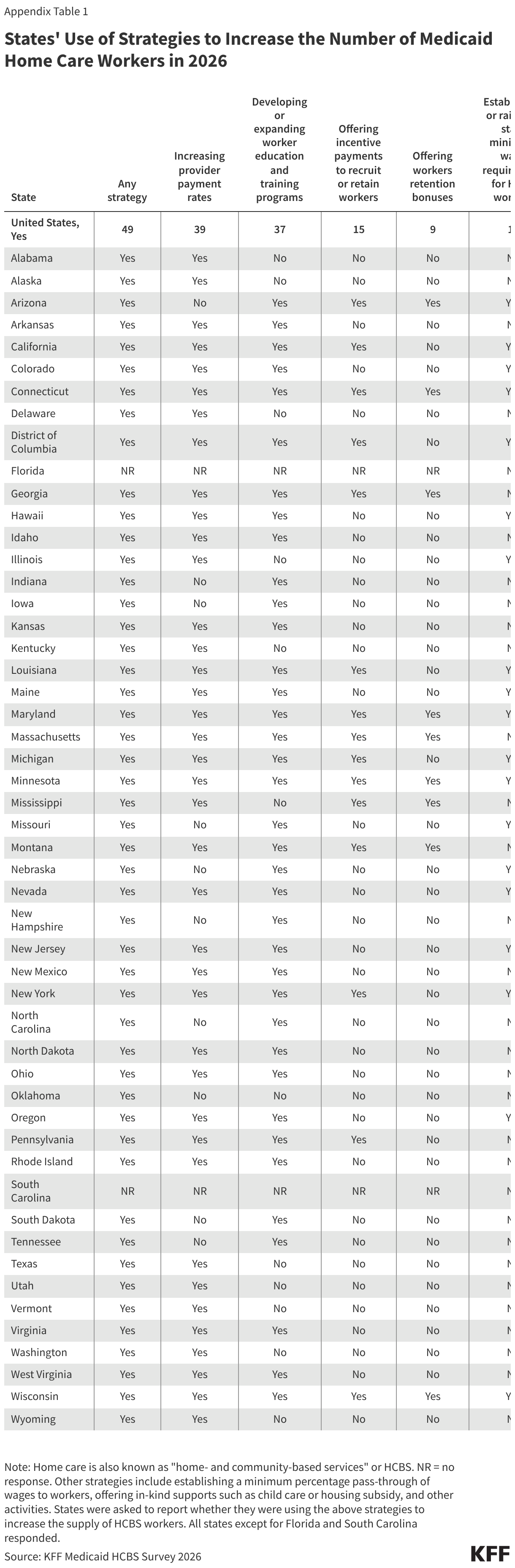
To counteract these trends, states have deployed various intervention strategies. All responding states reported taking some form of corrective action, with 39 states increasing provider payment rates and 37 developing or expanding worker education and training programs. However, a comparative analysis reveals a retreat in direct compensation measures compared to 2025. The number of states increasing provider payment rates dropped from 48 in 2025 to 39 in 2026. Similarly, states offering recruitment or retention incentive payments fell from 24 to 15, while those offering retention bonuses declined from 20 to 9. Observers attribute this contraction in compensation enhancements to tightening state budgets, slower revenue growth, and looming reductions in federal Medicaid funding.
The Impact of the 2024 Medicaid Access Rule and Federal Oversight
As states navigate these fiscal pressures, they must simultaneously comply with sweeping federal regulatory updates. The Centers for Medicare & Medicaid Services (CMS) finalized the Medicaid Access Rule in May 2024, introducing significant transparency and accountability measures. Beginning in July 2026, states are required to publicly report hourly payment rates for personal care, home health aide, homemaker, and habilitation services on state websites, alongside data tracking paid claims and enrollees served.
Crucially, these federal transparency and access requirements may conflict with state objectives to cut spending. During a CMS-hosted public webinar, agency officials indicated that proposed rate reductions for home care workers might face federal rejection if they result in a reduction of more than four percent in Medicaid expenditures for any service category. While CMS did not explicitly outline the rationale, the provision is widely viewed as a safeguard to preserve network adequacy and service access.
Additional federal integrity initiatives, such as stricter provider revalidation actions, add another layer of operational complexity. Furthermore, the Access Rule mandates that by July 2030, states must ensure that at least 80 percent of total Medicaid payments for specific home care services are directed toward direct care worker compensation—a benchmark informally known as the "80/20 rule." States are required to report on their readiness to comply with this benchmark by July 2027, setting the stage for a major overhaul of state reimbursement methodologies.
Analysis of Medicaid Home Care Payment Rates
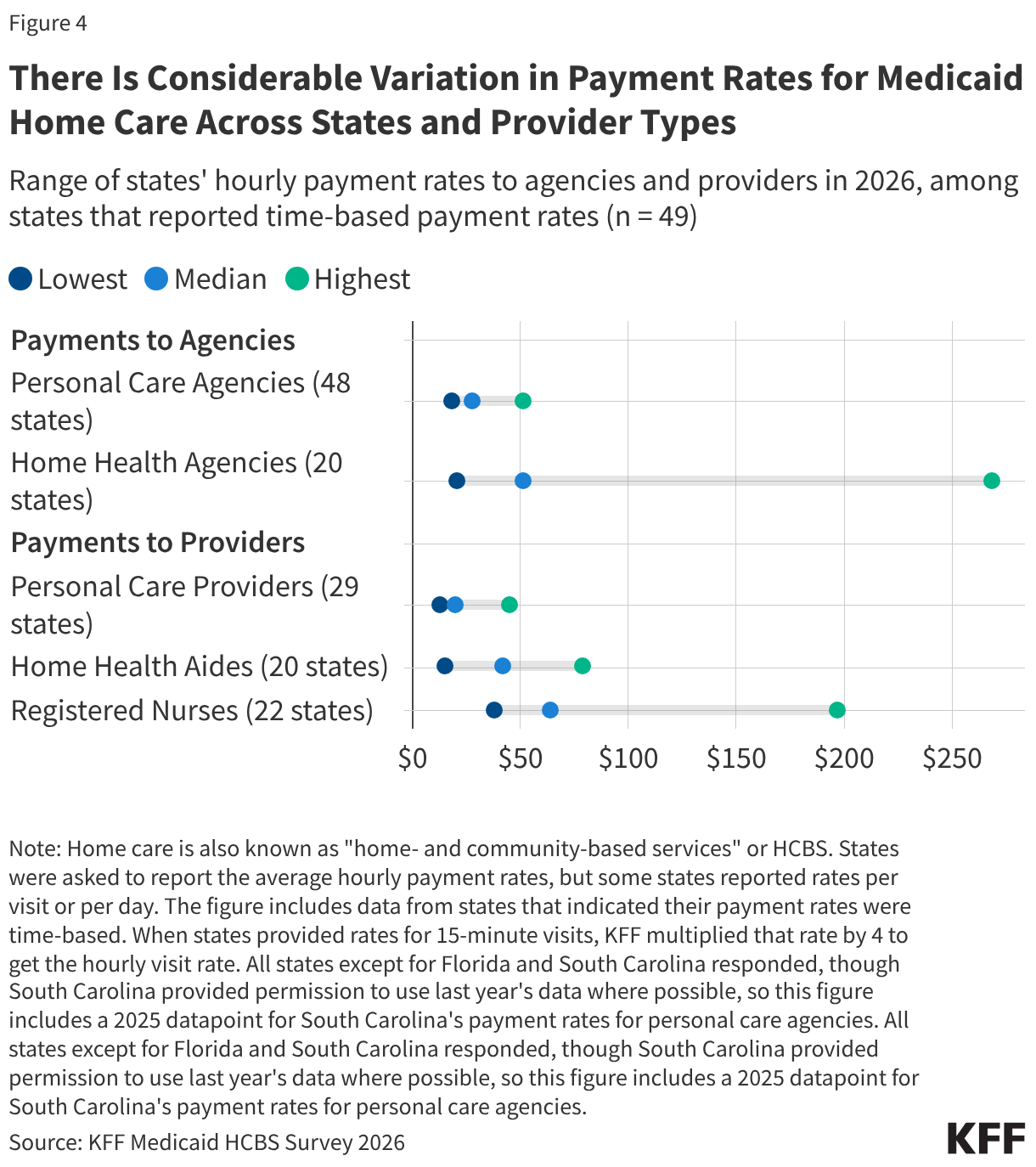
Collecting and standardizing payment rate data across the country remains a formidable challenge. In the 2026 KFF survey, numerous states were unable to provide hourly payment rates or noted that rates were unknown, particularly for specific provider types like registered nurses and home health aides. Among states able to report comprehensive data, payment rates varied widely.
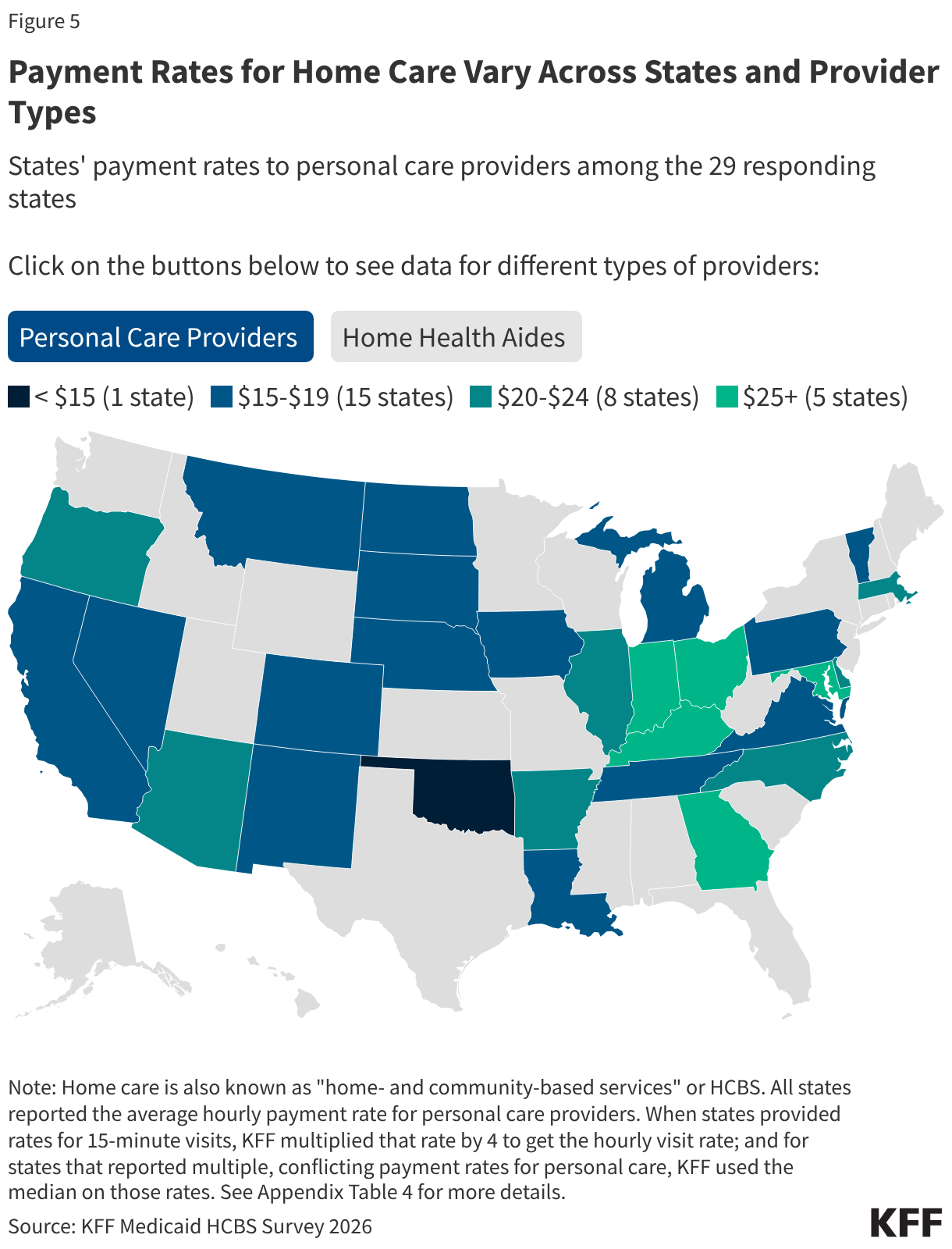
KFF’s survey estimates that median national payment rates for providers stand at $19 per hour for personal care providers, $42 per hour for home health aides, and $64 per hour for registered nurses. When examining agency-level reimbursement, home health agencies command considerably higher rates than personal care agencies. Among reporting states, hourly rates for home health agencies ranged from $20 to $268 (with a median of $51), whereas personal care agency rates ranged from $18 to $51 (with a median of $27). Year-over-year comparisons show that median payment rates for personal care agencies and home health aides ticked up marginally, while rates for registered nurses declined from $70 to $64 per hour.
Furthermore, out of the 40 states utilizing managed care delivery models for home care, 14 reported that fee-for-service payment schedules serve as the mandatory minimum floor that managed care plans must pay providers. One state (Wisconsin) sets a maximum rate, while nine states reported that fee-for-service rates exert no influence on private plan reimbursements.
Broader Implications for the Future of Long-Term Care
The intersection of escalating workforce shortages, tightening state budgets, and rigorous federal oversight creates a complex operational landscape for state Medicaid programs. While the 2024 Access Rule aims to elevate wage transparency and direct a greater share of public dollars into the pockets of frontline workers, it arrives at a time when states are facing severe fiscal constraints and an shrinking labor pool.
Without targeted financial interventions and sustained investments, the erosion of the direct care workforce threatens to destabilize home- and community-based care systems nationwide. Policymakers, advocacy groups, and state health officials face difficult choices in balancing fiscal sustainability with the statutory obligation to guarantee adequate, high-quality care for millions of vulnerable Medicaid enrollees.
Related posts: