Navigating the Infodemic: How Misinformation and Digital Technology Shaped the Global Response to COVID-19

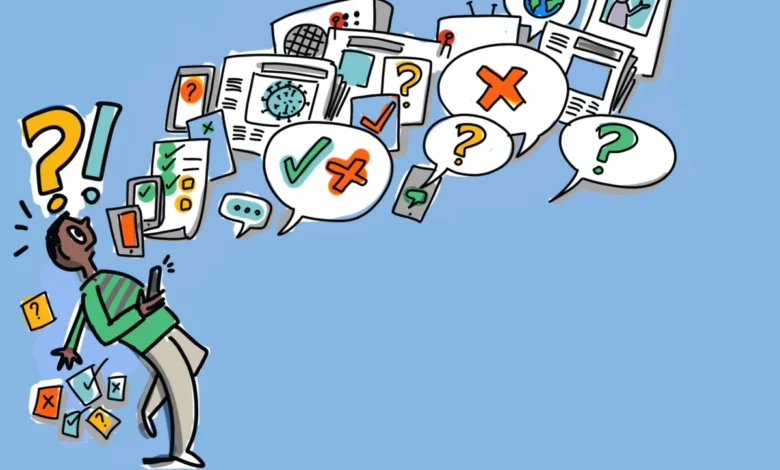
The coronavirus disease (COVID-19) pandemic marked a historic turning point not only in global public health but also in the unprecedented scale at which digital technology and social media were deployed. For the first time in human history, a global health crisis unfolded in real-time across interconnected digital networks. On one hand, these platforms proved indispensable, keeping billions of people safe, informed, productive, and socially connected amidst sweeping lockdowns and physical distancing measures. On the other hand, the very same technological infrastructure relied upon to disseminate vital public health updates simultaneously enabled and amplified a parallel crisis: a massive "infodemic."
This overabundance of information—both online and offline—has continuously undermined the global public health response, jeopardized institutional measures designed to control the virus, and posed severe threats to social cohesion. Defined by public health authorities as an oversupply of information that includes deliberate attempts to disseminate inaccurate facts, the infodemic has actively sought to subvert scientific consensus. By advancing the alternative agendas of various groups and individuals, the spread of mis- and disinformation has transcended digital annoyance to become a matter of life and death.
Understanding the Mechanics and Toll of the Infodemic
The human cost of misinformation during the COVID-19 pandemic is immeasurable. When trust in public institutions and scientific expertise erodes, the consequences manifest directly in public health statistics. Without accurate information, communities have remained hesitant or entirely unwilling to utilize diagnostic testing. Furthermore, immunization campaigns—critical to achieving herd immunity and halting transmission—have faced severe headwinds, struggling to meet coverage targets due to rampant falsehoods regarding vaccine safety, efficacy, and development timelines.
Beyond physical health risks, the infodemic has heavily impacted mental health. The constant exposure to sensationalized, alarming, and contradictory claims has fueled widespread anxiety, panic, and uncertainty. Misinformation has also driven increased stigmatization, targeting specific nationalities, ethnic groups, and healthcare workers who were erroneously blamed for the introduction or spread of the virus. This social fracturing has led to poor adherence to foundational public health measures, such as mask-wearing, hand hygiene, and compliance with quarantine guidelines, thereby reducing their overall effectiveness and extending the duration of the pandemic.
Furthermore, the proliferation of disinformation has severely polarized public debate. Topics intrinsically tied to science and medicine were dragged into political battlegrounds, amplifying hate speech and elevating the risk of social conflict, civil unrest, and human rights violations. The long-term prospects for advancing democracy and social cohesion have been threatened as algorithmic amplification rewards sensationalism over truth, creating isolated echo chambers where fact-checking struggles to penetrate.
A Chronology of the Global Response
Recognizing that the spread of inaccurate information posed an existential threat to pandemic control, international organizations and member states began mobilizing countermeasures early in the crisis.
In April 2020, as the pandemic rapidly accelerated across continents, the United Nations Secretary-General launched the United Nations Communications Response initiative. This sweeping effort was designed to flood the digital and physical spaces with verified, science-based information while actively combating the tide of mis- and disinformation. Building upon this framework, the UN issued a targeted Guidance Note on Addressing and Countering COVID-19 Related Hate Speech on May 11, 2020, drawing attention to the rising tide of xenophobia and targeted abuse.
The international health community codified these concerns at the World Health Assembly in May 2020. During this pivotal gathering, World Health Organization (WHO) Member States overwhelmingly passed Resolution WHA73.1 on the COVID-19 response. This landmark resolution formally recognized that managing the infodemic is not a peripheral concern, but a critical, non-negotiable component of controlling the COVID-19 pandemic.
Resolution WHA73.1 explicitly called upon Member States to provide reliable COVID-19 content to their populations, implement proactive measures to counter false narratives, and leverage digital technologies constructively across all facets of the response. Additionally, the resolution urged international organizations to address mis- and disinformation within the digital sphere, work diligently to prevent harmful cyber activities that could undermine health infrastructure, and robustly support the provision of transparent, science-based data to the global public.
Collaborative Action and Stakeholder Responsibilities
In the years following the initial outbreak, the UN system, academic institutions, and civil society organizations pooled their collective expertise to counter the infodemic. Fact-checking networks expanded globally, tech platforms introduced warning labels on unverified posts, and public health agencies refined their communication strategies to be more accessible and empathetic.
Despite these efforts, the persistence of uncertainty and anxiety demonstrated that stronger, more sustained action was urgently required. Experts emphasized that managing an infodemic cannot be left to health agencies alone; it demands a deeply coordinated, multi-lateral approach involving states, international bodies, civil society, technology companies, and local community leaders.
To achieve sustainable progress in crisis communication, policymakers and public health advocates issued specific, actionable calls to stakeholders across society:
First, Member States were urged to develop and implement comprehensive national action plans specifically designed to manage the infodemic. These plans must prioritize the timely dissemination of accurate, science-based information tailored to all communities, with a particular focus on high-risk and marginalized groups who are often disproportionately targeted by predatory misinformation campaigns. Crucially, these action plans must balance the necessity of curbing harmful falsehoods with an absolute respect for freedom of expression, ensuring that censorship does not replace dialogue.
Second, governments and public institutions were urged to actively engage with and listen to their local communities during the formulation of national strategies. Empowering local leaders, trusted messengers, and grassroots organizations is vital for building community resilience against manipulation. When communities feel heard and respected, they are far more receptive to evidence-based guidance.
Third, a direct appeal was directed toward external stakeholders, including mainstream media organizations and social media platforms—the primary distribution channels for digital disinformation. Researchers, software engineers, and technologists were called upon to design sophisticated, ethical strategies and tools to detect and neutralize infodemic trends. Furthermore, civil society leaders, cultural influencers, and opinion-makers were urged to collaborate closely with the UN system and national governments to amplify verified facts and marginalize harmful falsehoods.
Broader Implications for Future Public Health Crises
The hard lessons learned from the COVID-19 infodemic have fundamentally altered how the global community views information integrity. Public health and national security experts now recognize that information operations and the viral spread of falsehoods constitute a biological security threat as well as an informational one.
As the world looks toward future public health challenges, the infrastructure built to combat the COVID-19 infodemic—ranging from enhanced digital literacy programs to direct partnerships between governments and tech giants—serves as both a foundation and a cautionary tale. Mitigating the next global health crisis will depend not only on the speed of vaccine development and the resilience of medical supply chains, but equally upon humanity’s collective ability to protect the truth, foster institutional trust, and ensure that science remains the guiding light in an increasingly interconnected world.
Related posts: