Beyond Inertia: New Research Reveals How Microplastics Actively Damage Biological Systems Through Chemical Reactivity

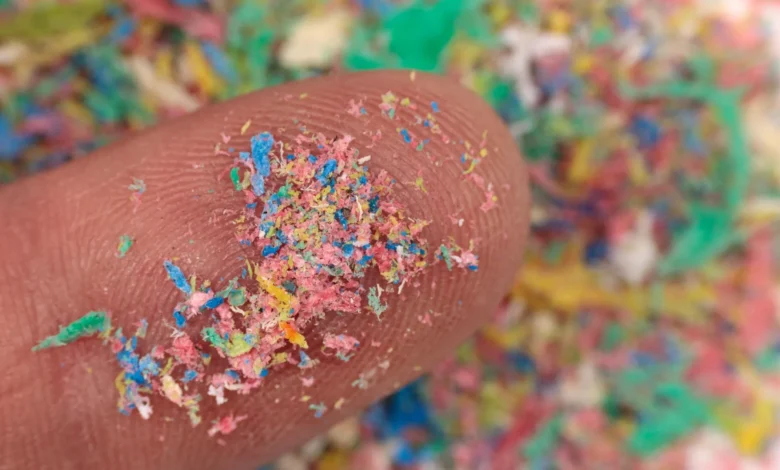
For decades, the global scientific consensus categorized plastic as a chemically inert substance, a characteristic that made it the material of choice for everything from medical devices and food storage to children’s toys. This perceived stability suggested that while plastic pollution was an eyesore and a persistent waste management challenge, the material itself was largely passive when ingested or inhaled. However, groundbreaking research from Columbia University and the University of California, Berkeley, has fundamentally dismantled this assumption. By investigating the behavior of plastics at the micro- and nanoscopic levels, scientists have discovered that these particles are not merely inert debris; rather, they are chemically active agents capable of triggering harmful reactions within the human body.
The study, published in the journal Nature, reveals that as plastic objects fragment into microplastics and the even smaller nanoplastics, their surface area increases exponentially. This massive expansion of surface area facilitates a previously misunderstood interaction with water, leading to the production of high-energy, reactive molecules known as reactive oxygen species (ROS). These radicals are well-documented contributors to cellular damage, inflammation, and the progression of chronic diseases in both animals and humans.
A Chronology of Discovery: From Detection to Mechanism
The journey to this discovery began with advancements in high-precision detection technology. In January 2024, researchers at Columbia University made international headlines when they unveiled a laser-based microscopy technique capable of identifying particles that were previously invisible to standard testing methods. By applying this technology to bottled water, the team discovered that a single liter contained, on average, 240,000 plastic fragments—a figure 10 to 100 times higher than previous estimates.
This revelation served as a catalyst for a broader shift in public health policy. By 2026, the urgency of the situation prompted the United States federal government to launch a $144 million initiative specifically tasked with investigating the toxicological impacts of microplastics on human physiology. Simultaneously, the Environmental Protection Agency (EPA) officially added microplastics to its federal list of contaminants of concern in drinking water, a regulatory milestone that underscored the growing alarm among policymakers.
However, even as the presence of these particles was confirmed, the "missing link" remained: if plastic was chemically stable, how exactly did it cause physiological harm? The current study provides the missing piece of the puzzle, identifying the chemical pathway through which these particles shed their "inert" status.
The Science of Reactive Oxygen Species (ROS)
To understand why microplastics are dangerous, one must look at the chemistry of the interface between plastic and water. Most common plastics—such as polyethylene and polypropylene—are hydrophobic, meaning they naturally repel water. When these materials fragment into the nanoscale, the boundary between the plastic surface and the surrounding water becomes an environment where standard chemical rules are suspended.
According to the research team, led by Columbia Professor Wei Min and postdoctoral researcher Naixin Qian, the interaction between the water-repellent plastic and the aqueous environment of the human body creates a catalyst for electron transfer. In this specific zone, water molecules are forced into a state of chemical activity. Collaborators at Professor Teresa Head-Gordon’s laboratory at UC Berkeley utilized sophisticated computer simulations to model this process, confirming that negatively charged hydroxide ions concentrate in the water layers surrounding the plastic.
In this high-energy environment, these ions readily lose electrons, resulting in the formation of hydroxyl radicals—a highly reactive form of ROS. Because these particles are minute enough to cross biological barriers, such as the blood-brain barrier or the gut lining, they can generate these damaging molecules directly inside living tissues. ROS are notorious in medical science for their ability to damage DNA, proteins, and cell membranes, providing a plausible mechanism for the associations seen in clinical studies linking microplastic exposure to heart attacks, strokes, and neurodegenerative conditions like dementia.
Implications for Human Health and Chronic Disease
The medical community has been observing an increase in unexplained chronic health conditions that correlate with the global rise in plastic consumption. Recent studies in high-impact journals, including the New England Journal of Medicine and Nature Medicine, have highlighted statistical associations between microplastic accumulation in the body and severe pathologies.
The mechanism identified by the Columbia-Berkeley team offers a scientific foundation for these observations. When microplastics circulate in the bloodstream or lodge themselves in organ tissue, they do not remain static. Instead, they act as continuous, internal generators of oxidative stress. This suggests that the risk posed by plastics is not just a function of the volume of material present, but of the surface-area-driven chemical reactions that occur once those particles reach the nanoscale.
While the researchers emphasize that this study does not definitively prove that this specific mechanism causes a particular disease in a specific patient, it provides the most compelling evidence to date that microplastics are an active, rather than passive, health threat.
Environmental and Regulatory Perspectives
The implications of this research extend far beyond the human body. Because microplastics are ubiquitous in our waterways, the same chemical reactions identified in the human bloodstream are likely occurring in aquatic ecosystems. Industrial discharge, wastewater treatment plant outflows, and even the mechanical agitation of plastics in home appliances—like washing machines—contribute to the influx of these reactive particles into the environment.
Beizhan Yan of Columbia University’s Lamont-Doherty Earth Observatory, a co-author of the study, notes that everyday human behaviors are significant contributors to the problem. "Various uses and processes in our daily lives can generate microplastics, including microwave heating and sunlight exposure of bottled water during storage," Yan stated. "This foundational work provides a potential pathway for understanding their health impacts in both human and environmental contexts."
From a regulatory standpoint, this research changes the calculus for plastic safety. Historically, plastics were tested for toxicity based on their bulk chemical properties. The new findings suggest that testing protocols must be updated to account for the "nanosurface chemistry" of fragmented plastics. This could necessitate new standards for food-grade packaging, which currently may be safe in its pristine form but could become hazardous as it degrades over time.
The Path Toward Safer Engineering
Perhaps the most promising outcome of this discovery is the potential for industrial redesign. Professor Teresa Head-Gordon suggests that by identifying the specific chemical characteristics that make certain plastics "reactive" when they contact water, scientists might be able to engineer new polymers that are inherently less capable of facilitating these harmful electron-transfer reactions.
"Our fundamental work shows that the most hydrophobic microplastics interacting with water can drive chemical reactivity," Head-Gordon said. "This could ultimately lead to new engineering solutions by redesigning the chemistry of these commodity plastics to reduce the toxic outcomes on health and the environment."
As the scientific community moves forward, the focus will likely shift toward mitigating the fragmentation of plastics and developing advanced filtration technologies to remove nanoplastics from water supplies. The realization that water is an "active player" rather than a passive bystander in the life cycle of plastic pollution marks a paradigm shift in environmental science. The challenge now lies in translating this fundamental chemical discovery into tangible policy changes and material innovations that can reduce the burden of these invisible, reactive threats to global health.
As regulatory bodies continue to digest these findings, the call for more rigorous, long-term longitudinal studies on the health effects of microplastic exposure is expected to grow. For now, the research serves as a stark reminder that the materials we use daily are not as inert as they appear, and their impact on our biology may be far more complex and pervasive than previously imagined.