Alanis Morissette Opens Up About the Harrowing Reality of Postpartum Depression and Intrusive Thoughts

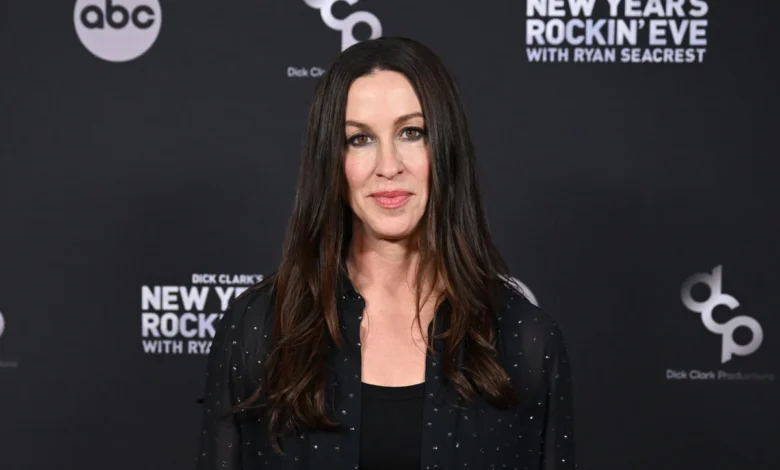
Alanis Morissette, the iconic singer-songwriter whose career has spanned over three decades, recently provided a candid and deeply personal account of her journey through postpartum depression (PPD). In a wide-ranging conversation on the Call Her Daddy podcast, the 52-year-old artist detailed the psychological toll that accompanied the births of her three children—Ever, Onyx, and Winter—whom she shares with her husband, rapper Mario “Souleye” Treadway. Her testimony serves as a significant contribution to the growing public discourse surrounding maternal mental health, shedding light on the often-stigmatized intersection of physiological trauma and the demands of modern motherhood.
The Clinical Reality of Perinatal Intrusive Thoughts
While Morissette has long been public about her struggles with clinical depression, she noted that the experience of PPD introduced a new, terrifying layer to her mental health challenges. Central to this were "perinatal intrusive thoughts," a phenomenon characterized by involuntary, distressing images or impulses. Morissette described these thoughts as "harrowing, terrible, and ceaseless," noting that her mind frequently fixated on themes of death and catastrophe.
The International OCD Foundation reports that a significant majority of new mothers—between 70% and 100%—experience some form of intrusive thoughts during the perinatal period. Despite the high prevalence, these symptoms are frequently misunderstood. It is vital to distinguish these thoughts from postpartum psychosis. While the latter involves a break from reality and requires immediate psychiatric intervention, intrusive thoughts are often a symptom of heightened anxiety or OCD-like manifestations. Mothers experiencing these thoughts are typically horrified by them, which is a key clinical indicator that they are unlikely to act upon them.
Chronology of a Public Struggle
Morissette’s experience is not isolated to her private life; it has occurred in tandem with a demanding professional career. Throughout her journey into motherhood, she continued to tour, manage complex business operations, and lead large teams. This high-pressure environment served to exacerbate her symptoms. She acknowledged that during certain tours, she felt as though she was "dipping into psychosis," characterized by an overwhelming combination of rage, anxiety, and deep-seated depression.
The juxtaposition of her professional responsibilities—leading a business, touring globally, and managing finances—against her internal instability created a unique dissonance. She described feeling "out of control" while simultaneously being expected to project strength and stability to her staff and audience. This tension highlights a broader societal issue: the pressure on women, particularly those in high-profile careers, to "bounce back" immediately following childbirth, often ignoring the physiological and psychological reality of the postpartum period.
Societal Expectations and the Myth of the "Invisible Mother"
One of the most poignant themes in Morissette’s discussion was the sudden shift in support systems following birth. She observed that while pregnancy is often marked by a high degree of medical and social monitoring, that attention rapidly dissipates once the child is born. "The minute the mother gives birth, it’s like we get invisible again," Morissette remarked.
This observation aligns with findings from public health researchers who argue that the "fourth trimester"—the three months following birth—is a critical period that is often neglected in standard healthcare protocols. Women are frequently expected to prioritize immediate weight loss and a return to pre-pregnancy productivity, rather than focusing on recovery. Morissette noted that this lack of support, coupled with the pressure to remain functional, led to a deep-seated fear that she was losing the trust of those around her. She felt that others viewed her as someone who might "fly off the handle," a perception that only deepened her sense of isolation.
Supporting Data and Public Health Implications
The statistics surrounding postpartum mental health are stark. According to the Centers for Disease Control and Prevention (CDC), approximately one in eight women in the United States experience symptoms of postpartum depression. When including all forms of perinatal mood and anxiety disorders (PMADs), the number is estimated to be significantly higher.

The economic and social implications are equally significant. Untreated PPD can lead to long-term health consequences for both the mother and the infant, potentially affecting early childhood development and maternal employment stability. Experts in maternal health emphasize that early screening and community-based support systems are essential for mitigating these risks. Morissette’s decision to speak openly about her experience has served as an unintended support network; she noted that following her public disclosures, she received an influx of correspondence from families facing similar, often unspoken, challenges.
The Role of Celebrity Advocacy in Normalizing Mental Health
Morissette’s willingness to discuss her experiences while she was still navigating them has been instrumental in reducing the stigma associated with PPD. By refusing to wait for a "neatly packaged" recovery story, she has provided a platform for others to recognize their own symptoms.
Public health advocates often point to "celebrity advocacy" as a powerful tool in health communication. When high-profile figures share their vulnerabilities, it provides a sense of validation for everyday individuals who may feel ashamed or isolated by their own mental health struggles. The reaction to Morissette’s appearance on Call Her Daddy underscores the hunger for authentic, unfiltered conversations about the complexities of parenting.
Analysis of the "Performance of Motherhood"
A critical analysis of Morissette’s experience suggests that the "performance" of motherhood is a significant stressor. The societal expectation that mothers must appear effortlessly capable contributes to the suppression of negative emotions. When a mother experiences rage, intrusive thoughts, or despair, the gap between her internal reality and the expected external image can become a source of profound shame.
Morissette’s narrative challenges this performance. By admitting to "rage, anxiety, and depression," she disrupts the trope of the blissful, self-sacrificing mother. This honesty is not merely a personal release; it is a systemic critique of how we value—or fail to value—the labor of birth and the subsequent period of recovery.
Looking Toward Future Support
As the conversation around postpartum mental health continues to evolve, the focus is shifting toward integrated care. This includes:
- Universal Screening: Standardizing PPD screenings at all postpartum medical appointments.
- Extended Postpartum Care: Advocating for medical coverage that extends beyond the traditional six-week checkup to cover the full first year of the child’s life.
- Community Normalization: Creating spaces where parents can discuss the "lesser-known" symptoms of PPD, such as intrusive thoughts, without the fear of judgment or the threat of child welfare intervention.
Alanis Morissette’s journey, while deeply personal, serves as a mirror for a broader societal crisis. Her ability to articulate the terrifying, chaotic, and ultimately survivable nature of PPD provides a roadmap for those who are currently struggling. Her story confirms that while the physical experience of childbirth is transformative, the mental journey that follows is equally profound—and one that should not be navigated in silence.
As she moves forward, Morissette’s focus remains on transparency. By treating her own mental health as a subject of objective, public inquiry rather than a source of private shame, she has contributed to a necessary shift in how we understand the boundaries of the maternal experience. The relief she expresses at feeling "like herself again" serves as a message of hope to the countless women who are currently in the thick of their own struggles, waiting for the fog to lift. Her openness is a reminder that the path through postpartum depression is not a straight line, but a complex, ongoing process of self-reclamation and communal support.