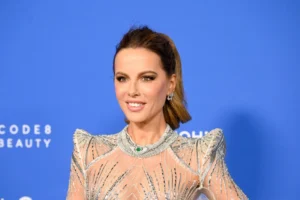
Kate Beckinsale Sparks Concern After Wiping Instagram Account Following Cryptic Posts

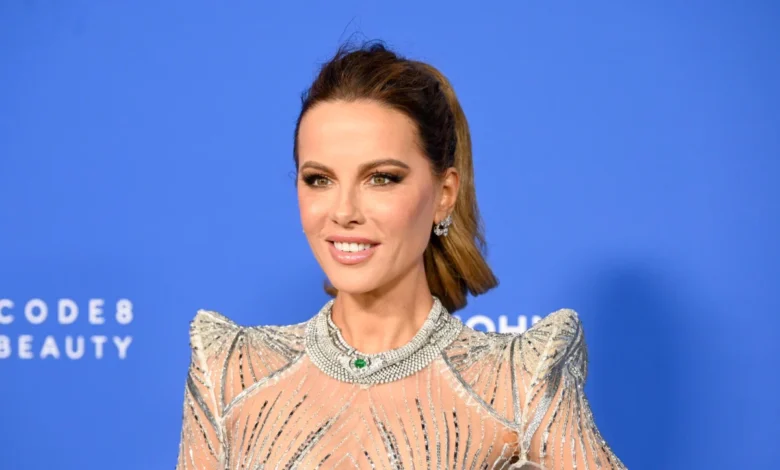
The British actress Kate Beckinsale has once again prompted widespread public concern after deleting the entirety of her Instagram presence, following a series of cryptic messages that signaled significant personal distress. The move, which occurred this past Sunday, saw the actress initially purge her long-standing photo archive, leaving behind only a stark black image emblazoned with the word "bye." The post, which had its comment section disabled shortly after being published, was soon followed by a post to her Instagram Stories featuring an image of a rainbow alongside the haunting declaration: "Congratulations. You won. I give up." By Monday morning, both images had been removed, and the account displayed zero content.
The most notable development following the account wipe was a change to her profile biography, which now features a singular link to a 2020 BBC News report concerning the suicide of television presenter Caroline Flack. This choice of reference has been interpreted by many observers as a commentary on the corrosive nature of public scrutiny and the intense pressures faced by high-profile figures in the digital age.
A Chronology of Recent Public Turmoil
This most recent incident is not an isolated event but rather the latest in a series of digital withdrawals that highlight the actress’s ongoing struggle with the intersection of public visibility and personal bereavement. The timeline of these events suggests a pattern of retreating from social media whenever the burden of external commentary becomes unsustainable.
In August 2024, Beckinsale engaged in a similar total purge of her social media presence. That decision followed months of sustained, often hostile, commentary regarding her physical appearance. The criticism began in earnest following the back-to-back deaths of her stepfather, director Roy Battersby, and her mother, the actress Judy Loe. The loss of both parents in a relatively short window of time had left the actress visibly affected, leading to weight loss that became a focal point for tabloid speculation and social media commentary.
At the time, Beckinsale attempted to address the speculation directly, noting the absurdity of having to explain the physiological realities of profound grief to strangers. She cited both the natural, often involuntary, appetite loss associated with severe bereavement and her struggle with Mast Cell Activation Syndrome (MCAS). MCAS is a complex, chronic condition characterized by an overactive immune system that triggers repeated, systemic allergic-type reactions, which can be further exacerbated by extreme stress.
In a statement posted prior to her August deletion, she addressed her critics: "You take a break from Instagram for several months following the death of your mother, delete all of your posts, and explain in some considerable detail about why you may have lost weight, including the fact that weight loss is one of the very first physical signs of bereavement… I think people might be broken."
The Physiological and Psychological Toll of Grief
The discourse surrounding Beckinsale’s recent posts has reignited broader conversations regarding the physical toll of grief. Scientific literature confirms that bereavement is not merely an emotional state but a physiological event. The body’s stress response system—specifically the hypothalamic-pituitary-adrenal (HPA) axis—can become dysregulated during prolonged periods of sorrow. This often manifests in gastrointestinal distress, suppressed appetite, insomnia, and weakened immune function.
In a poignant video uploaded in December 2025, Beckinsale detailed the cumulative weight of her losses, describing a period of intense personal suffering. "2025 was a really, really hard year," she stated. "It was also the last year that my incredible mum was on this planet. So I feel really torn about letting go of it as well." She expanded on the generational impact of the trauma she has faced, noting, "I watched my 31-year-old father die of a huge heart attack, and then I watched my stepfather die, and I watched my mother degenerate and die. Such an incredible amount of suffering, and what I will say, it doesn’t make you feel very hungry."
Understanding Non-Military PTSD
Beyond the immediate symptoms of grief, Beckinsale has recently begun to advocate for a deeper understanding of non-military Post-Traumatic Stress Disorder (PTSD). While the public is often familiar with the manifestations of PTSD in combat veterans, the diagnosis of non-military PTSD—often stemming from sudden loss, childhood trauma, or prolonged emotional shock—is frequently misunderstood or dismissed by the general public.

In a now-deleted post from earlier this month, the actress described the exhausting "fight-or-flight" state that characterizes the condition. "I think what people will find incredibly hard to understand about non-military PTSD is that those people have seen or experienced levels of horror, terror, violence that they don’t just dream about incessantly, so there’s no rest," she wrote. "They see it when they blink. Every time they close their eyes for a second and those people aren’t just recognized as heroes."
Medical experts emphasize that non-military PTSD often involves "hypervigilance," where the individual’s nervous system remains constantly primed for danger. When a public figure, who is already under the "microscope" of global media, is also navigating this level of neurological disruption, the boundary between private coping and public performance becomes nearly impossible to maintain.
The Broader Implications for Celebrity and Social Media
The decision to link to the tragic death of Caroline Flack carries significant weight in the context of celebrity discourse. Flack’s death prompted a national conversation in the United Kingdom regarding the treatment of public figures by the media and the public. By drawing attention to this specific case, Beckinsale appears to be signaling a critique of the "parasocial" nature of social media, where followers feel entitled to pass judgment on the lived experiences of those they view through a digital lens.
There is a growing body of academic research suggesting that social media platforms are inherently ill-equipped to handle the realities of human grief. When individuals, particularly those with a large following, attempt to process trauma in public, the feedback loop of commentary—ranging from performative empathy to vitriolic criticism—can exacerbate the underlying trauma.
For Beckinsale, the "blacking out" of her account serves as a digital boundary. In an era where "digital presence" is often viewed as a requirement for career maintenance, her refusal to engage—even at the potential cost of her online platform—highlights a shift in how high-profile individuals are beginning to prioritize mental health over public engagement.
The Intersection of Health and Public Image
The medical context of Beckinsale’s health challenges, particularly MCAS, adds another layer to the public’s misunderstanding. Because MCAS is often invisible to the untrained eye, critics frequently misattribute her physical changes to aesthetic choices or "lifestyle" decisions. When a celebrity addresses these issues, the information is often lost in the noise of gossip culture.
The medical community maintains that for patients with MCAS, managing stress is not just a lifestyle preference but a clinical necessity. Severe emotional stress can trigger mast cell degranulation, leading to physical reactions that can be debilitating. By consistently withdrawing from the platform that causes her stress, Beckinsale is arguably engaging in a form of self-preservation that is often ignored by the public in favor of more sensationalized narratives.
Conclusion and Future Outlook
As of the current writing, representatives for Beckinsale have not issued a formal statement regarding her social media activity. The ambiguity of her "I give up" message has left her audience in a state of uncertainty, highlighting the precarious nature of celebrity mental health in the digital age.
The incident serves as a stark reminder of the limitations of social media as a medium for authentic human connection. While platforms like Instagram provide a bridge between fans and stars, they also act as a conduit for systemic harassment that can turn a platform for self-expression into a source of profound psychological harm. As Beckinsale continues to navigate her recovery and grief, the silence on her profile may be the most significant message she has delivered to date: that for some, the healthiest response to an intrusive world is to simply step away from the light.
Related posts: