Exploring the Underwater Mysteries and Ecological Realities of the Bermuda Triangle

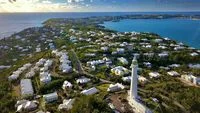
The Bermuda Triangle, a region of the North Atlantic Ocean bounded by Miami, Bermuda, and Puerto Rico, has long served as a lightning rod for nautical folklore and speculation. However, beyond the sensationalist myths lies a complex marine environment characterized by treacherous coral reefs and a dense concentration of maritime history. Recently, travel writer and explorer Robin Esrock embarked on a journey to the archipelago of Bermuda, peeling back the layers of mystery to reveal a landscape where history, science, and environmental stewardship intersect beneath the waves.
A Graveyard of Ships: The Maritime History of Bermuda
Bermuda’s geography is as perilous as it is beautiful. Surrounded by an expansive crescent of coral reefs that extend several miles offshore, the archipelago has acted as a natural trap for seafaring vessels for centuries. According to records from the Bermuda Underwater Exploration Institute (BUEI), there are over 300 documented shipwrecks scattered across the island’s territorial waters. These vessels range from 17th-century Spanish galleons to mid-20th-century steel-hulled cargo ships.
These wrecks are not merely relics of human error; they have evolved into vital artificial reefs. Over decades, the iron skeletons of these ships have become colonized by sponges, corals, and diverse marine life, creating biological hotspots that support the local Atlantic ecosystem. The preservation of these sites offers a rare window into the history of global trade and naval navigation, transforming the “Triangle’s” reputation from a zone of disappearance into a living museum.
Decoding the Compass Mystery: Science vs. Folklore
One of the most persistent myths surrounding the Bermuda Triangle involves the alleged failure of navigational instruments, specifically the erratic behavior of compasses. For decades, theorists have suggested that magnetic anomalies or paranormal forces were responsible for ship and aircraft disappearances.
However, experts like those at the Bermuda Underwater Exploration Institute provide a more grounded, scientific explanation. Horsfield, a representative of the institute, notes that while the behavior of old-fashioned compasses can indeed be startling, it is rooted in physics rather than the supernatural.
"When we place compasses from various periods on a deck, we observe that the older instruments—which lack the modern dampening and magnetic shielding found in contemporary equipment—can begin to rotate in different directions," Horsfield explains. This phenomenon occurs when the geographic North Pole and the magnetic North Pole align under specific atmospheric and electromagnetic conditions. In these instances, the compass needle, sensitive to the Earth’s magnetic field, struggles to maintain a steady orientation. While this can be disorienting for a navigator relying on antiquated tools, it is a well-documented physical interaction that does not reflect a "curse" or an otherworldly force.
The Case of the Pelinaion: A Window into 1940
A focal point of Esrock’s expedition was the wreck of the Pelinaion, a 117-meter Greek-flagged cargo ship that met its end on January 16, 1940. The vessel, heavily laden with iron ore, was en route from West Africa to Baltimore, Maryland, when it struck the razor-sharp reefs near St. David’s Head.
The Pelinaion serves as a poignant example of the hazards faced by mariners in the pre-GPS era. Today, the ship lies at a depth of 20 to 70 feet, making it accessible to experienced divers. The wreck remains a significant site for marine archeology; the massive steam boiler, the primary propulsion engine, and a spare propeller are still visible, though they are now heavily encrusted with decades of marine growth. The presence of such a large vessel so close to the shore serves as a stark reminder of the limitations of early 20th-century navigation and the unforgiving nature of the Atlantic currents.
Beyond the Myth: Environmental Challenges
While the media often focuses on the "mystery" of the Bermuda Triangle, local experts and conservationists are grappling with more tangible, present-day threats. The primary concern for Bermuda’s marine environment is not the disappearance of ships, but the encroachment of invasive species.
The most notable threat is the Pterois volitans, or lionfish. Native to the Indo-Pacific, this invasive species was introduced to the Atlantic, likely through the aquarium trade. Without natural predators in the Atlantic to keep their numbers in check, lionfish have proliferated, consuming native juvenile fish and disrupting the delicate balance of the reef ecosystem.
Piers and local dive guides have shifted their focus toward ecological preservation, frequently engaging in culling programs to manage the lionfish population. This effort is critical, as the health of the coral reefs is essential not only for biodiversity but for the physical protection of the islands from storm surges. The irony, as noted by local guides during Esrock’s expedition, is that while the public remains captivated by ghost stories, the real drama unfolding beneath the surface is a critical fight for ecological survival.
Chronology of Maritime Incidents in the Region
- 1600s–1800s: The age of exploration saw a significant increase in shipwrecks as European powers navigated the Atlantic; many ships were lost to the treacherous, uncharted reefs surrounding Bermuda.
- January 16, 1940: The Greek cargo ship Pelinaion strikes the reef at St. David’s Head, becoming one of the most iconic wrecks for modern divers in the region.
- 1945: The disappearance of Flight 19, a group of five U.S. Navy bombers, cemented the "Bermuda Triangle" in popular culture, despite official investigations citing pilot error and fuel exhaustion.
- 2000s–Present: Scientific institutions like the BUEI continue to conduct educational programs and underwater research, focusing on environmental conservation and the mapping of historical shipwrecks.
Implications for Future Exploration
The narrative of the Bermuda Triangle is undergoing a transition. As technology improves, the veil of mystery is being replaced by empirical data. The use of side-scan sonar, remote-operated vehicles (ROVs), and advanced underwater mapping has allowed researchers to demystify the seafloor.
The implications of this are twofold. First, it honors the history of those who were lost at sea by providing accurate accounts of their final moments, moving away from speculation and toward historical truth. Second, it highlights the vulnerability of our oceans. By treating these sites as protected heritage zones and biological habitats, Bermuda is setting a standard for how other maritime regions can balance tourism, history, and environmental science.
Conclusion: A Shift in Perspective
Robin Esrock’s exploration of Bermuda’s waters underscores a fundamental truth: the ocean remains one of the least understood environments on Earth, but its secrets are written in biology and physics, not in the supernatural. When interviewed about the "mystical" nature of the area, local dive guides—who spend more time in the "Triangle" than almost anyone else—consistently report no evidence of the paranormal.
Instead, their experience is one of profound respect for the sea. The real mystery of the Bermuda Triangle is not why ships vanish into thin air, but rather how the ocean manages to reclaim the artifacts of human industry and transform them into thriving new habitats. As the world moves forward, the focus must remain on the preservation of these sites and the ongoing effort to protect the Atlantic’s fragile ecosystems from invasive species and climate change. The "Bermuda Triangle" is, in reality, a testament to human fallibility and the relentless, restorative power of nature.