Rewriting the Rules of Biology: Inside Chaska Walton’s Quest to Conquer Alzheimer’s Disease

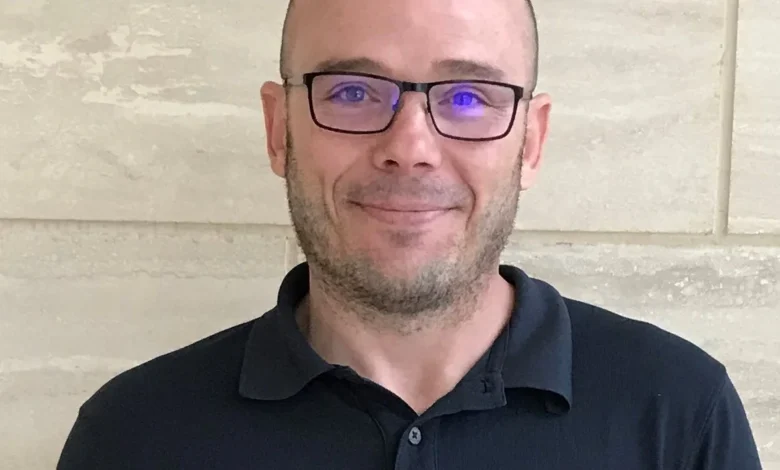
The pursuit of longevity and the eradication of age-related neurodegenerative diseases have entered a bold new frontier, propelled by visionary science and unprecedented financial backing. Chaska Walton, a pioneering molecular bioscience researcher at the renowned Buck Institute for Research on Aging and a key member of Julie Andersen’s laboratory, has been awarded a prestigious $2.4 million NIH Transformative Research Award. This elite distinction places Walton among an extremely select group of scientists nationwide—only nine such grants were awarded by the National Institutes of Health in this competitive cycle. The funding will directly support Walton’s groundbreaking work in developing smart, programmable cell delivery systems designed to simultaneously combat the multiple pathologies driving Alzheimer’s disease.
This milestone represents a significant leap forward in the treatment of complex cognitive disorders. By bridging the gap between neuroscience, synthetic biology, and translational medicine, Walton is challenging the foundational paradigms of modern pharmacology. Rather than accepting neurodegeneration as an inevitable consequence of human aging, Walton’s research operates on the radical premise that biological systems are fundamentally programmable, opening up entirely new avenues for therapeutic intervention.
From Fundamental Neuroscience to Synthetic Biology: A Global Scientific Journey
Chaska Walton’s trajectory through the international scientific community reflects a lifelong fascination with the complexities of the human brain. Walton’s academic journey began in Spain, where they earned a degree in psychology and neuroscience from the Autonomous University of Barcelona. Driven by a deep-seated curiosity about neural mechanics, Walton pursued doctoral research at the esteemed Cajal Institute in Madrid, operating under the auspices of the Spanish National Research Council (CSIC) and the Autonomous University of Madrid.
During doctoral studies at the Cajal Institute, Walton made waves in the neuroscientific community by challenging long-standing biological dogma. Walton demonstrated that mature, fully differentiated neurons can re-enter the cell cycle—a discovery heavily inspired by the historical philosophy of Santiago Ramón y Cajal, the father of modern neuroscience, who famously theorized that the science of the future would eventually overturn even his most rigid decrees.
Carrying this spirit of biological reimagining to California, Walton joined the Buck Institute for Research on Aging, an institution globally recognized for its focus on extending healthspan and combating age-related pathologies. At the Buck, Walton’s research focus evolved from probing the basic mechanisms of neuronal vulnerability to engineering living cellular therapeutics. Today, Walton’s lab is pioneering synthetic immune-cell therapies, including programmable CAR-Treg (Chimeric Antigen Receptor Regulatory T cell) platforms and smart cell delivery systems tailored specifically to dismantle the complex architecture of Alzheimer’s disease.
The Philosophy of Editable Code: Rethinking Biological Limits
At the heart of Walton’s scientific philosophy is a conviction that human biology is fundamentally malleable. In an expansive discussion detailing the conceptual framework behind their work, Walton draws a parallel between technological evolution and the future of medicine.
"We are, in essence, editable code," Walton explains. "Some argue that we cannot edit ourselves, but that misses the point. It is not about whether we can do something today. In the Stone Age, humans could not fly, yet flight was never forbidden by physics. The limitation was technological, not fundamental. Likewise, biology does not forbid rewriting ourselves."
This perspective rejects the notion that biological constraints are permanent walls, viewing them instead as temporary technological hurdles. Walton envisions a future where medicine routinely designs synthetic proteins that natural evolution could never produce, engineering entirely new cell types with novel functions, and duplicating or replacing failing organs. This limitless philosophy forms the intellectual bedrock of the $2.4 million NIH-funded project.
The Multi-Pathology Crisis: Why Modern Medicine Fails Alzheimer’s Patients
To understand the urgency and revolutionary nature of Walton’s research, one must examine the profound shortcomings of contemporary pharmaceutical approaches to Alzheimer’s disease. Despite decades of intensive research and billions of dollars in clinical trials, effective cures for complex neurodegenerative disorders remain elusive. Walton argues that this failure is rooted in a fundamental flaw in how modern medicine diagnoses and treats systemic diseases.
Walton illustrates this systemic failure with an automotive analogy. Imagine a car experiencing a cascading mechanical failure. The vehicle begins with a flat tire. Because the driver continues to operate the car, the deflated tire causes the metal wheel to grind against the asphalt. This friction damages the wheel, which in turn strains the underlying axle. Eventually, the axle snaps, the vehicle grinds violently against the road, leaks vital fluids, and ultimately destroys the engine.
"The approach of modern medicine is to fix one of those things only," Walton notes. "We either fix the flat tire, or the wheel, or the shaft, or the engine. We never fix all of them at the same time. The crazy thing is that we expect the car to work by fixing just one thing."
In the context of Alzheimer’s disease, this fragmented approach is starkly evident. Alzheimer’s is not a singular, isolated malfunction; it is a multifactorial pathology characterized by the accumulation of toxic amyloid-beta and tau aggregates, chronic neuroinflammation, hyperactive and damaging microglia, and progressive synapse dysfunction. Historically, clinical trials have focused on isolating and treating just one of these hallmarks—such as clearing amyloid plaques—while ignoring concurrent inflammatory and metabolic breakdowns.
"We have zero clinical trials trying to fix all of these pathological hallmarks of Alzheimer’s at the same time," Walton emphasizes. "Still, we expect Alzheimer’s to be cured very much like we expect the broken engine in the car to work by fixing the flat tire. This is not rhetoric. This is a fact. This is how modern medicine thinks."
Cellular Nanobots: Engineering Living Micro-Physicians
To solve the multi-pathology dilemma, Walton’s lab is turning to science fiction-inspired concepts and translating them into tangible biological reality. While science fiction frequently depicts mechanical nanobots patrolling the human bloodstream to repair damaged tissue, Walton and the research team at the Buck Institute are deploying a biological equivalent: engineered immune cells.
Rather than building microscopic robots out of silicon and metal, the research team is reprogramming living immune cells to act as intelligent, autonomous micro-physicians. These engineered cells are designed with dual capabilities: they can independently detect the specific, multifaceted biochemical signatures of Alzheimer’s pathology in real time, and in response, synthesize and deliver precise therapeutic payloads directly to the site of damage.
Furthermore, these smart delivery systems are engineered with regulatory feedback loops. Much like the body’s natural immune response, these therapeutic cells are programmed to cease drug delivery and stand down once the pathological stress is mitigated, preventing off-target toxicity and chronic cellular exhaustion.
Implications for the Future of Translational Medicine
The receipt of the NIH Transformative Research Award underscores the broader scientific community’s growing recognition that incremental pharmacological adjustments will not suffice to conquer complex neurodegenerative diseases. By shifting the paradigm from static drug delivery to dynamic, living therapeutics, Walton’s work holds profound implications for translational medicine.
If successful, this platform technology will not only transform the therapeutic landscape for Alzheimer’s disease but will also establish a modular template for treating other historically intractable, multi-pathology conditions, including Parkinson’s disease, amyotrophic lateral sclerosis (ALS), and various forms of systemic organ degeneration. Diseases that have baffled clinicians for generations may soon transition from incurable terminal diagnoses to manageable, correctable conditions.
As Chaska Walton continues this groundbreaking work within Julie Andersen’s laboratory at the Buck Institute, the scientific community watches with high anticipation. By dismantling the artificial boundaries between disciplines and embracing the limitless potential of editable biological code, Walton is forging a new path toward a healthier, more resilient human lifespan.