The Sweet Smell of Success: How Chocolate Aromas May Unlock Enhanced Athletic Performance During Resistance Training

A tough leg day may have an unexpectedly simple boost: the scent of chocolate. Emerging research suggests that our olfactory system—often overlooked in the context of physical training—may hold the key to unlocking hidden reservoirs of endurance and strength. A study recently published in the journal Frontiers in Physiology indicates that exposure to chocolate aromas before and during resistance exercise can help athletes complete a significantly higher number of repetitions without increasing their subjective perception of physical exertion.
The investigation, led by Dr. Mohamed Nashrudin bin Naharudin, an assistant professor at the Faculty of Sports and Exercise Science at the University of Malaya, marks a novel intersection between sensory biology and sports performance. By testing the impact of dark and milk chocolate scents on a cohort of healthy, moderately trained men, the research team has opened a new dialogue on how anticipatory cues can alter human physiology during high-intensity activity.
The Chronology of the Study
The study was conducted under strictly controlled conditions to isolate the effects of the olfactory stimuli. The researchers recruited 23 healthy men in their early to mid-20s, all of whom engaged in regular resistance training. To ensure that baseline metabolic states were consistent, participants were required to fast for a minimum of 10 hours prior to arriving at the laboratory.
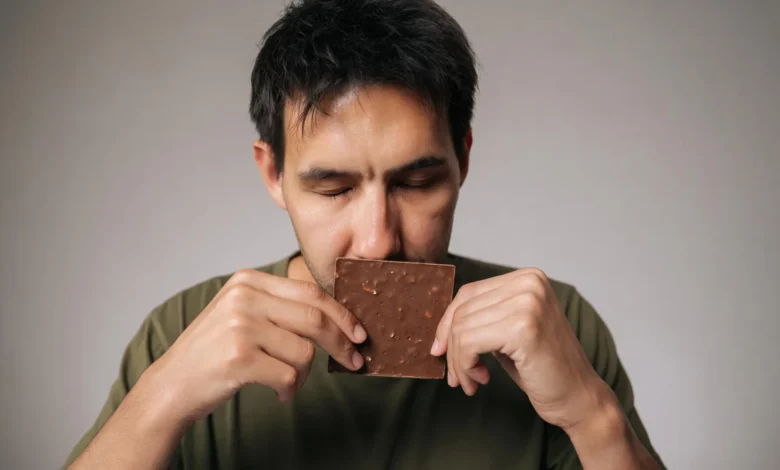
The experimental process was structured into three distinct conditions. Participants were exposed to either the aroma of liquified dark chocolate (90% cocoa), liquified milk chocolate (60% cocoa), or a neutral control sample of water. The protocol involved a series of leg extensions—a classic compound movement that isolates the quadriceps and is frequently used in sports science to measure muscular output and fatigue.
Throughout the study, the researchers employed a rigorous measurement schedule. Before the first set, participants provided subjective ratings regarding their hunger, satiety, and desire to eat. As the resistance training progressed, researchers tracked the volume of repetitions completed and monitored the subjects’ self-reported feelings of hunger after each 30-second scent exposure interval. This controlled sequence allowed the team to map the relationship between specific aromas, appetite signaling, and physical output in real-time.
Decoding the Olfactory-Metabolic Response
The data revealed a striking divergence in how different chocolate profiles influenced the subjects. The 90% dark chocolate scent demonstrated a clear, measurable effect on appetite regulation. Participants exposed to this aroma reported lower hunger levels, a reduced desire to consume food, and a heightened sense of fullness before beginning their workout.
In contrast, the 60% milk chocolate scent triggered a different psychological mechanism. While it did not dampen appetite in the same manner as the darker variety, participants consistently rated the milk chocolate aroma as more pleasant. Despite this difference in appetite suppression, both scents resulted in improved physical performance compared to the control group.
The quantitative results were compelling: subjects exposed to the dark chocolate scent added an average of 18 additional repetitions to their leg extensions, while those exposed to the milk chocolate scent added approximately nine repetitions compared to the water-only control group.
"Seeing a substantial increase in repetitions without the athletes feeling like they were exerting themselves any harder is a fascinating psychobiological outcome," noted Dr. Nashrudin bin Naharudin. The finding that these performance gains occurred without an increase in perceived exertion is particularly significant, as it suggests the brain can be primed to overcome physical barriers through sensory cues that bypass the traditional fatigue-signaling pathways.
The Neuroscience of Learned Associations
The research team posits that the results are rooted in the brain’s deep-seated learned associations with food. From early childhood, humans are conditioned to link specific smells with the reward of eating. Over years of life experience, these sensory inputs become powerful signals that prepare the body for the ingestion of nutrients.
This process, known as cephalic phase response, involves the body anticipating digestion even before food is consumed. The researchers believe that the dark chocolate scent serves as a signal for a nutrient-dense, satiating substance, effectively "tricking" the brain into an anticipatory state of fullness. By signaling to the endocrine and nervous systems that sustenance is imminent, the body may be more willing to expend energy, as it anticipates a post-workout recovery phase.
The milk chocolate scent, conversely, appears to function as a hedonic reward cue. Rather than shifting metabolic hunger signals, the pleasant smell of milk chocolate likely enhances the training environment, creating a psychological buffer that allows the athlete to push through discomfort. This suggests that the pathway to enhanced performance can be reached through either biological priming—the dark chocolate route—or hedonic, mood-enhancing stimulation—the milk chocolate route.
Broader Implications for Sports Science
The study raises profound questions about the future of athletic optimization. If simple, non-invasive olfactory cues can yield an increase in training volume, the implications for professional athletes and casual gym-goers alike are significant.
Historically, performance enhancement in the gym has focused on physical interventions: supplementation, periodization, and recovery protocols. This study shifts the lens toward the "psychobiological" environment. By leveraging sensory triggers, trainers may be able to manipulate an athlete’s state of mind, potentially delaying the onset of exhaustion during high-volume sessions.
Furthermore, the fact that these effects were observed in fasted individuals is particularly intriguing. In many weight-class sports, athletes train while caloric intake is restricted. If specific aromas can mitigate the psychological drain of fasting while maintaining or boosting training volume, it could become a vital tool for performance coaches looking to maintain output during demanding weight-cut cycles.
Limitations and Future Research
Despite the promising findings, the researchers remain cautious. Dr. Nashrudin bin Naharudin emphasized that the biological mechanisms behind these results remain speculative, as the study did not include invasive measures such as blood hormone analysis or functional magnetic resonance imaging (fMRI) to track neural activity in real-time.
Other limitations include the sample size, which consisted only of young, healthy males. Future research will need to expand to broader demographics, including women and athletes of varying ages and fitness levels, to determine if the findings are universally applicable. Additionally, the researchers acknowledged that the intensity of the aromas was not perfectly standardized, and the use of an odorless control made it impossible to achieve a truly double-blind environment, as participants could likely distinguish between the scents and the plain water.
The question of whether chocolate is uniquely effective also remains open. While chocolate is a universally recognized food cue with strong reward associations, it is possible that other familiar, comforting scents—such as vanilla, coffee, or even specific savory herbs—could yield similar results. The key factor, according to the researchers, is likely the familiarity and positive association the individual holds with the scent.
"We don’t think chocolate is entirely unique," Dr. Nashrudin bin Naharudin noted. "A person likely needs to find the odor familiar and appealing to trigger the psychological shift in appetite that’s needed to see a performance boost."
Conclusion: The Future of Sensory Integration
As the field of sports science continues to evolve, the integration of sensory biology represents a frontier that has only begun to be explored. This study serves as a critical proof-of-concept, demonstrating that the brain’s interpretation of the environment is just as vital to athletic performance as the physical capabilities of the muscles themselves.
While the scientific community awaits more comprehensive studies involving larger, more diverse cohorts and neurobiological tracking, the preliminary evidence suggests that the next generation of performance optimization may not come from a pill or a protein shake, but from a well-timed sensory experience. For now, those looking to push past a plateau during their next leg day might consider that the solution to a grueling set could be as simple as the right smell in the air.