The Global Sulfur Crisis Explained: The Invisible Chokepoint That Could Break Food, Energy, and Industry

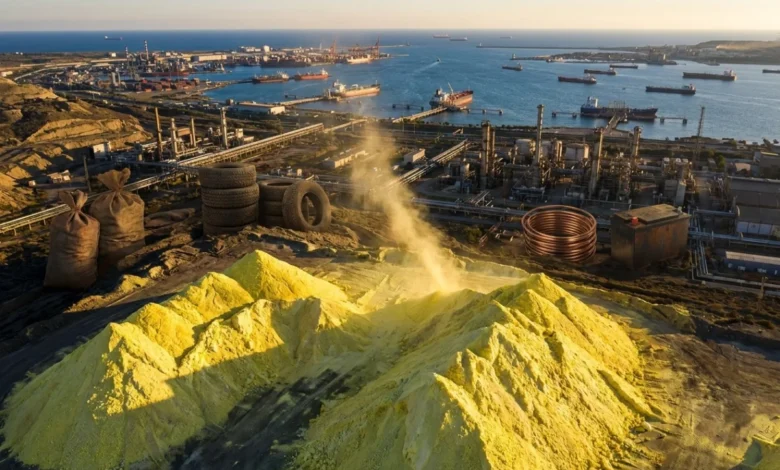
The global industrial economy is currently facing a systemic disruption that threatens the foundational elements of modern agriculture, manufacturing, and energy production. While public attention remains focused on the immediate geopolitical volatility in the Middle East and the fluctuating prices of crude oil, a silent, more critical shortage has emerged in the supply of elemental sulfur. Since the escalation of hostilities in the Persian Gulf in March, the flow of sulfur—a byproduct of oil and gas refining—has been severely curtailed. This disruption has triggered a cascading effect, threatening to undermine the production of sulfuric acid, which is an essential input for everything from phosphate-based fertilizers to high-tech electronics and automotive components.
The reliance of global supply chains on the Strait of Hormuz is well-documented regarding petroleum, but the secondary implications for the chemical industry are only now coming into sharp focus. With roughly 20 percent of global oil transit passing through this corridor, the recent instability has essentially severed a primary artery for global sulfur production. As stockpiles dwindle, industrial sectors are facing a realization that the "just-in-time" supply model is fundamentally ill-equipped to handle the sudden removal of a mission-critical chemical input.
Chronology of the Supply Disruption
The current crisis began in early March, following a significant escalation in regional military activity. The closure of key transit routes in the Persian Gulf immediately halted the export of refined sulfur, which is typically recovered during the desulfurization process of "sour" crude oil and natural gas.
- March 2026: Geopolitical tensions culminate in the effective closure of the Strait of Hormuz to commercial shipping. Global sulfur spot prices begin a steady, unprecedented climb.
- April–May 2026: Major fertilizer manufacturers in the Northern Hemisphere report significant delays in sourcing sulfur-based inputs. Industrial mining operations, particularly those involved in copper and zinc extraction, begin to report supply-chain bottlenecks.
- June 2026: Market analysts observe a rapid drawdown of secondary reserves, specifically the large, long-term stockpiles located in Alberta, Canada.
- July 2026 – Present: Global agricultural organizations and industrial consortiums issue warnings regarding the potential for a mid-term yield decline as the availability of sulfuric acid—the precursor to phosphate fertilizer—reaches a critical low.
The Industrial Infrastructure of Sulfur
To understand the severity of the crisis, one must recognize that sulfuric acid is often cited as the "king of chemicals." Its consumption rate is frequently used as an indicator of a nation’s industrial health. The chemical is vital to the dissolution of phosphate rock, which is the primary source of phosphorus in modern agriculture. Without a steady supply of sulfur to create sulfuric acid, the ability to convert raw phosphate rock into plant-available fertilizer is severely compromised.
Beyond agriculture, the impact is pervasive:
- Mining and Metallurgy: Sulfuric acid is the primary reagent used for leaching metals from ore. A decrease in acid availability directly correlates to lower output of copper, nickel, and zinc.
- The Energy Transition: Nickel and other base metals are critical components in the manufacturing of lithium-ion batteries. The current sulfur bottleneck, therefore, serves as a significant hurdle for the global push toward electric vehicle adoption and renewable energy storage.
- Transportation: The vulcanization process—the chemical treatment that transforms raw latex into durable rubber for tires—is entirely dependent on sulfur. Any prolonged interruption in supply threatens the global automotive and freight logistics chain.
- The Silver Market: Because silver is largely extracted as a byproduct of copper and zinc mining, the reduction in mining activity has indirectly led to a contraction in silver supply, complicating the inputs for solar panel manufacturing and electronic circuitry.
Supporting Data and Market Analysis
Historical data indicates that sulfur was previously treated as a secondary commodity, often priced as a byproduct of energy production. In stable periods, the cost of sulfur remained relatively low, frequently hovering around $50 per ton. However, since the March disruption, market data suggests prices have surged to nearly 10 to 20 times their historical averages.
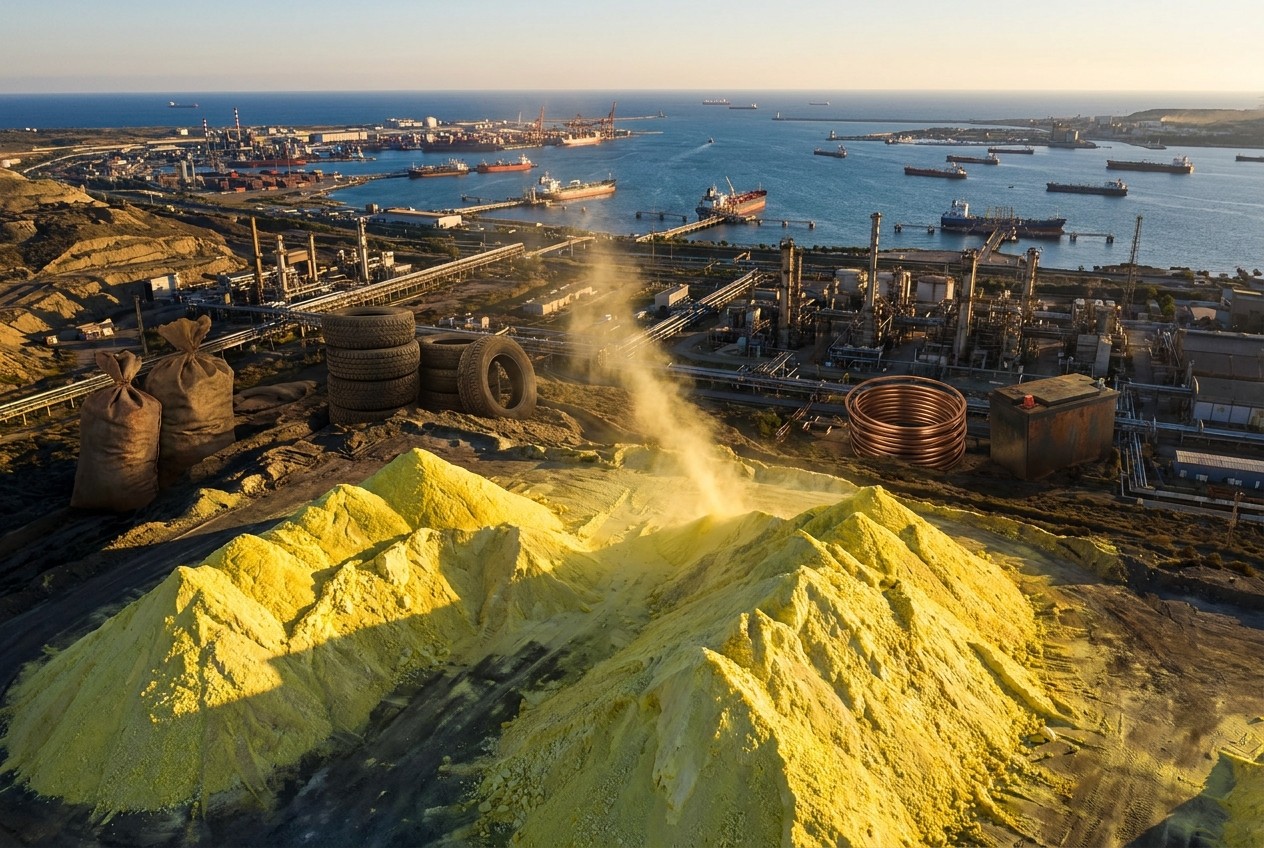
This volatility has forced a reliance on strategic stockpiles, such as those maintained in Canada. These reserves, built over decades from the processing of heavy, high-sulfur oil, were intended as a long-term buffer. Current estimates suggest that the rate of drawdown is significantly higher than historical norms. Analysts from several commodities research firms have warned that if the Gulf supply chain remains interrupted, these reserves could be depleted by the fourth quarter of 2026, leaving no margin for error in global industrial production.
Official Responses and Institutional Reactions
Governments and international regulatory bodies have begun to acknowledge the strain. In several regions, agricultural ministries have issued emergency declarations to facilitate the duty-free import of phosphate fertilizers, attempting to circumvent the cost spikes associated with the sulfur shortage. However, these measures are largely reactive.
In a recent briefing, international trade representatives noted that the "fragmentation of global logistics" has rendered traditional stockpiling strategies insufficient. There is growing pressure on policy makers to provide transparency regarding the exact volume of remaining global reserves. While official agencies have attempted to downplay the risk of a "cascading collapse," the private sector is increasingly engaging in independent contingency planning, focusing on decentralizing sourcing and exploring alternative chemical synthesis routes.
Broader Implications for Global Stability
The implications of this shortage extend far beyond simple price inflation. The interconnectedness of the modern economy means that the sulfur crisis is not merely a commodity issue; it is a structural one. If the production of fertilizer is constrained, the resulting impact on crop yields will be felt in global food markets approximately six to nine months after the initial supply disruption.
Furthermore, the "brittleness" of the current industrial model has been exposed. By optimizing for efficiency and centralized production, the global market has created a system that lacks redundancy. When one narrow corridor—like the Strait of Hormuz—is closed, the ripple effects move through the industrial base with increasing velocity.
Economists point out that the transition away from this fragile state will require significant capital expenditure in localized manufacturing and circular economy initiatives, such as the recycling of industrial acids and the development of mining techniques that require less chemical intervention. However, such transitions require time that the current supply crisis may not allow.
Conclusion: The Need for Structural Resilience
The ongoing sulfur crisis serves as a critical case study in the fragility of globalized industry. As the world navigates the remainder of the year, the focus must shift from short-term market corrections to the establishment of long-term structural resilience. The reliance on a single, vulnerable geographic corridor for a foundational industrial chemical has proven to be a strategic oversight.
For industry leaders and policy makers, the priority is now the diversification of supply chains and the intensification of resource recovery efforts. For the general public, the crisis underscores the necessity of understanding the invisible inputs that sustain modern life. As the Alberta stockpiles continue to diminish, the global community faces a period of unprecedented testing—one where the ability to maintain industrial output will be defined by the capacity to adapt to a world of scarcer, more expensive, and less accessible resources. The era of cheap, abundant industrial inputs appears to be coming to an end, necessitating a fundamental recalibration of how society views the intersection of security, geography, and chemical necessity.