World Health Organization Expresses Deep Regret Over United States Withdrawal Notice and Defends Pandemic Record

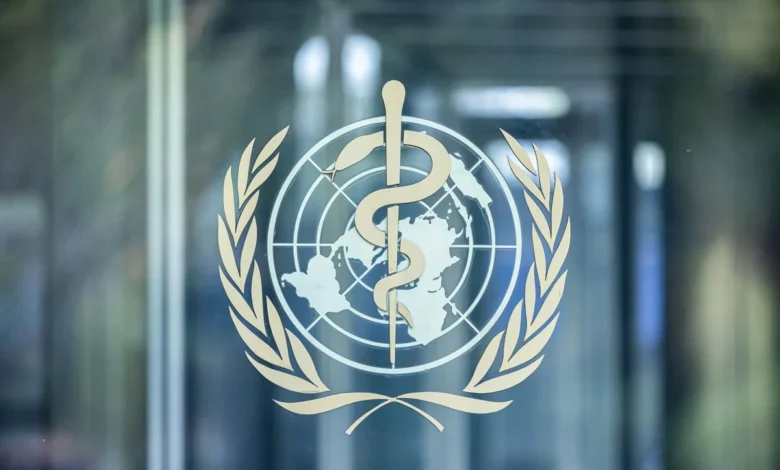
The World Health Organization (WHO) has formally expressed profound regret following the decision by the United States to notify the international body of its withdrawal from the organization. As a founding member state, the United States has historically played a critical, leading role in financing, shaping, and executing numerous historic global public health milestones alongside the WHO. These cooperative achievements include the monumental eradication of smallpox, dramatic containment campaigns against polio, and continuous frontline progress against a myriad of persistent global health threats, ranging from HIV, Ebola, influenza, tuberculosis, and malaria, to antimicrobial resistance and international food safety standards.
The formal notification of withdrawal issued by Washington has triggered immediate procedural reviews within the international health community. This development introduces complex diplomatic, financial, and operational issues that are slated for formal consideration by the WHO Executive Board during its upcoming regular meeting, scheduled to commence on February 2. Furthermore, the matter will be brought before the broader international community at the annual World Health Assembly slated for May 2026. Global health analysts note that the departure of the United States—traditionally the organization’s largest financial and technical contributor—threatens to create a substantial vacuum in both funding and strategic global health governance.
Background Context and U.S. Grievances
The withdrawal notice follows a period of mounting geopolitical friction between Washington and the Geneva-based agency. Statements issued by the U.S. government detailed sharp criticisms, accusing the WHO of having "trashed and tarnished" the nation, insulted its contributions, and severely compromised its own operational and political independence.
The WHO, however, has firmly rejected these characterizations. Officials reiterated that the organization engages with the United States in absolute good faith, mirroring the diplomatic respect afforded to all 194 sovereign member states.
At the core of the U.S. decision are deep-seated grievances regarding the global management of the COVID-19 pandemic. Washington has specifically alleged systemic WHO failures during the initial phases of the global health crisis, asserting that the agency obstructed the timely and accurate sharing of critical epidemiological information and subsequently attempted to conceal those missteps.
The WHO maintains that while no international organization, government, or scientific body executed a flawless response to an unprecedented, once-in-a-century pathogen, the agency stands resolutely by its record. The organization maintains it acted with swift urgency, rapidly and transparently disseminating all verified information to the global community. Furthermore, the agency emphasizes that its technical recommendations—such as promoting masks, encouraging vaccination, and advising physical distancing—were consistently formulated on the best available scientific evidence. The WHO points out that it never issued global mandates for lockdowns, mask-wearing, or vaccinations, leaving those sovereign regulatory decisions entirely in the hands of national governments acting in what they determined to be the best interests of their populations.
Chronology of the Early COVID-19 Response
To contextualize its actions during the critical opening weeks of the global pandemic, the WHO has outlined a strict timeline of its early interventions:
- December 31, 2019: Immediately following the receipt of initial reports regarding a cluster of "pneumonia of unknown cause" cases originating in Wuhan, China, the WHO formally requested detailed information from Chinese authorities and simultaneously activated its internal emergency incident management system.
- January 11, 2020: By the date the first official death was recorded and reported by China, the WHO had already broadcast global alerts through formal diplomatic channels, public advisories, and digital media. The agency convened an emergency panel of global experts and published comprehensive technical guidance designed to assist countries in protecting domestic populations and fortifying healthcare systems.
- January 30, 2020: The WHO Director-General formally declared COVID-19 a Public Health Emergency of International Concern (PHEIC) under the binding framework of the International Health Regulations. This represented the highest possible tier of global alarm under international health law. At the precise moment of this declaration, fewer than 100 cases and zero deaths had been officially reported outside of mainland China.
Throughout the subsequent weeks and months of the unfolding crisis, the Director-General repeatedly implored world leaders to take immediate, aggressive preventative action. Emphasizing the gravity of the situation, leadership warned that "the window of opportunity is closing," characterized the unfolding crisis by stating "this is not a drill," and ultimately labeled COVID-19 as "public enemy number one."
Institutional Reforms and Response to Independent Reviews
In the wake of the pandemic, numerous independent panels and international committees conducted exhaustive post-mortem evaluations of the global response, including assessments of the WHO’s internal performance. In direct response to these critiques, the organization implemented a series of institutional reforms aimed at sharpening operational efficacy. These measures were designed to bolster the internal capacities of member states, enhancing their individual and collective preparedness for future pandemic threats.
The specialized early-warning systems, surveillance networks, and diagnostic frameworks developed and maintained by the WHO before, during, and after the acute phase of the pandemic operate on a continuous, round-the-clock basis. The agency notes that these vital intelligence networks have historically served to safeguard all member states, including the United States.
Addressing Allegations of Politicization
In its official withdrawal statements, the United States additionally contended that the WHO had drifted into pursuing a "politicized, bureaucratic agenda driven by nations hostile to American interests."
The WHO has pushed back vigorously against this assertion. Operating as a specialized, technical agency of the United Nations, the organization is structurally governed collectively by its 194 member states. The agency emphasizes that it has remained steadfastly impartial throughout its operational history, existing solely to serve all nations equitably, with rigorous adherence to national sovereignty and without yielding to external political pressure or favoritism.
Broader Impact and Implications for Global Health
Despite the diplomatic setback posed by the American notification, the WHO continues to cultivate active engagement and financial support from its remaining member states. Nations continue to utilize the institutional framework of the WHO to negotiate cooperative frameworks addressing the planet’s foremost health challenges, spanning both communicable diseases and the rising tide of non-communicable illnesses.
A primary milestone in these ongoing multilateral efforts occurred last year, when WHO member states successfully adopted the landmark WHO Pandemic Agreement. Once ratifications are formally completed, this agreement will function as a cornerstone instrument of international law, specifically designed to insulate the global population from future large-scale biological threats.
Presently, member states are actively engaged in negotiating a critical annex to the Pandemic Agreement known as the Pathogen Access and Benefit Sharing (PABS) system. If successfully adopted, the PABS system will streamline the rapid detection and transparent sharing of emerging pathogens possessing pandemic potential, while concurrently guaranteeing equitable, timely global access to life-saving vaccines, therapeutics, and diagnostic tools.
Looking toward the future, leadership at the World Health Organization has expressed persistent optimism that the United States may eventually reverse its course and return to active, collaborative participation within the international body. In the interim, the WHO asserts that it remains unswervingly committed to partnering with all nations, honoring its foundational constitutional mandate: the attainment by all peoples of the highest possible standard of health as a fundamental human right.
Related posts: