WHO Chief Dr Tedros Praises Jordan’s Humanitarian Leadership During High-Level State Visit Focused on Universal Health Coverage and Crisis Response

World Health Organization (WHO) Director-General Dr Tedros Adhanom Ghebreyesus successfully wrapped up the first day of a critical two-day State visit to the Hashemite Kingdom of Jordan, marking a significant milestone in the enduring partnership between the global health body and the Jordanian government. The high-profile mission is designed to spotlight Jordan’s exemplary role in advancing universal health coverage (UHC), delivering comprehensive mental health services, and spearheading vital humanitarian health interventions amidst a volatile regional landscape.
The opening day of the diplomatic mission was characterized by high-level political engagement, on-the-ground facility tours, strategic partner roundtables, and the active participation of high-profile global philanthropists. As health systems across the Middle East face unprecedented strains driven by protracted conflicts, refugee crises, and systemic underfunding, Jordan’s proactive stance has positioned the nation as a regional pillar of medical resilience and human compassion.
A Royal Audience and Strategic Bilateral Engagements
The centerpiece of Dr Tedros’s opening itinerary was a formal audience with His Majesty King Abdullah II of Jordan. The high-level dialogue underscored Jordan’s steadfast leadership in championing health as both a fundamental human right and a critical anchor of national and regional security. Discussions between the WHO Director-General and the Jordanian monarch focused intensively on reinforcing national health architectures, expanding equitable access to specialized medical care, and sustaining international support for emergency health responses across the Middle East.
Particular emphasis was placed on Jordan’s ongoing humanitarian obligations, notably its sustained support for the Palestinian people, critically ill or injured patients evacuated from the Gaza Strip for advanced medical treatment, and the millions of displaced refugees currently hosted within Jordanian borders.
“I wish to express my appreciation to His Majesty King Abdullah II for his commitment to advancing universal health coverage,” Dr Tedros stated following the meeting. “I also extend my thanks to His Majesty and the people of Jordan for their solidarity and generosity in providing health services to more than three million refugees, primarily from Gaza and Syria, who are living in the country.”
Dr Tedros further commended Jordan’s broader geopolitical and humanitarian footprint, explicitly highlighting the monarch’s visionary Medical Corridor initiative. This specialized framework has proven instrumental in facilitating the transfer and treatment of severely ill and injured children out of war-torn Gaza, ensuring they receive life-saving interventions that would otherwise be entirely inaccessible. “Jordan continues to show the world what it truly means to put health and humanity first,” Dr Tedros added.
Witnessing Frontline Care: Medical Evacuations from Gaza
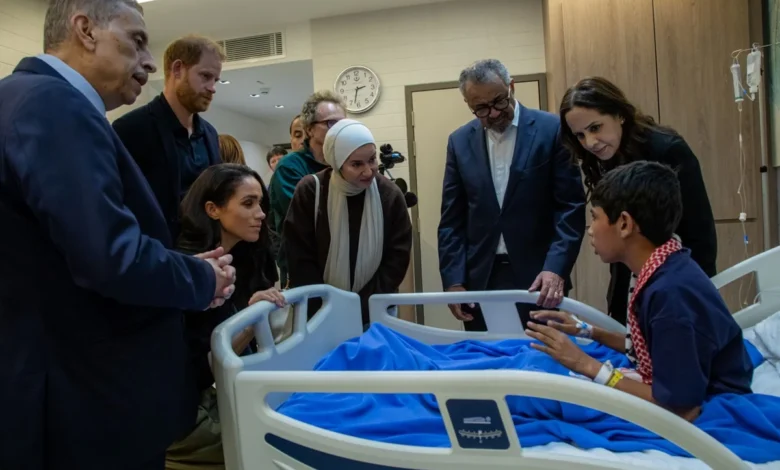
Following his discussions with King Abdullah II, Dr Tedros transitioned from diplomatic boardrooms to the frontlines of clinical care, visiting a specialized, WHO-supported hospital facility dedicated to treating pediatric patients evacuated from Gaza. During the hospital tour, the WHO chief spent time interacting directly with young patients, their families, and the multidisciplinary teams of physicians, nurses, and allied health professionals delivering intensive medical interventions.
The facility provides comprehensive, specialized care for severe traumatic injuries, advanced oncology cases, and other critical medical conditions resulting from the collapse of healthcare infrastructure in conflict zones. The visit served to underscore the operational viability and absolute necessity of the medical evacuation corridor operating through Jordan. Public health experts note that as local healthcare facilities in conflict zones face systematic destruction or depletion of supplies, secure international transit corridors remain the single most effective mechanism for preventing preventable mortality among vulnerable populations, particularly children.
WHO officials accompanying the delegation emphasized that maintaining these evacuation channels requires predictable, long-term international funding, robust logistical coordination, and unwavering diplomatic protections to ensure safe passage for patients and medical escorts alike.
Mobilizing Global Resources for Regional Health Resilience
Recognizing that national healthcare systems cannot absorb the escalating demands of protracted regional crises without international burden-sharing, Dr Tedros convened a high-level strategic roundtable later in the day. The gathering brought together key health sector partners, donor government representatives, United Nations agency leads, and international philanthropic organizations.
The core agenda of the multilateral meeting centered on aligning financing priorities to fortify Jordan’s health infrastructure while simultaneously sustaining broad-scale humanitarian health operations. Key discussion points included the urgent need to scale up community-level mental health services, optimize resource allocation for countries hosting massive refugee populations, and establish durable financing mechanisms that bridge the operational gap between emergency humanitarian relief and long-term developmental health programming.
Participants engaged in rigorous dialogue regarding sustainable fiscal strategies for health systems under duress. Dr Tedros welcomed the robust collaboration demonstrated by international donors and reaffirmed WHO’s commitment to facilitating transparent, high-impact investments that yield measurable health outcomes across Jordan and the wider Eastern Mediterranean region.
Advancing Primary Healthcare and Mental Health Integration
Earlier in the day, Dr Tedros held substantive bilateral consultations with Jordan’s Minister of Health. The talks focused intensely on institutionalizing structural reforms designed to cement Jordan’s trajectory toward comprehensive universal health coverage.
Jordan has earned international acclaim for its progressive implementation of a primary healthcare-oriented model. Rather than treating specialized services as isolated verticals, the Jordanian health system has systematically integrated mental health care into routine primary healthcare clinics. This integration ensures that citizens and refugees alike can access psychological support services seamlessly alongside general medical consultations, thereby reducing social stigma and expanding early intervention capabilities.
This strategic alignment closely mirrors the core objectives of the WHO Director-General’s Special Initiative for Mental Health. By embedding psychological first aid and psychiatric care into community-level facilities, Jordan has established a replicable blueprint for resource-efficient mental health delivery in middle-income settings burdened by external shocks and demographic pressures.
The Engagement of Archewell Philanthropies and Global Mental Health Advocacy
Adding a distinct dimension to the diplomatic mission, Dr Tedros was accompanied throughout several key engagements by Prince Harry, The Duke of Sussex, and Meghan, The Duchess of Sussex. Traveling in their capacities as founders of Archewell Philanthropies and long-standing strategic partners of the World Health Organization, the Duke and Duchess participated to amplify international visibility surrounding global health equity, humanitarian crisis response, and mental health advocacy.
Archewell Philanthropies has a well-documented history of collaboration with the WHO, having previously supported global health initiatives ranging from equitable access to COVID-19 vaccines to specialized medical evacuation frameworks and comprehensive mental health programs in fragile environments.
During the visit, Prince Harry participated actively as a global advocate for WHO’s mental health initiatives. His engagements underscored the imperative of prioritizing psychological well-being across diverse communities and emergency settings, with targeted focal points on the psychological resilience of men, adolescents, and children caught in the crosshairs of conflict.
Expressing gratitude for their sustained partnership, Dr Tedros remarked: “I want to thank our partners, including Prince Harry, Duke of Sussex and Meghan, Duchess of Sussex, whose commitment to mental health and humanitarian action has helped bring visibility, resources and hope to some of the world’s most vulnerable communities. Their collaboration is helping to advance WHO’s mission to ensure health for all.”
Reflecting on the experiences of the first day, Prince Harry shared his perspective on Jordan’s national ethos: “It is an honour to join the Director-General of the World Health Organization in Jordan, a country that is leading by example in compassion, resilience and innovation. Through our work with Archewell Philanthropies, my wife and I have seen first-hand the impact of WHO’s efforts to support mental health and deliver life-saving care in emergencies.”
The Duke of Sussex further emphasized the indispensable role of psychological support in post-crisis recovery: “We remain deeply committed to advancing awareness, reducing stigma and expanding access to mental health support for all those affected by conflict and crisis. Mental health is fundamental to recovery, dignity and long-term peace, and we are proud to stand with WHO and partners around the world to make it a global priority.”
Previewing Day Two: Rehabilitation, Oncology, and Community Resilience
As the state visit transitions into its second and final day, Dr Tedros’s itinerary remains intensive. The WHO Director-General is scheduled to visit Jordan’s National Center for Rehabilitation of Addicts, an institution supported by WHO that delivers holistic, integrated medical, psychological, and social rehabilitation services.
In addition, Dr Tedros will engage directly with grassroots community leaders and prominent women’s empowerment organizations, including the Jordanian Hashemite Fund for Human Development (JOHUD), to assess the grassroots impact of community-led health and social welfare initiatives. The delegation will also tour the renowned King Hussein Cancer Center to evaluate cutting-edge advancements in oncology care, research protocols, and regional medical collaboration frameworks.
The official state visit will conclude with a series of wrap-up consultations with bilateral donors and humanitarian operational partners. These final meetings aim to consolidate commitments made during the mission, cementing Jordan’s undisputed status as an indispensable regional hub for medical evacuation logistics, emergency healthcare response, and long-term health system resilience.
Related posts: