WHO and the Kingdom of Saudi Arabia sign agreements in support of health priorities

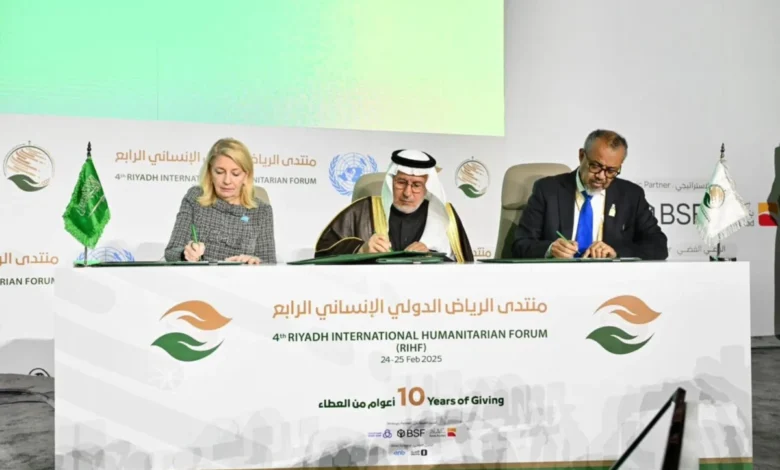
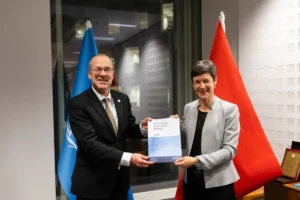
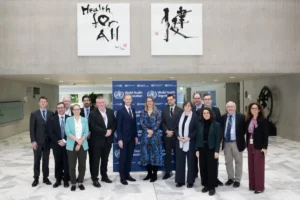
The global humanitarian landscape gathered in the capital of Saudi Arabia for a pivotal milestone as the Riyadh International Humanitarian Forum convened on February 24–25, 2025. Marking a decade of dedicated operational impact by the King Salman Humanitarian Aid and Relief Centre (KSRelief), the two-day high-level conference served as a crucial crucible for health diplomacy, crisis advocacy, and international cooperation. Amid escalating geopolitical instabilities and protracted regional conflicts, global leaders, policymakers, and health officials converged to address the deteriorating well-being, survival, and fundamental dignity of vulnerable populations worldwide. Beyond addressing immediate crisis interventions, discussions heavily emphasized the safety and operational security of aid workers navigating increasingly hostile environments.
Against this backdrop of urgent global need, the forum yielded substantial financial commitments and operational agreements. Most notably, the World Health Organization (WHO), UNICEF, and KSRelief solidified landmark funding partnerships totaling hundreds of millions of dollars. These pacts target severe infectious disease outbreaks, critical healthcare access for refugees, and a monumental push toward global polio eradication.
Main Facts of the Riyadh Agreements
The high-level diplomatic and humanitarian exchanges in Riyadh translated directly into tangible, multi-million-dollar health interventions designed to mitigate suffering across the Middle East and surrounding regions. The agreements concluded during the event address acute public health threats that have been exacerbated by conflict, displacement, and infrastructural collapse.
Foremost among the bilateral pacts signed between the WHO and KSRelief are targeted funding allocations for Yemen, a nation grappling with one of the world’s most severe humanitarian crises. The new agreements allocate US$ 12 million specifically dedicated to comprehensive malaria control programs, alongside US$ 2.1 million designated to rapidly expand cholera treatment capacity. Years of conflict have systematically degraded Yemen’s water, sanitation, and hygiene (WASH) infrastructure, creating recurrent conditions for massive cholera outbreaks. Simultaneously, vector-borne diseases like malaria continue to spread unchecked among displaced and impoverished communities.
In addition to the Yemeni interventions, the humanitarian fallout from the ongoing conflict in Sudan prompted a dedicated regional response. KSRelief and the WHO Egypt Country Office formalized a US$ 3.6 million agreement aimed at sustaining and expanding life-saving dialysis treatment for Sudanese refugees who have fled across the border into Egypt. The sudden influx of displaced persons has placed immense strain on Egypt’s domestic healthcare infrastructure, making external financing vital to ensure that patients with chronic renal failure maintain access to continuous, life-sustaining medical care.
The crown jewel of the financial announcements, however, was the official confirmation of the Kingdom of Saudi Arabia’s monumental US$ 500 million pledge to the Global Polio Eradication Initiative (GPEI). Initially announced in April 2024, this commitment was formally structured into two definitive operational agreements during the forum: US$ 300 million allocated to the WHO and US$ 200 million directed to UNICEF. This substantial capital infusion will directly underwrite global vaccination campaigns targeting approximately 370 million children annually, forming a robust defense against the resurgence of the poliovirus, particularly in high-risk, conflict-ridden environments.

Background and Chronology of the Partnership
To fully understand the gravity of the agreements signed in February 2025, one must examine the institutional evolution of KSRelief and its enduring partnership with the United Nations system. Established in May 2015 by royal decree under the directive of King Salman bin Abdulaziz Al Saud, KSRelief was envisioned as the central humanitarian arm of the Kingdom of Saudi Arabia, designed to unify and professionalize the nation’s international aid delivery. Over the past ten years, the organization has evolved from a nascent regional responder into a prominent global donor, executing thousands of projects across dozens of countries in collaboration with specialized UN agencies like the WHO, UNICEF, and the United Nations High Commissioner for Refugees (UNHCR).
The trajectory leading up to the Riyadh International Humanitarian Forum 2025 has been marked by escalating commitments to health security. The milestone is framed by a clear chronological progression:
- May 2015: The King Salman Humanitarian Aid and Relief Centre is founded, establishing a new framework for Saudi Arabia’s international humanitarian assistance.
- April 2024: The Kingdom of Saudi Arabia initially pledges US$ 500 million toward the Global Polio Eradication Initiative, signaling a decisive shift toward long-term, preventative global health security rather than purely reactive emergency aid.
- February 24–25, 2025: The Riyadh International Humanitarian Forum convenes its milestone tenth-anniversary event. Dr. Tedros Adhanom Ghebreyesus, WHO Director-General, and Dr. Abdullah Al Rabeeah, KSRelief Supervisor-General, alongside UNICEF Executive Director Catherine Russell, utilize the platform to execute formal binding agreements for the previously pledged GPEI funds and new disease-control initiatives.
- Late February 2025: Operational timelines are immediately established for the disbursement of funds targeting malaria and cholera in Yemen, dialysis care for Sudanese refugees in Egypt, and broad-scale polio immunization drives.
Supporting Data and Epidemiological Context
The financial figures unveiled at the Riyadh forum are directly tethered to alarming epidemiological realities on the ground. Public health data from international monitors underscores the urgency driving these specific resource allocations.
In Yemen, the convergence of shattered health systems and malnutrition has created a fertile ground for infectious diseases. Millions lack access to safe drinking water, directly fueling cyclical cholera epidemics that disproportionately affect children. Furthermore, vector control measures for malaria have broken down in large swathes of the country, leading to surging infection rates that overwhelm rural clinics lacking basic diagnostic kits and antimalarial pharmaceuticals. The combined injection of US$ 14.1 million for Yemen’s malaria and cholera programs represents a critical lifeline designed to shore up primary healthcare delivery points and prevent catastrophic mortality spikes.
Regarding the Sudanese refugee crisis in Egypt, the demographic pressures are stark. Hundreds of thousands of Sudanese nationals have crossed the northern border seeking safety from the devastating civil war that erupted in April 2023. Among these displaced populations are numerous individuals suffering from chronic conditions requiring specialized medical intervention. Renal failure patients, absent immediate and consistent access to hemodialysis, face imminent mortality. The US$ 3.6 million earmarked for Egyptian health facilities ensures that these refugees are integrated into local treatment streams without destabilizing services available to the host population.
On a global scale, the threat of polio resurgence remains a haunting reminder of how easily eradicated diseases can stage a comeback when public health infrastructure falters. The GPEI notes that while wild poliovirus is endemic in only a few remaining pockets, localized outbreaks have surfaced in fragile and conflict-affected zones such as Afghanistan, Pakistan, and the Gaza Strip. Reaching 370 million children annually across remote, insecure, and politically volatile territories requires immense logistical coordination, cold-chain preservation, and community-level trust-building—capacities that the US$ 500 million joint WHO-UNICEF allocation is specifically engineered to secure.
Official Responses and Institutional Perspectives
The convergence of global health leaders in Riyadh generated robust dialogue concerning the ethics of health diplomacy and the necessity of multilateralism in times of crisis.
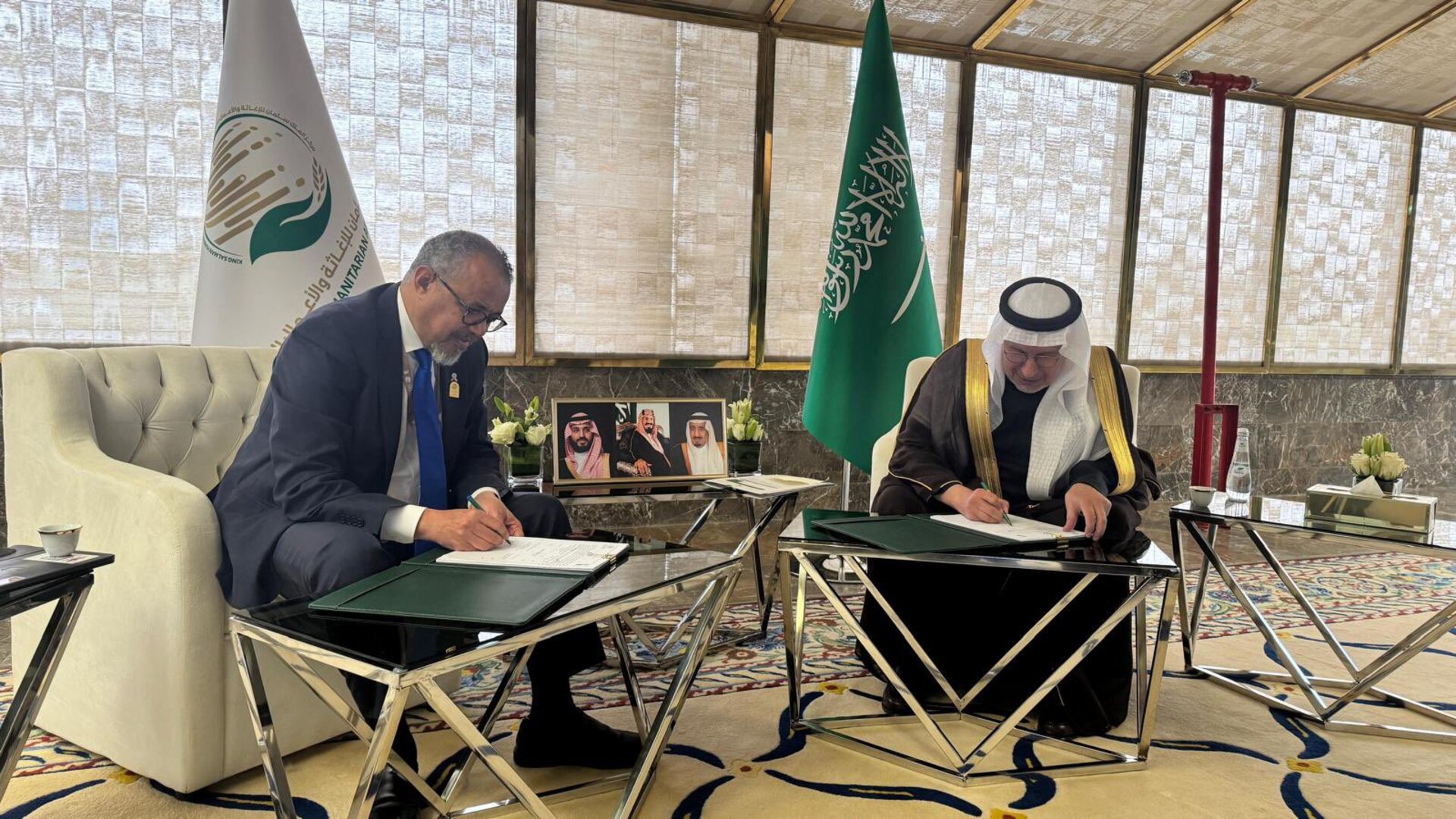
Dr. Tedros Adhanom Ghebreyesus, Director-General of the World Health Organization, continually emphasized the vital role of sustained international solidarity during his engagements at the forum. Highlighting the discussions on social media and official briefings, Dr. Tedros underscored that health is inextricably linked to human dignity and security. The formalization of the agreements with KSRelief was hailed by the WHO leadership as a model of strategic resource mobilization, proving that regional humanitarian entities and global health agencies can successfully synchronize their operational mandates to save lives in the world’s most difficult environments.
Dr. Abdullah Al Rabeeah, Supervisor-General of KSRelief, reflected on the ten-year journey of the organization during the anniversary forum. He reiterated Saudi Arabia’s steadfast dedication to mitigating human suffering irrespective of geography, race, or religion. Dr. Al Rabeeah noted that KSRelief’s institutional maturity is reflected in its shift toward evidence-based, sustainable health interventions—exemplified by the massive investment in polio eradication and targeted disease containment in Yemen and North Africa.
UNICEF Executive Director Catherine Russell, participating alongside her WHO and KSRelief counterparts for the formalization of the GPEI agreement, stressed the unique vulnerability of children caught in the crosshairs of modern warfare. Russell pointed out that immunization campaigns are frequently the last remaining thread of public health infrastructure in conflict zones, and the US$ 200 million allocated to UNICEF via the Saudi pledge will provide the necessary operational agility to pierce through bureaucratic and physical blockades to reach unreachable children.
Broader Impact and Future Implications
The agreements forged at the Riyadh International Humanitarian Forum 2025 carry profound implications for the future architecture of international aid and global health security. As traditional donor nations face domestic economic pressures and shifting political landscapes, the emergence of well-resourced regional humanitarian institutions like KSRelief marks a significant decentralization and diversification of global aid financing.
By anchoring massive financial commitments in institutional frameworks governed by multilateral bodies like the WHO and UNICEF, these partnerships ensure rigorous monitoring, accountability, and technical proficiency in execution. The explicit focus on preventative health measures—such as the global eradication of polio—demonstrates a sophisticated understanding that containing pathogens at their source is far more cost-effective and humane than managing endless emergency outbreaks.
Furthermore, the integration of health diplomacy into the core agenda of the Riyadh forum signals a growing recognition that health access can serve as a stabilizing bridge in fractured geopolitical zones. As the international community assesses the long-term outcomes of the US$ 500 million polio drive, the Yemen disease-control allocations, and the refugee support systems in Egypt, the 2025 Riyadh forum will likely be remembered as a watershed moment where regional leadership and global multilateralism successfully converged to confront the defining humanitarian challenges of the decade.