The True Cost of Optimal Health: Examining the Financial, Temporal, and Psychological Price of Longevity Culture

The modern wellness landscape is dominated by a singular, persistent promise: that human lifespan and healthspan can be indefinitely extended, optimized, and fine-tuned through the adoption of advanced, ultra-specific protocols. From high-profile longevity podcasters and bestselling authors to digital fitness influencers, contemporary culture is saturated with directives on how to reverse chronic disease, preserve youthful physiological markers, and push human longevity well past conventional boundaries—sometimes targeting ages upwards of 115 or even exploring radical life extension.
However, as the wellness industry burgeons into a multi-billion-dollar global enterprise, a critical question arises among researchers, clinicians, and everyday consumers: Are these advanced protocols genuinely necessary, or even scientifically effective? Furthermore, what are the true costs—measured in hours, financial expenditure, and psychological well-being—required to maintain these regimens? A comprehensive new visual and analytical resource released by health and nutrition researchers aims to dissect these very questions, offering a balanced look at the trade-offs inherent in the pursuit of absolute physiological optimization.
The Evolution of the Longevity Movement
To understand the current obsession with health optimization, one must examine the rapid evolution of the wellness and fitness industries over the past several decades. Historically, public health guidelines focused on broad, accessible pillars: maintaining a balanced diet, engaging in moderate daily physical activity, avoiding tobacco, and getting adequate sleep. These foundational habits were designed for population-level adoption, aiming to reduce the incidence of preventable chronic conditions such as cardiovascular disease, type 2 diabetes, and certain cancers.
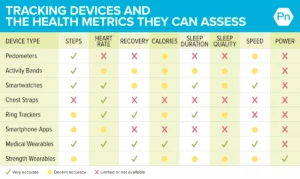
However, the advent of consumer wearable technology, direct-to-consumer genetic testing, and continuous blood glucose monitoring in the 2010s shifted the paradigm. Health ceased to be merely about the absence of disease and became an active project of continuous data collection and biological fine-tuning. By the early 2020s, a new subculture of longevity medicine emerged, popularized by media figures who advocated for rigorous, medicalized daily routines involving dozens of targeted supplements, specialized sleep architecture tracking, cryotherapy, hyperbaric oxygen chambers, and heavily restricted dietary eliminations.
While these practices are often marketed as universal blueprints for a longer life, they frequently demand resources that place them far out of reach for the average individual. This disconnect has sparked a necessary dialogue within the health community regarding the fine line between proactive wellness and obsessive, counterproductive perfectionism.
Breaking Down the True Costs: Time, Money, and Mental Energy
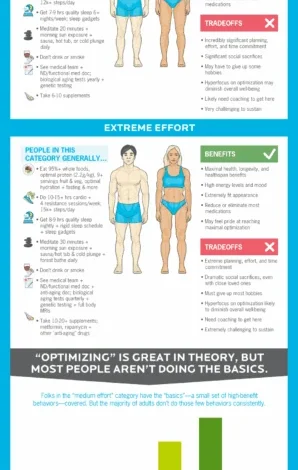
The newly published resource—anchored by an extensive infographic titled The True Cost of "Optimal" Health and an accompanying research review—seeks to quantify the hidden expenditures of extreme health optimization. According to the analysis, the cost structure of modern longevity protocols can be categorized into three primary domains: financial investment, time commitment, and psychological toll.
Financially, maintaining an advanced health optimization protocol can easily rival the cost of a mortgage or luxury vehicle lease. When factoring in specialized organic nutrition, high-grade nutraceuticals and supplements, boutique fitness memberships, diagnostic blood panels, and wearable biometric devices, individuals can easily spend thousands, or tens of thousands, of dollars annually. For many, this creates a significant economic barrier, fostering a culture where optimal health appears accessible only to the affluent.
From a temporal perspective, the demands are similarly staggering. Rigorous protocols often require hours dedicated each day to meal preparation, structured exercise regimens spanning multiple modalities (strength, zone 2 cardio, mobility), meditation, targeted recovery sessions, and data analysis. When health management begins to consume the majority of an individual’s discretionary time, it threatens to crowd out the very social connections, professional pursuits, and leisure activities that contribute meaningfully to a high quality of life.

Perhaps most critically, the psychological impact of hyper-optimization is drawing increased scrutiny from behavioral scientists and mental health professionals. The pursuit of flawlessness in biomarkers—such as blood pressure, resting heart rate, lipid panels, and glycemic variability—can foster orthorexia, anxiety, and a pervasive sense of failure when biological metrics inevitably fluctuate due to stress, aging, or normal physiological variance.
Expert Perspectives and the Search for Sustainability
Public health officials and registered dietitians have increasingly voiced concerns over the all-or-nothing mindset perpetuated by extreme wellness media. Experts argue that while advanced protocols may yield marginal gains for elite athletes or individuals managing specific pathological conditions, they offer diminishing returns for the general public compared to foundational health behaviors.
Clinical researchers emphasize that longevity is overwhelmingly driven by consistency in mundane, unglamorous habits rather than the introduction of expensive, novel interventions. Decades of epidemiological data consistently point to a few core determinants of long-term health: regular physical movement, a nutrient-dense and predominantly whole-food diet, restorative sleep habits, avoidance of harmful substances, and strong social networks.
When individuals become overwhelmed by the complexity of advanced protocols, they are statistically more likely to abandon their health routines entirely—a phenomenon known in behavioral psychology as the "what-the-hell effect." Consequently, the movement toward sustainable health coaching has gained considerable traction. Professionals in the nutrition and fitness sectors are increasingly pivoting away from rigid, prescriptive mandates in favor of client-centered strategies that foster long-term behavioral change without inducing lifestyle distress.
Broader Implications for Public Health and Longevity
The release of these analytical tools arrives at a critical juncture for public health. As chronic disease rates continue to challenge healthcare systems globally, finding effective ways to encourage health-promoting behaviors is paramount. However, misallocating societal focus toward ultra-expensive, fringe longevity interventions risks alienating populations who may feel that true health is beyond their financial or temporal reach.
Furthermore, the commercialization of longevity can obfuscate basic health literacy. When consumers are inundated with conflicting claims regarding superfoods, hormone replacement therapies, and proprietary supplements, distinguishing between evidence-based science and marketing hype becomes exceedingly difficult. Educational resources that emphasize cost-benefit analysis and demystify the science of aging play a vital role in empowering individuals to make informed decisions about their own care.
Assessing Personal Longevity Efforts
For those seeking to evaluate their current health strategies without falling victim to optimization fatigue, self-assessment tools provide a constructive path forward. By examining how current lifestyle habits align with proven longevity science, individuals can identify high-impact areas for improvement—such as sleep hygiene or resistance training—while discarding low-yield, high-cost practices that add unnecessary stress.
Ultimately, the overarching message from researchers and health educators is one of moderation and perspective. While the desire to live a longer, healthier life is a universally shared aspiration, the journey toward that goal should not come at the expense of enjoying the life one is trying to prolong. By prioritizing sustainable, foundational habits over expensive shortcuts, individuals can achieve meaningful longevity while maintaining a balanced and fulfilling existence.