The Food Emergency Explained: An Analysis of Global Supply Chain Fragility and Agricultural Stability

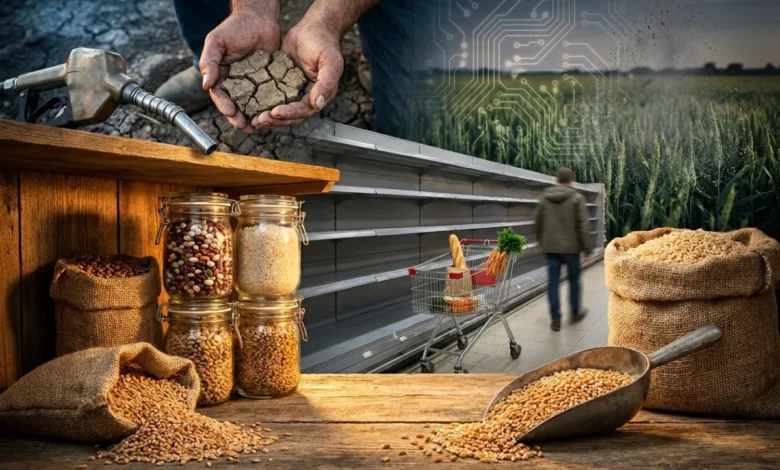
The global food supply chain is currently navigating a period of unprecedented volatility, characterized by a convergence of logistical constraints, systemic cyber vulnerabilities, and shifting geopolitical priorities. While retail shelves in North America have remained largely stocked, wholesale data and industrial procurement trends indicate a narrowing margin of safety in the availability of essential staples. This assessment examines the multi-faceted pressures facing the agricultural sector and the long-term implications for food security as we approach 2027.
The Anatomy of Supply Chain Compression
The current strain on food distribution is not merely a localized phenomenon but a result of compounding systemic stressors. Over the past six months, wholesale distribution centers have reported a marked decline in inventory velocity and availability. Procurement managers at major supply firms have noted that several categories of agricultural outputs are currently subject to extended lead times, with some suppliers projecting shortages through 2027.
This trend is driven by several key factors. First, the cost of inputs—specifically diesel fuel and synthetic fertilizers—remains high, limiting the ability of mid-sized farms to scale production to meet rising demand. Second, there is growing evidence of "quiet diversion," where production capacity is increasingly allocated toward federal stockpiles or government-managed emergency reserves. This shift represents a transition from a consumer-driven market to one increasingly dictated by state-managed logistics.
Chronology of Agricultural Instability
The vulnerability of the modern food system has been highlighted by a series of events over the last two years that have exposed the fragility of centralized, just-in-time logistics.
- Q1 2025: Fertilizer prices peaked, leading to a global reduction in crop yields for staple grains. Farmers, unable to offset the cost of production, transitioned toward lower-yield crops or reduced acreage.
- Q3 2025: Several European and Asian governments issued public advisories encouraging citizens to maintain a 30-day supply of food, signaling a shift in institutional confidence regarding global trade stability.
- Q2 2026: A series of cyber intrusions targeted the United States Department of Agriculture (USDA) and related agricultural payment processing systems. These incidents highlighted the risks of digitizing agricultural credit and loan infrastructures.
- Q4 2026: Procurement data indicated a 30% to 50% reduction in bulk commodity availability for wholesalers, marking the beginning of a sustained period of scarcity for high-quality, nutrient-dense food supplies.
Cyber Vulnerabilities and Infrastructure Fragility
The reliance on centralized digital systems has introduced a new layer of risk to food production. The recent cyber-attacks on USDA systems underscored the danger of administrative disruption. When the automated systems governing farm loans, subsidies, and payment disbursements are compromised, producers are left without the working capital required to purchase fuel, seed, or equipment.
In a highly specialized agricultural economy, a disruption of even two weeks during the planting or harvest season can result in the total loss of a year’s yield. Because the current system is designed for high efficiency rather than resilience, it lacks the redundancies necessary to survive prolonged technological downtime. Analysts argue that this creates a "cascading failure" scenario where a single server error can lead to empty shelves thousands of miles away.
Environmental and Military Intersections
The intersection of military activity and agricultural land use has also become a focal point for food security advocates. Recent military operations, including planned exercises involving the detonation of hazardous materials near fertile land in the American Midwest, have raised concerns regarding long-term soil and water safety.
Lead azide and other heavy metal byproducts represent a permanent threat to agricultural ecosystems. Once these particulates settle into the topsoil or migrate into local water tables, the resulting contamination can render farmland unusable for years. Critics of these operations argue that the long-term impact on regional food security is not being adequately factored into the cost-benefit analysis of these military maneuvers.

Comparative Analysis: Commodity vs. Nutrient-Dense Foods
A critical distinction must be made between "processed shelf-stable commodities" and "nutrient-dense whole foods." Economic models of past food crises suggest that during periods of extreme supply chain stress, highly processed goods—engineered for long-term shelf life using standardized commodity inputs—are the last to vanish from shelves.
Conversely, fresh produce, whole grains, and organic, nutrient-dense staples are the first to experience supply interruptions. This pattern of "nutritional degradation" occurs because processed foods rely on a globalized, highly efficient supply chain that can be subsidized or redirected by state entities, while the specialized production of high-quality food requires decentralized, local, and reliable logistics that are currently being squeezed by rising operational costs.
Official Responses and Institutional Guidance
While public messaging remains focused on maintaining market stability, behind-the-scenes procurement activity suggests a more cautious outlook. Governments that typically emphasize market-led solutions have begun to explore decentralized food security strategies. This shift suggests that institutional planners are increasingly aware of the limitations of the current system.
Independent analysts suggest that the primary risk is not a total systemic collapse, but a gradual "inflationary famine." In this scenario, high-quality, non-GMO, and nutrient-dense food becomes a luxury item, while the general population is forced to rely on low-nutrition, calorie-dense processed alternatives. This creates a two-tiered food system where health outcomes become inextricably linked to one’s ability to secure reliable food sources.
Preparing for Systemic Volatility
For households, the current environment necessitates a move toward personal food security. Experts in logistics and disaster preparedness advocate for the following measures to mitigate the risks of supply chain disruption:
- Inventory Rotation: Rather than reactionary panic-buying, households are encouraged to build a pantry of long-storing staples such as whole grains, legumes, and salt, which should be regularly consumed and replaced.
- Prioritization of Whole Foods: Because processed foods contain preservatives that allow for longer shelf life, they may remain available longer than nutrient-dense options. Prioritizing whole grains and raw ingredients provides a hedge against the inevitable scarcity of high-quality produce.
- Local Sourcing: Reducing reliance on globalized supply chains by identifying local producers can mitigate the risk of national-level logistics failures.
- Skill Acquisition: Beyond physical storage, the ability to store, preserve, and prepare food independently is considered a critical skill set in an era of technological instability.
Long-term Implications
The events of the coming years will likely serve as a stress test for the globalized agricultural model. If the current trajectory of supply chain compression continues, the burden of food security will shift from the state and the retail grocery sector to the household.
The objective of current preparation efforts is to establish a buffer against short-term disruptions, allowing families to avoid the "panic premium"—the inflated costs associated with desperate, last-minute purchasing when shortages become visible to the general public. As institutional planners and private wholesalers continue to adjust their operations in anticipation of further volatility, the importance of maintaining an independent, stable, and nutrient-dense food supply becomes a matter of foundational household security.
The period between now and 2027 will be defined by how effectively both individuals and producers can navigate the transition away from a vulnerable, centralized system toward one that emphasizes localized resilience and long-term storage. Whether the projected scarcity is mitigated by shifts in policy or exacerbated by further systemic failures remains to be seen; however, the data currently available suggests that the status quo is no longer a viable assumption.