Hailey Bieber Discusses the Devastating Mental Health Toll of Online Harassment and the Struggle for Digital Boundaries

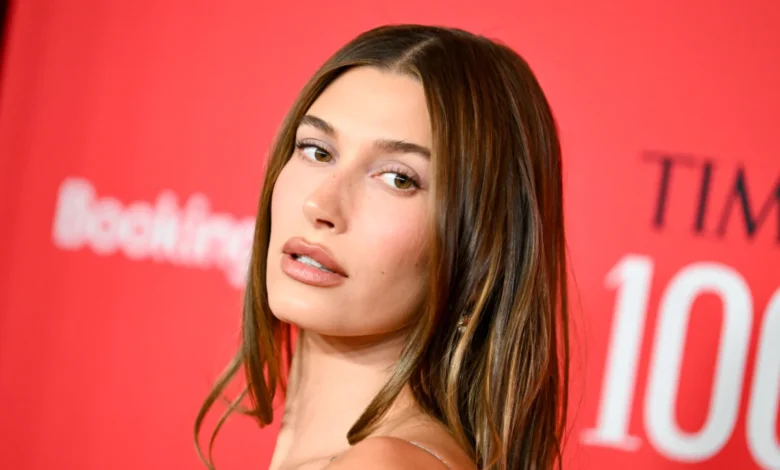
Hailey Bieber, the founder of the skincare line Rhode and a prominent fixture in global media, recently provided a candid look into the psychological toll of sustained digital vitriol. During a keynote appearance at The New York Times’ DealBook Summit, Bieber articulated the profound impact that chronic online harassment has had on her personal well-being, shedding light on a darker side of modern celebrity culture that is often shielded by a polished social media presence. Her testimony serves as a stark reminder of the human cost of the parasocial relationships that dominate the current internet landscape.
The Anatomy of Digital Harassment
Bieber’s account of the harassment she has endured is not merely a complaint about "mean comments." Instead, she detailed a sustained campaign of targeted hostility that bled from digital spaces into the physical world. During the summit, the model recounted instances where public vitriol manifested in real-time interactions, such as being aggressively confronted on the street. Perhaps most disturbing was her recollection of public "comparisons"—such as Starbucks baristas placing tip jars labeled with her name versus those of her contemporaries—an act that reduced her humanity to a spectator sport.
The cumulative effect of this scrutiny, she noted, was a profound sense of isolation. "I had people telling me to kill myself in the comments every single day," Bieber stated. This environment led her to a point of extreme emotional exhaustion where she began to internalize the collective hatred directed toward her, leading to intrusive thoughts regarding her own safety and self-worth. Her admission—that she felt the world might be better off without her—underscores the severity of the psychological crisis that can be triggered by relentless digital bullying.
A Chronology of Public Scrutiny
The trajectory of Bieber’s experience with public perception has been marked by several key moments that illustrate the volatility of online fandoms. Her rise to fame, initially bolstered by her career as a model, became increasingly complicated following her marriage to pop icon Justin Bieber.
In 2022, during an appearance on the podcast Call Her Daddy, Bieber first began to publicly address the narrative of "being the villain" in various celebrity feuds, many of which were entirely manufactured by social media users. At that time, she noted that the pressure to constantly clarify her side of the story or defend her character created an environment of stifling anxiety. She confessed that this climate made her fearful of interviews, as she felt that any word could be weaponized against her by a public already predisposed to dislike her.
Between 2022 and 2026, the discourse surrounding her persona intensified. Despite the growth of her business ventures, the "perceived" version of her life—often curated by anonymous accounts on platforms like X (formerly Twitter) and TikTok—frequently diverged from her reality. The DealBook Summit appearance represents a shift in her strategy: rather than attempting to appease the public or defend her reputation, she is now focusing on the realities of surviving a "cancel culture" environment that shows little regard for individual mental health.
The Data Behind the Digital Mental Health Crisis
Bieber’s experience is not an isolated incident but rather a high-profile example of a broader societal trend. According to data from the Pew Research Center, roughly 41% of U.S. adults have experienced some form of online harassment, with a significantly higher percentage of young adults reporting severe experiences, such as physical threats or stalking.
The psychological implications of this are well-documented by mental health professionals. Research published in the Journal of Affective Disorders suggests a direct correlation between high-intensity social media consumption and the exacerbation of suicidal ideation, particularly among individuals who are the targets of public shaming campaigns. When a person is subjected to a "pile-on"—a sudden, mass influx of negative commentary—the brain’s threat-detection system is hyper-activated. In the case of public figures like Bieber, this "fight or flight" response is rarely resolved because the harassment is persistent and global in reach.

Strategies for Internal Regulation and Boundaries
At the DealBook Summit, Bieber emphasized that the path to recovery involves active "internal regulation." This is a cognitive-behavioral approach to digital consumption. She described a disciplined practice of disconnecting from her devices, acknowledging that the temptation to read comments—even when one knows they will be harmful—is a form of digital compulsion.
"We’re going to put it away. We’re going to put it down. We’re going to be present," she explained. This boundary-setting is essential for maintaining a sense of self that exists outside of the digital gaze. By prioritizing her immediate physical environment over the abstract, digital version of herself, Bieber is attempting to regain agency over her identity. However, she admitted that this is a difficult, ongoing process. In an economy that rewards engagement—and where algorithms prioritize inflammatory content—stepping back is an act of resistance against a system designed to keep users permanently plugged in.
Broader Implications for Celebrity Culture
The public discourse surrounding Bieber’s experience has sparked a necessary conversation about the responsibility of platforms and the ethics of celebrity journalism. While the traditional media model once served as a filter, the current landscape allows for direct, unfiltered, and often dehumanizing communication between the public and public figures.
Industry analysts suggest that we are reaching a tipping point. As more celebrities speak out about the suicidal ideation and anxiety induced by their digital footprints, there is mounting pressure on social media companies to implement better moderation tools. While automated filters and "hide reply" functions exist, they often fail to address the systemic nature of targeted harassment.
Furthermore, the implications for the "influencer economy" are significant. As individuals like Bieber demonstrate, the cost of building a personal brand can be the erosion of one’s mental health. This realization is causing a shift in how talent agencies and public relations firms handle their clients. Many are now prioritizing "digital detox" protocols and counseling for their clients, acknowledging that the psychological toll of fame is no longer sustainable under the current model of 24/7 engagement.
Conclusion
Hailey Bieber’s candor at the DealBook Summit provides a necessary look behind the curtain of celebrity. By choosing to speak openly about her darkest moments, she has humanized a figure often treated as a two-dimensional character in online dramas. Her story is a testament to the fact that no amount of wealth or fame provides immunity to the psychological impact of collective cruelty.
As the digital world continues to evolve, the challenge for society will be to balance the benefits of connectivity with the preservation of individual humanity. For now, Bieber’s message is clear: the most important connection one can foster is the one with oneself, and that often requires the courage to log off.
If you or someone you know is struggling or in crisis, call or text 988 or visit 988lifeline.org in the U.S. Support is free, confidential, and available 24/7.