Are Younger Generations Aging Faster and Driving a Global Surge in Early-Onset Cancer

For decades, the medical community operated under the axiom that cancer was primarily a disease of the elderly, a culmination of decades of cellular wear and tear. However, a significant paradigm shift is underway as oncologists and epidemiologists grapple with a disquieting trend: a rising incidence of early-onset cancers among younger adults globally. A groundbreaking study led by researchers at the Washington University School of Medicine in St. Louis suggests that the answer may lie in the body’s biological clock. According to findings recently published in the journal Nature Medicine, younger generations appear to be aging at a more rapid pace than their predecessors, a phenomenon that is statistically linked to an increased vulnerability to cancer before the age of 55.
The Biological Disconnect: Chronology Versus Physiology
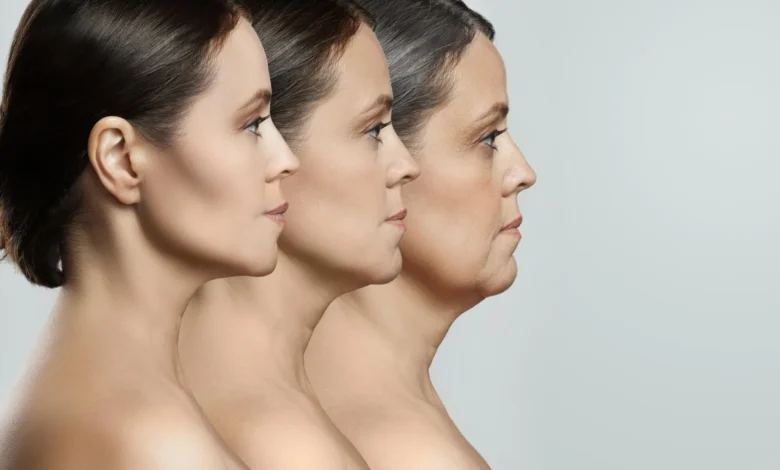
To understand the scope of this phenomenon, it is essential to distinguish between chronological age—the number of years a person has lived—and biological age, which refers to the physiological state of an individual’s cells, organs, and metabolic systems. While chronological age is fixed, biological age is fluid, influenced by a complex interplay of genetics, lifestyle, and environmental factors.
The research team, led by molecular epidemiologist Yin Cao, ScD, identified a troubling pattern: the "gap" between biological and chronological age is widening in more recent birth cohorts. When individuals from younger generations are compared to older generations at the same point in their lives, the younger cohorts frequently exhibit biological markers associated with more advanced physiological decline. This accelerated aging does not appear to be a uniform process across the entire body; rather, it manifests in specific organ systems, creating a unique "biological profile" that serves as a precursor to early-onset disease.
Analyzing the Data: A Multi-Generational Study
The investigation, conducted under the auspices of the international research initiative Cancer Grand Challenges, utilized two massive datasets to substantiate these claims. By examining the health records of more than 154,000 adults from the UK Biobank and over 10,000 participants from the U.S. National Institutes of Health’s (NIH) "All of Us" Research Program, researchers were able to quantify systemic and organ-specific aging across decades.
The findings were stark. In the UK cohort, individuals born between 1965 and 1974 exhibited systemic biological aging that was 23% higher than those born between 1950 and 1954, even when accounting for chronological age. The trend was even more pronounced in the United States, where participants born between 1990 and 1999 showed systemic aging markers 92% higher than those born between 1965 and 1969.
To measure this, the team employed established clinical biomarkers, including PhenoAge and the Klemera-Doubal Method, which analyze blood chemistry—such as albumin and creatinine levels—to estimate the "true" age of a person’s biological systems. Furthermore, by utilizing blood proteomic data, the researchers were able to assess the health of individual organs, finding that accelerated aging in the immune system was specifically linked to early-onset lung cancer, while older-appearing adipose (fat) tissue was significantly correlated with early-onset colorectal cancer.
Connecting Accelerated Aging to Cancer Risk
The statistical correlation between accelerated biological aging and cancer incidence is profound. The study revealed that individuals with the most advanced systemic aging faced a 15% higher risk of developing early-onset solid cancers compared to their peers who exhibited the slowest rates of biological aging. Even when researchers adjusted for inherited genetic risks and known predispositions to accelerated aging, the association remained robust.
This suggests that the rise in early-onset cancer is not merely an outcome of genetic bad luck but a reflection of how external environments become "biologically embedded" within the human body. The cumulative effect of modern stressors—ranging from diet and sedentary behavior to metabolic shifts and chemical exposures—appears to be accelerating the aging process in ways that fundamentally undermine the body’s ability to suppress tumor growth.
A New Frontier in Preventive Medicine
The implications of this research are transformative for the future of oncology. Currently, cancer screening protocols are heavily weighted toward older populations. If medical professionals can identify younger individuals who exhibit signs of accelerated biological aging, they could shift the focus from reactive treatment to proactive, personalized prevention.
"Our ultimate goal is to decode how modern environments become biologically embedded to drive cancer risk," Dr. Cao stated. "This brings us closer to identifying risk earlier and developing prevention strategies that are tailored to an individual’s biology." By monitoring biomarkers as part of routine physical examinations, physicians might eventually be able to flag "at-risk" patients in their 30s or 40s, offering them specialized screenings or lifestyle interventions before a malignancy ever develops.
The Role of Cancer Grand Challenges
The complexity of this research necessitated a global approach. Cancer Grand Challenges, an initiative co-founded by the National Cancer Institute and Cancer Research UK, provided the framework for the Team PROSPECT project. By assembling an international cohort of experts, the initiative aims to solve some of the most intractable questions in cancer biology.
David Scott, PhD, director of Cancer Grand Challenges, noted the significance of this scale of inquiry. "Right now, we don’t have a definitive answer to what’s driving the rise of early-onset cancers around the world," Scott said. "But studies like this are helping us piece together the bigger picture, showing that cancer may be influenced not just by changes inside individual cells, but by wider changes happening across the body as a whole."
Future Research Directions: Why Now?
While the study successfully identifies a correlation between accelerated aging and cancer, the scientific community is now tasked with identifying the specific "triggers" of this phenomenon. The team led by Dr. Cao is shifting its focus to isolate the precise environmental and societal factors responsible for these biological shifts. Previous studies by the group have already investigated variables such as metabolic dysregulation, alcohol consumption, and cesarean delivery, but no single factor has proven sufficient to explain the global surge in early-onset cases.
The current hypothesis is that the answer lies in a cumulative "exposome"—the totality of environmental exposures an individual encounters throughout their life. From the rise of ultra-processed foods to the chronic inflammation caused by sedentary lifestyles, the modern environment may be exerting a constant, subtle pressure on biological systems, forcing the body to age prematurely.
Impact and Public Health Implications
The publication of these findings in Nature Medicine serves as a clarion call for public health authorities to rethink the current approach to early-onset cancer. If biological aging is indeed the mechanism, then the strategies used to combat it must also be systemic. This could involve broad policy changes regarding environmental health, nutritional standards, and sedentary workplace culture, as well as a clinical shift toward measuring biological age in primary care settings.
For younger generations, the research provides a stark validation of the feeling that something in the modern world is "off." As the scientific community continues to dissect the pathways between cellular aging and tumor development, the focus remains on the possibility of a "biological intervention" era. If cancer can be predicted through the lens of biological aging, the medical community might finally be able to stop the disease before it starts, effectively resetting the clock for those at the highest risk.
The research was supported by an extensive list of international organizations, including the National Cancer Institute of the NIH, the French National Cancer Institute, and the Bowelbabe Fund for Cancer Research UK. This multi-institutional backing underscores the gravity of the challenge, as stakeholders across the globe recognize that the rising tide of early-onset cancer is one of the most pressing health crises of the 21st century. As the team continues its work, the medical field moves one step closer to moving beyond the limitations of chronological age and into a new, more nuanced era of preventative, biology-informed care.