New insights into brain resilience reveal how local white matter pathways protect cognitive function during aging

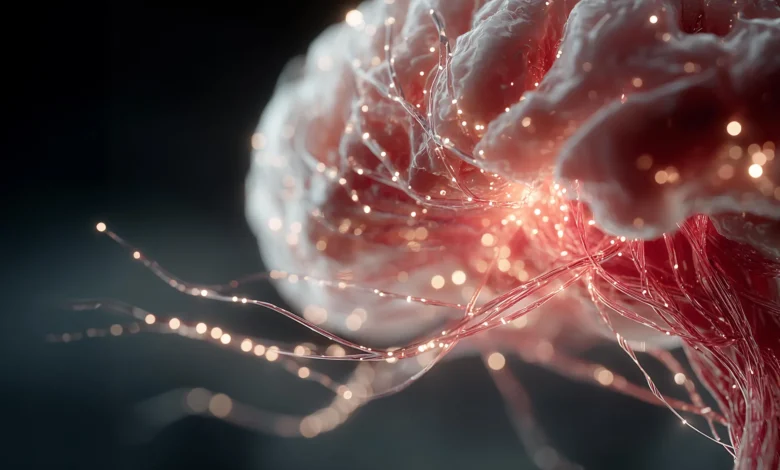
Scientists at the Mark and Mary Stevens Neuroimaging and Informatics Institute (Stevens INI) at the Keck School of Medicine of the University of Southern California have unveiled a significant discovery regarding the architecture of the aging brain. Their latest study, published in Alzheimer’s & Dementia: The Journal of the Alzheimer’s Association, identifies a critical, previously under-researched component of brain health: superficial white matter. This thin layer of nerve fibers, situated directly beneath the cerebral cortex, appears to act as a vital communication network that may provide a protective buffer against the cognitive decline typically associated with gray matter atrophy.
The Anatomy of Local Communication
To understand the significance of this finding, one must first distinguish between the primary components of the brain’s "wiring." Gray matter serves as the command center, containing the neuronal cell bodies responsible for processing information, memory, and executive function. Conversely, white matter acts as the connectivity infrastructure, consisting of myelinated axons that transmit signals between different regions of the brain.
While deep white matter tracts have been studied extensively, superficial white matter—the short, U-shaped fibers that connect adjacent cortical areas—has often been overlooked. Researchers at the Stevens INI describe these fibers as "local roads" that facilitate immediate neighborhood communication. The study suggests that if gray matter is the processor, superficial white matter is the local circuitry that ensures the processor’s outputs are successfully transmitted and integrated. When this circuitry remains intact, the brain demonstrates a form of resilience, potentially mitigating the functional impact of structural gray matter loss.
A Global Perspective on Neuroimaging
This research is distinguished by its demographic scope. By utilizing data from the Harmonized Diagnostic Assessment of Dementia for the Longitudinal Aging Study in India (LASI-DAD), the team examined 459 adults aged 60 and older. This inclusion is critical because a significant portion of current neuroimaging literature relies on populations from high-income, Western countries with high literacy rates.
In contrast, over 50% of the LASI-DAD cohort reported low literacy, and approximately 60% resided in rural communities. By expanding the geographic and social diversity of the study population, the researchers provided a more nuanced look at how cognitive aging manifests across different environmental and educational backgrounds. The results indicated that the correlation between superficial white matter health and language ability was particularly pronounced in individuals with lower formal education or those living in rural areas, suggesting that environmental factors and life experiences may shape the physical resilience of the brain in ways that are currently under-explored.
Methodology: Advanced Diffusion MRI
The investigation employed advanced diffusion MRI (dMRI), a sophisticated imaging technique that surpasses the resolution of conventional brain scans. By tracking the microscopic movement of water molecules through brain tissue, the researchers were able to quantify neurite density—the delicate projections through which nerve cells communicate—and the volume of "free water" in the extracellular space.
In neurobiology, an increase in free water or a decrease in neurite density often serves as a proxy for tissue degradation, including demyelination, inflammation, or cellular swelling. By mapping these markers in the superficial white matter, the researchers established a direct link between the integrity of these local connections and performance on standardized cognitive assessments, particularly in the frontotemporal regions associated with language fluency, word recognition, and short-term linguistic memory.
Chronology and Scientific Context
The effort to map the "connectome"—the complete map of neural connections in the brain—has been a primary focus of neuroscience for the past two decades. Early studies primarily targeted the large, long-range white matter tracts, such as the corpus callosum. However, as the field has matured, there has been a shift toward understanding the "micro-connectome."
- 2010–2015: Initial research into superficial white matter was largely confined to neurosurgical planning, focusing on how these fibers could be preserved during operations for epilepsy or tumors.
- 2016–2020: Advancements in diffusion-weighted imaging allowed researchers to begin characterizing these fibers in vivo, rather than relying on post-mortem histological analysis.
- 2023–2024: The current study marks a milestone by applying these advanced techniques to a large-scale, diverse, and community-based aging population, shifting the focus from surgical pathology to the biology of healthy aging.
Resilience and the "Cognitive Cushion"
Perhaps the most compelling finding of the study is the observed "cushioning" effect. In standard neurodegenerative models, the volume of gray matter loss is the primary predictor of cognitive decline. However, the Stevens INI team found that this relationship is not absolute. Two individuals with identical levels of gray matter atrophy may exhibit vastly different cognitive abilities depending on the condition of their local superficial white matter.
"Our findings suggest that cognitive health depends not only on how much gray matter is preserved, but also on the condition of the wiring that connects it," said Dr. Yingxu Liu, a postdoctoral scholar at the Stevens INI and the study’s lead author. This implies that the brain possesses inherent mechanisms for compensation. If the local wiring is robust, the brain can potentially reroute or maintain efficiency despite the gradual loss of cortical neurons.
Implications for Clinical Neurology
The implications for clinical practice are significant. If superficial white matter health is a marker of cognitive resilience, it could eventually serve as a biomarker for predicting which patients are at higher risk for rapid cognitive decline. By identifying the factors that preserve these connections—whether they be vascular health, systemic inflammation, or cognitive stimulation—clinicians may be able to develop targeted interventions that bolster brain resilience long before the onset of symptomatic dementia.
Dr. Leon Aksman, assistant professor of research neurology and the senior author of the study, noted the potential for future longitudinal tracking. "Two people with a similar degree of gray matter loss may not experience the same cognitive effects if the local connections surrounding that gray matter differ in health," he stated. "Following participants over time will be essential to test whether preserving these connections can help maintain cognition."
Addressing the Research Gap
The study also highlights the necessity of "globalizing" neuroscientific research. By moving beyond typical academic populations, the research team identified that social and environmental factors—such as lifelong exposure to specific environments or educational opportunities—likely influence the microscopic structural integrity of the brain. While the researchers caution that these findings do not prove a direct causal link between social status and white matter health, they do underscore that the brain is a dynamic organ shaped by a lifetime of interactions.
Dr. Arthur W. Toga, director of the Stevens INI and Provost Professor at USC, emphasized that a truly comprehensive understanding of neurodegeneration requires a broader lens. "A fuller understanding of brain aging requires research that reflects the world’s social, cultural, and geographic diversity," Toga stated. By bridging the gap between high-tech imaging and global population health, this study sets a new standard for how researchers should approach the study of the aging brain.
Limitations and Future Directions
Despite the groundbreaking nature of the study, the authors are careful to define its limitations. Because the data was collected at a single point in time, it remains unclear whether superficial white matter degradation acts as a precursor to gray matter loss or occurs in parallel. Future research will need to address the temporal sequence of these changes through long-term longitudinal studies.
Furthermore, the team intends to incorporate data regarding Alzheimer’s-related proteins, such as amyloid-beta and tau, into their future models. Determining how these toxic proteins interact with the degradation of local wiring will be the next major step in decoding the complex pathology of dementia. As the global population continues to age, these insights into the "hidden wiring" of the brain provide a renewed sense of hope that we may eventually be able to protect cognitive function by fortifying the brain’s local communication networks.
Related posts: