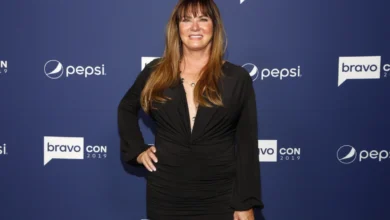
Katherine LaNasa Channels Personal Battle with Breast Cancer into Award-Winning Performance on The Pitt


The intersection of life and art has provided a profound platform for actress Katherine LaNasa, whose recent professional accolades are deeply rooted in a harrowing personal medical journey. The 59-year-old actress, who secured a Primetime Emmy Award in 2025 for her portrayal of charge nurse Dana Evans on the HBO Max medical drama The Pitt, has revealed that her nuanced performance is informed by her own experience with stage I breast cancer. This synthesis of lived trauma and professional craft has not only elevated her work on screen but has also positioned her as a vocal advocate for early cancer detection and patient-centered healthcare.
A Chronology of Diagnosis and Recovery
LaNasa’s path from patient to performer began well before her casting in the acclaimed drama. Years prior, during a routine examination in her 30s, she was informed that she possessed dense breast tissue. This physiological characteristic, which complicates the detection of tumors via standard mammography, served as a pivotal point in her health narrative. It was this knowledge of her elevated risk profile that compelled the actress to maintain a rigorous schedule of annual screenings—a commitment that ultimately proved life-saving.
Following her diagnosis, LaNasa navigated a taxing treatment protocol that included surgical intervention and three weeks of targeted radiation therapy. The recovery process was measured and deliberate. Remarkably, only six months after concluding her treatment regimen, she stepped onto the set of The Pitt. Walking into the hyper-realistic environment of the show’s emergency department, LaNasa found the transition from patient to portrayer to be an emotionally evocative experience. The set, designed to mirror the frantic, high-stakes atmosphere of a modern hospital, served as a visceral reminder of the vulnerability she had only recently experienced in reality.
The Science of Dense Breasts and Early Detection
The importance of LaNasa’s story lies in the broader medical context of breast cancer screening. According to the National Cancer Institute, dense breasts are defined by a higher proportion of fibrous and glandular tissue relative to fatty tissue. Because both tumors and dense tissue appear white on a mammogram, traditional imaging often lacks the contrast necessary to identify malignancies in their earliest stages.
Medical guidelines have increasingly shifted toward personalized screening recommendations for women with dense breast tissue. LaNasa’s case underscores the necessity of patient literacy regarding one’s own anatomy. By adhering to a consistent screening schedule despite the anxieties often associated with medical diagnostics, she was able to identify a tumor before it reached the lymph nodes. This aligns with clinical data suggesting that when breast cancer is localized, the five-year relative survival rate is approximately 99%.
Artistic Integration and Patient Advocacy
In her portrayal of Dana Evans, LaNasa draws heavily upon the "little kindnesses" she received during her own treatment. In interviews, she has emphasized that the demeanor of the nursing staff—the way information was communicated, the empathy displayed during moments of terror, and the clinical competence demonstrated—shaped her understanding of what a patient requires from a healthcare provider. By channeling these memories into her character, she has brought a rare level of authenticity to the role, resonating both with viewers and critics.

The recognition of her performance by the television academy in 2025 served as a validation of this artistic process. However, LaNasa has utilized her platform not merely for professional advancement but as a conduit for public health education. She has entered a partnership with Novartis for the "Your Attention, Please" campaign, an initiative aimed at dismantling the fear surrounding cancer screenings and empowering women to take charge of their preventative care.
The Broader Impact of Narrative Medicine
The integration of personal illness into public storytelling, often referred to as "narrative medicine," serves several critical functions in modern media. It humanizes complex medical procedures, demystifies the diagnostic process, and encourages proactive health behaviors among the viewing public. When a public figure of LaNasa’s stature speaks openly about the psychological toll of a cancer diagnosis, it provides a sense of solidarity for the millions of individuals currently navigating similar medical landscapes.
From an industry perspective, the success of The Pitt—bolstered by performances rooted in such profound authenticity—highlights a growing audience appetite for medical dramas that prioritize emotional realism over mere sensationalism. The show’s production team has been lauded for creating a set that prioritizes medical accuracy, which in turn allows actors like LaNasa to deliver performances that feel grounded in actual clinical experience rather than dramatic trope.
Implications for Future Screening Protocols
The implications of LaNasa’s advocacy are particularly relevant as national healthcare systems grapple with the aftermath of pandemic-related disruptions in routine screenings. Data from various oncology registries indicate that late-stage diagnoses increased in the years following 2020 due to deferred medical appointments. Advocates argue that stories like LaNasa’s are essential in re-engaging the public with preventative services.
By demystifying the process of diagnosis—from the initial "scary" realization to the implementation of a treatment plan—LaNasa helps lower the barrier of anxiety that prevents many from seeking professional guidance. Her messaging is consistent: early detection is not merely a clinical goal, but a life-saving strategy that transforms a catastrophic diagnosis into a manageable health event.
Conclusion
Katherine LaNasa’s journey from a patient grappling with a stage I diagnosis to an Emmy-winning actress portraying a compassionate caregiver is a testament to the power of personal experience. Her narrative serves as a bridge between the clinical requirements of breast cancer survival and the human need for empathy. As she continues her work with the "Your Attention, Please" campaign and her ongoing role on The Pitt, she remains a significant figure in the conversation surrounding health literacy. Her story reinforces the fundamental truth that medical advocacy, when paired with high-profile storytelling, has the potential to influence public health outcomes on a significant scale. Through her commitment to transparency, LaNasa has transformed her own medical journey into a beacon of hope for those currently facing the uncertainties of a cancer diagnosis.
Related posts: