The Parchment Archives: How Medieval Manuscripts Are Revealing 3,500 Years of Viral History

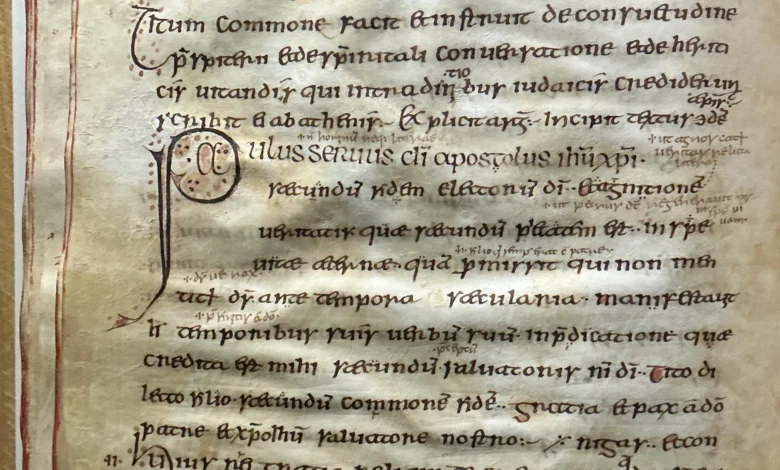
In a landmark multidisciplinary study that bridges the gap between paleography and molecular biology, researchers have unlocked an unexpected biological record hidden within the pages of some of Europe’s most treasured medieval manuscripts. By analyzing the animal skins used to create parchment, an international team led by University College Dublin (UCD) has successfully recovered ancient viral DNA, providing a definitive timeline for the sheeppox virus (SPPV). This breakthrough not only sheds light on the devastating economic and social impacts of livestock disease in the pre-modern era but also establishes a new methodology for reconstructing the evolution of pathogens that continue to threaten agriculture today.
The Parchment as a Biological Repository
For centuries, the creation of manuscripts was a labor-intensive process requiring the preparation of animal hides—predominantly sheep, goats, and cattle. Unlike modern paper, which is derived from wood pulp or rags, parchment is a proteinaceous material that retains the biological signature of the animal from which it was sourced. Because these manuscripts were often commissioned by the church or royal courts and kept in climate-controlled environments, they have served as unintentional time capsules, shielding biological material from the degradative forces of the environment.
The research team, which included experts in genetics, history, virology, and protein chemistry, turned their attention to high-profile historical artifacts, including the 1,000-year-old York Gospels and the Corpus Glossary held at Corpus Christi College, Cambridge. The findings were revelatory: the presence of SPPV DNA on these pages suggests that the parchment was crafted from the hides of animals that were infected with the virus at the time of their slaughter. This discovery provides the first direct genetic evidence that sheeppox, a highly contagious and lethal disease, was endemic to European flocks long before the advent of modern veterinary records.
A Chronology of Contagion: From the Bronze Age to the Middle Ages
The investigation into the sheeppox virus extended far beyond the monastic libraries of Europe. To understand the full scope of the virus’s trajectory, researchers analyzed DNA extracted from ancient sheep teeth recovered from archaeological sites across the Eurasian steppe. Teeth are particularly resilient to environmental degradation, acting as natural vaults for ancient genetic material.
By synthesizing the data from medieval parchment with the genomic information retrieved from Bronze Age remains, the researchers constructed a 3,700-year timeline of the disease. The data indicates that the capripoxvirus family—which includes sheeppox, goatpox, and lumpy skin disease—diverged between 11,500 and 3,700 years ago. This timeline correlates precisely with the Neolithic and Bronze Age expansions of human civilization. As early pastoralists domesticated livestock and began the massive, systemic migration of herds across the Eurasian continent, they inadvertently created the ideal conditions for the rapid transmission and evolution of viral pathogens. The movement of these animals served as a biological bridge, carrying the virus across vast geographical distances and establishing it as a persistent threat to early agricultural economies.
The Resilience of a Silent Killer
Perhaps the most striking outcome of the genomic analysis is the remarkable genetic stability of the sheeppox virus. While many viruses, such as influenza, mutate rapidly to evade host immunity and environmental changes, the sheeppox virus has remained largely unchanged for several millennia. This evolutionary stasis is a critical finding for contemporary virology.
By comparing the ancient viral sequences recovered from the manuscripts with modern samples of the virus, researchers have identified that the core genome of SPPV has undergone very little variation since the medieval period. This lack of mutation suggests that the virus reached a "peak" of adaptation to its host thousands of years ago. Understanding why the virus has remained so stable—and which specific genetic mechanisms allowed it to become such an effective pathogen in the first place—could provide the key to developing more effective vaccines and containment strategies.
Global Implications and Economic Impact
Sheeppox remains a significant economic burden in the 21st century. It is a highly contagious disease characterized by fever, skin lesions, and high mortality rates, particularly among young animals. Outbreaks frequently result in the mass culling of flocks, causing catastrophic losses in wool, milk, and meat production. The persistence of the virus in modern regions, such as recent outbreaks in Greece, underscores the relevance of this research.
Louis L’Héte, a PhD candidate at UCD and the lead author of the study, emphasized the dual nature of these findings. "The recording of ancient DNA of pathogens has completely changed our understanding of infectious disease in the past," L’Héte stated. "By showing that parchment can preserve animal pathogen DNA, we open the door to a new field of study. It is highly probable that archives and libraries around the world contain the genetic traces of disease outbreaks that occurred centuries ago, providing a ‘living’ map of historical epidemiology."
Collaborative Science and Future Research
The success of this study was predicated on an unprecedented level of interdisciplinary cooperation. More than 30 institutions, including Trinity College Dublin, the Helmholtz Institute for One Health, and the University of Cambridge, contributed resources and expertise. The project was supported by funding from Taighde Éireann (Research Ireland) and the European Research Council.
This collaborative model proved essential for interpreting the nuances of the findings. For instance, the discovery of viral DNA on parchment made from goatskin and calfskin—species not typically associated with sheeppox—presented a significant challenge. Researchers theorize that this could indicate either cross-species transmission, which would be a significant epidemiological discovery, or, more likely, environmental contamination occurring during the shared processing of hides in medieval tanneries. The ability to distinguish between these possibilities was only achievable through the integration of historical context with advanced genomic sequencing.
Implications for Archival Conservation
Beyond the biological discoveries, the study has significant implications for how museums and libraries approach the conservation of medieval artifacts. If manuscripts are indeed "archives of disease," then the handling and study of these documents must be reconsidered. While the DNA found in these manuscripts poses no threat to humans, it does highlight the need for careful management to prevent cross-contamination between different historical collections.
Furthermore, this research demonstrates that the value of an archive is not limited to the text inscribed on the page. The medium itself—the animal hide—is a primary source for understanding the ecological and agricultural history of the world. As conservation techniques improve, it is likely that future studies will be able to extract even more detailed information from these documents, such as evidence of other pathogens, dietary history, or the environmental conditions of the regions where the livestock were raised.
Conclusion: A New Window into the Past
The investigation into the York Gospels and other medieval texts has effectively transformed these cultural icons into scientific instruments. By documenting the 3,500-year history of the sheeppox virus, researchers have demonstrated that the past is never truly gone; it is woven into the very fabric of the records we have preserved.
This study provides a vital template for future research into the evolution of zoonotic diseases. As the global scientific community continues to grapple with the emergence of new pathogens, the lessons learned from the stability and transmission history of the sheeppox virus offer a unique perspective on the long-term relationship between humanity, our livestock, and the viral world. The marriage of humanities-based archival research with hard-science genomics has proven that the most profound insights into our future may well be found within the forgotten corners of our past.
Related posts: