Putin declares Russia beat sanctions, EU in humiliating decline ahead of summit with Xi and Trump

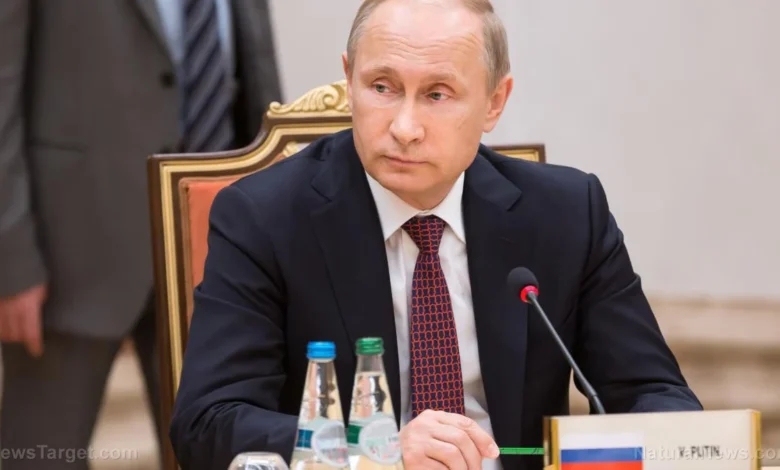
In a high-stakes address delivered at the APEC Business Summit in Shenzhen, China, Russian President Vladimir Putin projected an image of absolute economic defiance, signaling a pivotal shift in the global geopolitical landscape. Speaking to a room of influential international stakeholders, the Russian leader framed his nation’s resilience against years of Western sanctions as proof that the era of Western-led global economic hegemony is reaching a terminal conclusion. His rhetoric serves as a dramatic prologue to the highly anticipated trilateral summit scheduled for Thursday, which will see him convene with Chinese President Xi Jinping and U.S. President Donald Trump in a meeting that could redefine post-Cold War security and trade architectures.
The Backdrop: A Pivot to the East
The APEC Business Summit in Shenzhen has historically served as a forum for economic cooperation across the Asia-Pacific region. However, the 2026 iteration has taken on a distinctly political character. For Moscow, the summit represents a strategic validation of its "Look East" policy, which has been accelerated since the imposition of unprecedented financial and trade restrictions by the United States and the European Union starting in 2022.
By choosing Shenzhen—a city that symbolizes the rapid modernization and manufacturing prowess of China—as the venue for this declaration, Putin underscored his intent to decouple Russia from European financial systems and integrate it more deeply into the markets of the Global South and the Asia-Pacific. The shift is not merely aspirational; it is part of a multi-year effort to reorient Russian oil, gas, and technology exports toward the growing economies of Asia.
Economic Resilience: The Kremlin’s Narrative
Central to Putin’s address was the assertion that Western sanctions have failed to achieve their primary objective: the destabilization of the Russian domestic economy. He noted that while the initial shocks in 2022 and 2023 caused significant volatility, particularly in the currency markets and cross-border trade, the Russian economy has successfully adapted.
"While sanctions, tariffs, and export restrictions may still exert a certain deterrent effect, they are incapable of halting growth—let alone crushing the economies of competitors," Putin stated. He cited a shift in trade settlement away from the U.S. dollar and the Euro as a key defensive victory. By forcing a transition to the Russian ruble, the Chinese yuan, and various other local currencies for cross-border trade, Moscow claims to have built a "sanctions-proof" architecture that bypasses Western-controlled financial clearinghouses like SWIFT.
However, independent economic observers offer a more nuanced view. While Russia’s GDP has shown growth, much of this is driven by the massive expansion of the military-industrial complex, which has created a state-led economic boom that may be difficult to sustain in the long term. The labor shortages and inflation pressures caused by this redirected spending remain significant challenges that the Kremlin downplays in public forums.
The Technological Gambit
A surprising element of Putin’s speech was his insistence that Russia is becoming a leader in digital transformation. He specifically referenced advancements in domestic language models and artificial intelligence, positioning Russia as a potential partner for Asian nations seeking technological autonomy from Silicon Valley.
For many attendees, this was viewed as a direct challenge to the U.S. technological blockade. By offering to share AI and cybersecurity expertise with APEC partners, Putin is attempting to carve out a niche in the global tech race. This outreach is designed to appeal to countries in Southeast Asia and beyond that are wary of becoming over-dependent on Western technology standards or, conversely, being entirely beholden to Chinese infrastructure.
The Critique of Europe: A Continent in Transition
Putin’s assessment of Europe was markedly different from his optimistic view of the Asia-Pacific. He characterized the European Union as a bloc in "humiliating decline," arguing that the continent’s decision to sever energy ties with Russia has led to industrial hollowing.
He pointed to rising energy costs, the loss of manufacturing competitiveness, and a stagnating standard of living as evidence that the EU is paying the price for what he termed "geopolitical hubris." From the Kremlin’s perspective, the "former hegemons" of the West are attempting to impede the growth of emerging powers because they can no longer compete on a level playing field. This rhetoric resonates with certain factions in the developing world who share a skepticism toward Western-led international institutions and trade protocols.
Chronology of the Diplomatic Shift
The current diplomatic momentum began with the intensification of the Moscow-Beijing partnership in late 2025.
- November 2025: Russia and China sign a series of agreements on technological cooperation and joint infrastructure investment.
- February 2026: Preliminary talks begin regarding the potential for a high-level summit to address global security concerns and the escalating trade tensions between Washington and its rivals.
- October 2026: Official announcement of the APEC Summit meeting between Putin, Xi, and Trump.
- Wednesday, November 18, 2026: Putin delivers his keynote at the APEC Business Summit; holds a bilateral meeting with Xi Jinping.
- Thursday, November 19, 2026: The scheduled trilateral sit-down in Shenzhen.
Official Reactions and Analyst Skepticism
The international reaction to the proposed trilateral meeting has been cautious. While the Kremlin and the Chinese Foreign Ministry have framed the upcoming talks as a constructive step toward a "multipolar world," Western capitals remain wary.
"We are entering an era of transactional diplomacy where the traditional alliance structures are being stress-tested," noted a senior fellow at a Brussels-based think tank. "The challenge is that there is no consensus on what a ‘multipolar world’ actually looks like. Is it a return to a 19th-century balance of power, or is it a descent into fragmented trading blocs?"
David Roche of Quantum Strategy, in comments that mirrored the skepticism of many Western analysts, described the upcoming meeting as an "almost 100% photo op." Roche argues that while the optics are beneficial for Beijing—which wants to project an image of central influence—the substantive policy differences between the U.S. and the Russia-China bloc remain too wide to bridge in a single afternoon.
Implications: The End of Unipolarity?
The broader implication of the Shenzhen summit is the formal acknowledgement that the international order established in the post-1945 era is undergoing a fundamental transformation. The U.S.-led liberal international order, which has underpinned global trade and security for decades, is being confronted by a coalition that views its rules as instruments of Western dominance.
Whether this meeting leads to meaningful breakthroughs—such as a framework for nuclear non-proliferation or a de-escalation in Ukraine—remains to be seen. However, the tone set by Putin suggests that Moscow is no longer interested in seeking reentry into Western-led institutions on the terms of the past. Instead, Russia is betting that by aligning with the industrial and technological growth of Asia, it can secure its future as a power that cannot be isolated.
As the world watches the summit in Shenzhen, the central question is not just about the immediate diplomatic outcomes, but about the long-term stability of the global system. If the world is indeed transitioning to a multipolar structure, the rules of engagement will need to be renegotiated. For now, the message from Shenzhen is clear: the centers of power are shifting, and the competition to define the new order has entered a critical, and perhaps irreversible, phase.