
The pursuit of longevity often conjures images of arduous wellness regimens, restrictive dietary protocols, and exhaustive exercise schedules. Individuals seeking to alter their long-term health trajectory frequently anticipate a demanding catalog of behavioral modifications. However, modern nutritional science increasingly points toward interventions that are remarkably accessible. Among the most robustly supported dietary habits in contemporary epidemiological research is the daily consumption of tree nuts and peanuts—a minor adjustment requiring little more than incorporating a single daily serving into one’s routine. Backed by decades of prospective cohort studies, clinical trials, and meta-analyses, mounting empirical data indicates that this simple culinary addition yields profound, systemic benefits for human health span and lifespan.
The Epidemiological Foundation: Decades of Observation
The scientific consensus regarding nut consumption and mortality is rooted in extensive, long-term prospective investigations. For decades, large-scale epidemiological studies, such as the Nurses’ Health Study and the Health Professionals Follow-up Study, have tracked the dietary habits and health outcomes of hundreds of thousands of participants over extended periods.
A landmark systematic review and meta-analysis published in the journal BMC Medicine synthesized data from multiple global cohorts to evaluate the relationship between nut intake and specific health outcomes. The findings revealed a clear inverse relationship: individuals who consumed approximately one ounce of nuts per day—roughly equivalent to a golf-ball-sized portion—exhibited a 22 percent lower risk of all-cause mortality compared to those who abstained or rarely consumed nuts.
Crucially, this protective association demonstrated remarkable consistency across diverse geographic populations, varied age brackets, and distinct baseline dietary backgrounds. Whether evaluated in North American, European, or Asian cohorts, the regular inclusion of nuts proved to be a reliable predictor of extended longevity.
Nutritional Architecture: Why Nuts Deliver Systemic Protection
The broad physiological benefits derived from nuts are attributable to their complex, nutrient-dense composition. While sometimes scrutinized for their high caloric density, nuts are fundamentally distinct from ultra-processed, calorie-dense foods lacking nutritional value. Instead, they provide a dense matrix of bioactive compounds that act synergistically within the human body.
Nuts are rich in monounsaturated and polyunsaturated fatty acids, which play a critical role in lipid metabolism, endothelial health, and neurological function. Furthermore, they serve as an excellent source of plant-based protein, dietary fiber—which supports a healthy gastrointestinal microbiome—and essential micronutrients, including magnesium, potassium, and selenium.
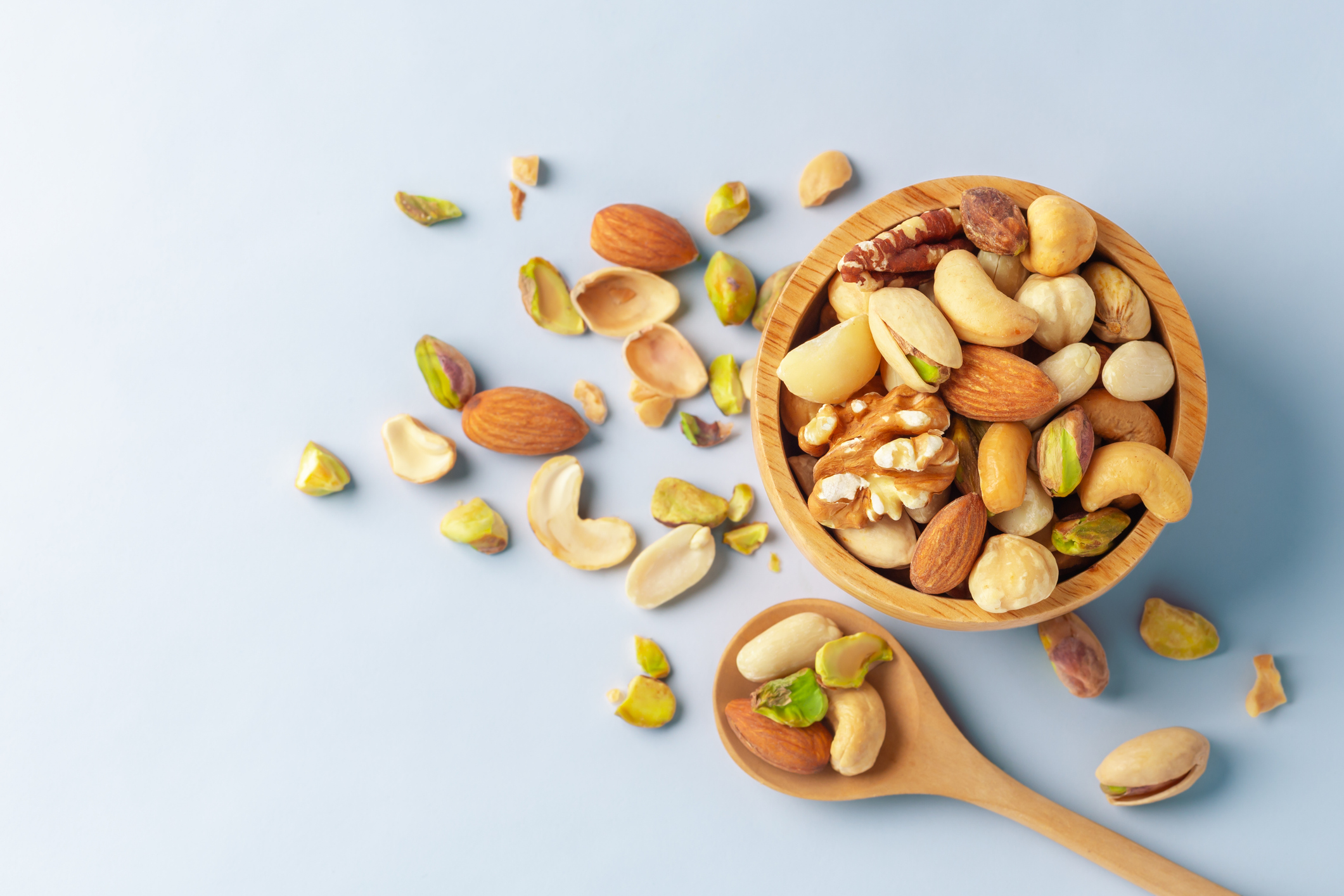
Beyond macronutrients, tree nuts and peanuts are exceptional reservoirs of polyphenols and other antioxidants. These bioactive molecules mitigate oxidative stress and systemic inflammation, two primary biological drivers of cellular aging and the pathogenesis of chronic non-communicable diseases. By neutralizing free radicals and downregulating inflammatory pathways, the constituents of nuts help preserve cellular integrity across multiple organ systems over decades of life.
Cardiovascular Health and the PREDIMED Trial
Nowhere is the therapeutic impact of nut consumption more pronounced than in the domain of cardiovascular health. Cardiovascular disease remains the leading cause of morbidity and mortality globally, making preventative dietary strategies a primary focus of public health initiatives.
Data from the aforementioned BMC Medicine meta-analysis highlighted a 21 percent reduction in the overall risk of cardiovascular disease among daily nut consumers. Furthermore, the analysis demonstrated a 25 to 29 percent reduction specifically in the incidence of coronary heart disease—the clinical manifestation most frequently underlying acute myocardial infarctions. Because these figures represent an aggregation of numerous independent studies, their statistical power and reliability are exceptionally high.
To establish causality rather than mere correlation, researchers turned to randomized clinical trials—the gold standard of medical evidence. The most definitive of these is the PREDIMED (PREvención con DIeta MEDiterránea) trial, a massive, multicenter randomized study conducted in Spain. PREDIMED evaluated the effects of a traditional Mediterranean diet supplemented with either extra-virgin olive oil or a daily serving of mixed nuts (walnuts, almonds, and hazelnuts) in individuals at high baseline risk for cardiovascular events.
The results of the PREDIMED trial provided compelling proof of efficacy. Participants assigned to the Mediterranean diet supplemented with mixed nuts experienced approximately a 30 percent reduction in major adverse cardiovascular events, including stroke and myocardial infarction. Notably, a specific sub-analysis within the trial revealed nearly a 50 percent reduction in stroke risk among the nut-supplemented cohort. Unlike observational data, this randomized controlled trial demonstrated that incorporating nuts directly alters cardiovascular risk trajectories in high-risk populations.
Beyond the Heart: Oncology and Metabolic Implications
While cardiovascular protection has dominated the literature, ongoing research continues to unveil broader systemic advantages associated with regular nut intake. The BMC Medicine review identified an 11 percent lower risk of cancer mortality among frequent nut consumers, with certain malignancies, such as colorectal cancer, showing particularly strong inverse associations.
Oncologists and nutritional scientists theorize that this chemopreventive effect stems from the combined action of fiber, selenium, vitamin E, and diverse phenolic compounds. These elements regulate cellular proliferation, enhance deoxyribonucleic acid (DNA) repair mechanisms, and modulate the gut microbiota to promote an anti-carcinogenic systemic environment.

A persistent barrier to widespread dietary adoption has been the apprehension surrounding weight gain, given that nuts are predominantly composed of fats and are calorically dense. However, clinical investigations have consistently debunked this concern. Study after study has demonstrated that regular nut consumption does not contribute to weight gain and, in many cases, is associated with long-term weight maintenance or modest weight loss.
This metabolic paradox is explained by several physiological mechanisms. Nuts induce robust postprandial satiety, largely driven by their protein, fat, and fiber content, which collectively delay gastric emptying and suppress subsequent hunger signals. Additionally, human absorption studies have revealed that a portion of the fats contained within nuts is not fully absorbed by the gastrointestinal tract due to the rigid cell wall structure of the nut matrix. Consequently, individuals incorporate nuts into their diets without experiencing the expected caloric surplus, often achieving a state of mindful, self-regulated energy intake.
Public Health Implications and Practical Integration
The convergence of robust epidemiological data, randomized clinical trials, and clear mechanistic pathways positions nut consumption as a cornerstone of evidence-based preventative nutrition. Public health organizations, cardiologists, and geriatricians increasingly advocate for the inclusion of simple dietary habits that bridge the gap between scientific discovery and daily human behavior.
Unlike complex pharmaceutical interventions or restrictive dietary paradigms that often suffer from low long-term compliance rates, incorporating a one-ounce serving of nuts—such as almonds, walnuts, pistachios, or pecans—requires minimal behavioral friction. The accessibility of this intervention enhances its public health utility, allowing diverse socioeconomic populations to engage in effective primary prevention against chronic disease.
As research into health span optimization continues to evolve, the humble nut serves as a reminder that profound physiological improvements do not always necessitate radical disruption. Backed by rigorous, peer-reviewed science across multiple decades, the daily ritual of consuming a handful of nuts remains one of the most thoroughly validated, accessible, and enjoyable prescriptions for longevity available in modern medicine.
Related posts: