Unpacking the Neuroscience of Revenge: A Deep Dive into its Addictive Nature and Forgiveness as a Neurobiological Antidote

New research in neuroscience is shedding light on the compelling and often destructive nature of revenge, proposing that it can develop into a powerful habit akin to addiction. Conversely, studies indicate that forgiveness may offer one of the most effective pathways to interrupt this cycle, fostering emotional healing and strengthening self-control. This paradigm shift in understanding human responses to grievance is spearheaded by James Kimmel Jr., an assistant clinical professor at the Yale School of Medicine and co-founder/co-director of the Yale Collaborative for Motive Control Studies. His work, informed by a profound personal experience with violence and retaliation, explores the deep-seated neurological underpinnings of vengeance and the transformative power of forgiveness.
A Personal Genesis: From Victimization to Vengeance
James Kimmel Jr.’s quest to understand the mechanisms of revenge and forgiveness began not in a laboratory, but amidst the trauma of his youth in rural Central Pennsylvania. Growing up on a farm, Kimmel endured years of escalating bullying from neighboring farm kids. What started as verbal taunts progressed to physical assaults, including pushing, shoving, kicking, and punching, coupled with relentless psychological abuse and humiliation. This protracted period of torment culminated in a terrifying incident when Kimmel was 16 or 17 years old.
One night, the Kimmel family was awakened by a gunshot. Peering out, they saw a pickup truck, known to be driven by one of his tormentors, speeding away. While no immediate damage was apparent, the true horror was discovered the following morning. Kimmel found Paula, the family’s beloved beagle hunting dog, dead in her pen, a bullet wound to her head. Despite reporting the incident, law enforcement indicated they would not pursue the case, leaving the family to grapple with profound grief and a sense of injustice.
Weeks later, the torment escalated further. While Kimmel was home alone late one night, a vehicle stopped outside their house, followed by a flash and an explosion. Their mailbox had been deliberately blown up. This act of destructive aggression, Kimmel recounts, not only detonated the mailbox but also shattered what remained of his self-control. Overwhelmed by years of unaddressed trauma, a sense of powerlessness, and the recent violent acts against his family and pet, a primal urge for retribution seized him.
In a moment of intense rage, Kimmel retrieved his father’s loaded handgun, jumped into his mother’s car, and sped off into the night. He located his tormentors’ truck, cornering them against a barn. As they emerged from their vehicle, Kimmel observed two crucial details: they were unarmed, and they had no knowledge of his weapon. It was, he recognized, the "perfect setup to get the perfect payback." As he reached for the gun and began to exit his car, a sudden, powerful flash of insight stopped him. He foresaw two possible futures: one, where he would commit a violent act, irrevocably destroying his own identity, facing arrest and incarceration, and ultimately losing his future; the other, a path of restraint. The realization that the cost of revenge far outweighed any perceived satisfaction prompted him to pull back, shut the car door, and drive home, narrowly averting a catastrophic act of violence. This pivotal moment ignited his lifelong pursuit of understanding the complex interplay between vengeance and healing.
From the Courtroom to the Clinic: Legalized Revenge and a Search for Answers
Kimmel’s initial response to his trauma wasn’t forgiveness; it was a desire for revenge, albeit at a "lower price." This led him to pursue a career in law, specializing in litigation. He began to perceive the legal system, particularly litigation, as a form of "professional revenge business," where lawyers effectively "sell revenge to the masses" under the guise of "Justice." While acknowledging that legal avenues are preferable to street violence, he recognized the underlying retaliatory process.
In his experience as a litigator, Kimmel observed a disturbing pattern: both he and his clients experienced "momentary bursts of pleasure" with every small victory or infliction of pain on the opposing side. Clients reveled vicariously in these reports, and Kimmel himself felt a surge of satisfaction as the "dealer" of this process. Over time, this professional engagement with vengeance began to seep into his personal life. He found himself seeking grievances and reasons for anger at home, using retaliation to "self-medicate" and feel better. This led to a profound personal crisis, where he questioned if he was "hooked on something," realizing he was unable to resist the urge for retribution despite its negative consequences, a hallmark of addiction. This period of intense introspection culminated in suicidal ideation, prompting a radical shift in his career trajectory.
Kimmel transitioned from law to academia and research, eventually joining the Yale School of Medicine’s Department of Psychiatry. This unusual career path, despite his lack of a traditional research psychology or neuroscience background, allowed him to collaborate with leading neuroscientists. His personal experience and professional observations fueled his interest in exploring the neurobiological basis of revenge, coinciding with the nascent stages of brain imaging research into the phenomenon.
The Neuroscience of Vengeance: A Brain on Drugs
The burgeoning field of neuroscience has begun to provide compelling insights into the brain’s activity during revenge-seeking. Using advanced imaging techniques such as functional magnetic resonance imaging (fMRI) and positron emission tomography (PET) scans, researchers can observe real-time brain activity. Studies involve presenting individuals with a grievance—a reason to feel victimized—and then offering an opportunity for retaliation.
What these studies reveal is striking: "your brain on revenge looks like your brain on drugs," as Kimmel succinctly puts it, emphasizing that this is not merely a metaphor but a neurobiological reality. The brain regions most closely associated with the "go circuitry" of addiction—the motivation, craving, and pleasure—are significantly activated. These include the nucleus accumbens and the dorsal striatum. These areas are crucial components of the brain’s reward system, which processes pleasurable stimuli and reinforces behaviors associated with rewards, from food and sex to addictive substances.
The sequence of neurological events begins with the experience of a grievance, which activates the brain’s pain network, particularly the anterior insula. This region is involved in processing painful sensations and emotions, including disgust and empathy. The activation of the anterior insula appears to then cue the desire for revenge within the reward circuitry. Crucially, the prefrontal cortex—the "stop circuitry" responsible for executive functions, decision-making, cost-benefit analysis, and self-control—appears to be significantly suppressed or "shut down" during revenge seeking. This inhibition of the prefrontal cortex, combined with the activation of the reward system, leads to what Kimmel describes as "compulsive revenge seeking." His own near-violent act as a teenager exemplifies this, where his "stop circuitry" only activated at the very last second, overriding an otherwise unchecked "go" impulse.
This neuroscientific evidence lends strong support to Kimmel’s assertion that revenge can manifest with the properties of an addiction. The definition of addiction, broadly, is the inability to resist an urge or desire to engage in a behavior (such as gambling, gaming, or substance use) despite knowing its negative consequences. If the drive for revenge meets these criteria—an irresistible urge leading to harm to oneself or others—then, from a clinical perspective, it aligns with what addiction medicine specialists would recognize as an addictive behavior.
Revenge as a Global Driver of Violence
Beyond individual brain activity, criminologists and behavioral scientists have identified revenge seeking as a primary motivation across a wide spectrum of violence. This includes intimate partner violence, youth violence, bullying, street and gang violence, violent extremism, police brutality, genocide, and warfare. The perception of being wronged consistently emerges as a core factor motivating individuals to inflict harm on others. This underscores the profound societal impact of unaddressed grievances and the powerful, destructive cycle of retaliation. Kimmel aptly calls revenge the "world’s deadliest addiction" due to its pervasive role in escalating conflicts and perpetuating cycles of harm. The adage "hurt people hurt people" gains significant validation through this lens, highlighting the critical need for effective interventions.
Forgiveness: The Neurobiological Antidote
If revenge operates like an addiction, then forgiveness, according to Kimmel’s research and neuroscientific findings, acts as its "detox." Emerging studies indicate that forgiveness neurobiologically reverses the circuitry activated by a grievance and the subsequent drive for revenge.
When an individual engages in forgiveness, studies show a remarkable shift in brain activity. Putting individuals in an fMRI scanner, giving them a grievance, and then providing an opportunity to forgive (rather than retaliate) reveals several key neurobiological benefits:
- Pain Cessation: Forgiveness appears to shut down or significantly reduce activity in the brain’s pain network, particularly the anterior insula. This suggests that forgiveness directly alleviates the emotional and psychological pain associated with past wrongs.
- Reward Circuitry Deactivation: The "go circuitry" of addiction—the nucleus accumbens and dorsal striatum—is also observed to quiet down. This deactivates the craving and compulsive drive for revenge, breaking the addictive cycle.
- Prefrontal Cortex Reactivation: Crucially, forgiveness reactivates the prefrontal cortex, restoring executive function, decision-making capabilities, and self-control. This allows individuals to weigh consequences more effectively and make choices aligned with their long-term well-being, rather than being driven by impulsive retaliation.
Kimmel characterizes these three neurobiological benefits as making forgiveness "almost a human superpower or a wonder drug." Unlike pharmaceutical interventions, this "drug" is free, requires no prescription or pharmacy, and is manufactured internally, available 24/7. This underscores its immense potential for individual and societal healing.
The Power of Decisional Forgiveness: An Internal Act of Healing
A common misconception about forgiveness is that it is a "soft" spiritual practice, a gift to the transgressor, or an act of condoning the wrongdoing. Kimmel emphasizes that neurobiological forgiveness, often referred to as decisional forgiveness by psychologists, is none of these. It is an internal decision made solely for one’s own healing, without necessarily involving or informing the person who caused the harm. It does not pardon the act or absolve the perpetrator; instead, it liberates the individual from the grip of past wrongs.
The power and immediacy of decisional forgiveness can be demonstrated through a simple exercise. By reflecting on a personal grievance and then merely imagining what it would feel like to forgive it, individuals often report an immediate sense of relief, a dissipation of tension, and a dissolution of emotional pain. From a neuroscience perspective, even this imaginative act momentarily stops the pain, quiets revenge fantasies, and reactivates the prefrontal cortex, providing immediate psychological and neurological benefits.
This "non-justice theory" of forgiveness focuses on the self-healing aspect, allowing individuals to release the pain of the past and reclaim their present and future. Revenge, by its nature, keeps individuals tethered to past events, dragging victimhood and pain into the present, contaminating life, and hindering productivity. Forgiveness, in contrast, offers a pathway to break free, leaving the past in the past.
Broader Implications for Society, Justice, and Well-being
The implications of understanding revenge as a neurobiological addiction and forgiveness as its antidote are profound and far-reaching.
- Criminal Justice Reform: Traditional punitive legal systems, which Kimmel metaphorically described as "selling revenge," could benefit from integrating restorative justice practices rooted in forgiveness. While incarceration rates in countries like the United States are high, evidence suggests that the length or severity of sentences often has little impact on recidivism. Shifting focus towards understanding the underlying motivations for violence and offering pathways for healing could lead to more effective rehabilitation and reduced re-offending rates. The Greater Good Science Center, supported by grants like the Templeton World Charity Foundation, actively works on "Putting the Science of Forgiveness into Practice," bridging research with real-world applications in justice and conflict resolution.
- Mental Health and Addiction Treatment: Recognizing revenge as an addictive behavior opens new avenues for therapeutic intervention. Strategies used in addiction treatment, such as cognitive behavioral therapy (CBT) and motivational interviewing, could be adapted to help individuals overcome compulsive revenge-seeking. Integrating forgiveness-based practices into mental health protocols could offer a powerful tool for emotional regulation, stress reduction, and overall psychological well-being.
- Conflict Resolution and Peacebuilding: On a larger scale, understanding the addictive nature of revenge could inform approaches to interpersonal, community, and even international conflicts. The current global landscape, marked by polarization and ongoing conflicts, could benefit immensely from promoting forgiveness as a mechanism for de-escalation and reconciliation. Imagine the potential for healing if communities and nations could collectively embrace the internal decision to forgive, breaking cycles of retaliatory violence.
- Individual Empowerment: For individuals, the knowledge that forgiveness is a self-manufactured "wonder drug" provides an accessible and powerful tool for personal healing. It empowers them to take control of their emotional responses to adversity, allowing them to discharge grievances, reduce chronic stress, and enhance their capacity for joy and productivity.
For James Kimmel Jr., forgiveness is not a one-time event but a daily practice. He acknowledges that grievances are a constant part of human experience, but through consistent application of decisional forgiveness, he is able to release them, move forward, and maintain a productive and fulfilling life. His work underscores that forgiveness, whether viewed through a spiritual or purely medicinal lens, offers immense benefits, grounding it firmly in neurobiological reality. By letting go of the past and its lingering pain, individuals can fully embrace their present and shape a more positive future.
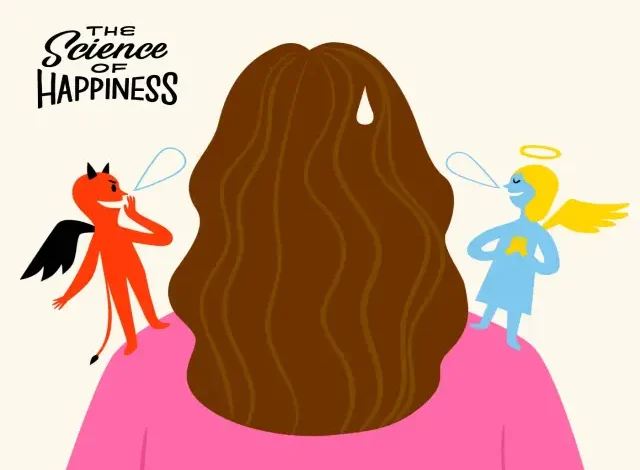
The research presented by James Kimmel Jr. and The Science of Happiness podcast offers a compelling new framework for understanding one of humanity’s most destructive impulses and one of its most profound capacities for healing. By illuminating the brain’s role in both revenge and forgiveness, it provides a scientific basis for fostering individual well-being and building a less violent, more compassionate world.