Greater Goodies 2024: Illuminating Human Strengths Amidst Global Challenges

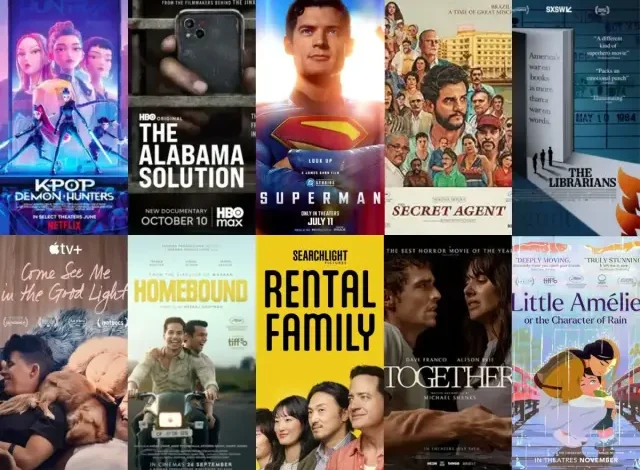
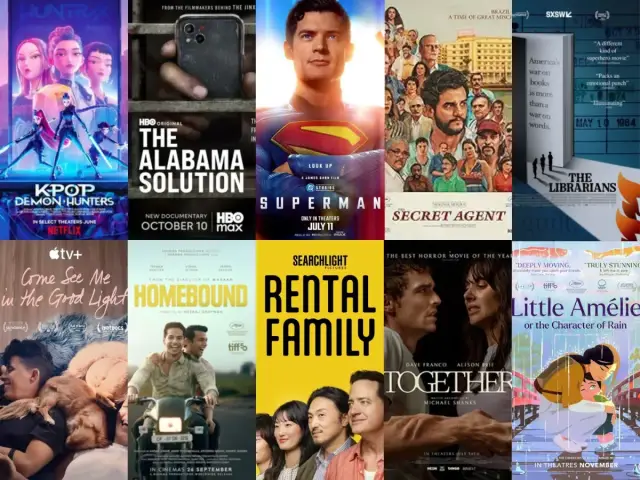
Every year, the Greater Good Science Center at the University of California, Berkeley, bestows its "Greater Goodies" awards upon films that profoundly illuminate human strengths and virtues. The 2024 selection, a diverse tapestry of cinematic narratives from across the globe, reveals a striking thematic convergence around love, courage, and connection. This emphasis is arguably not coincidental. In an era increasingly defined by what sociologist Edgar Morin termed the "polycrisis"—a complex web of interlocking political, social, and ecological adversities—artists worldwide appear to be summoning these fundamental human qualities as both a reflection of our struggles and a beacon of hope. While some may view these films primarily as entertainment, their collective resonance offers a compelling lens through which to understand our shared human experience and inspire individual and collective flourishing.
The Purpose Award: The Alabama Solution
Andrew Jarecki and Charlotte Kaufman’s heart-rending documentary, The Alabama Solution, plunges viewers into the grim realities of Alabama’s prison system, largely through the clandestine phone footage captured by inmates themselves. These harrowing recordings expose horrendous conditions and systemic violent abuse perpetrated by prison guards, painting a stark picture of a system in crisis. As prisoners and their families bravely strive to hold the state accountable for constitutional violations and advocate for a more just environment, they frequently confront deep-seated discriminatory biases.
Charles Dickens’s poignant observation in Little Dorrit—that "[l]ike a well, like a vault, like a tomb, the prison had no knowledge of the brightness outside"—resonates deeply within this narrative. The film vividly portrays the agonizing darkness imposed by incarceration. Yet, The Alabama Solution simultaneously reveals the remarkable resilience of the human spirit. Inmates, despite their suffering, find their own light through solidarity, shared knowledge, and a profound sense of purpose in fighting for fundamental civil and human rights. It is a humbling testament to witness these individuals, some enduring solitary confinement, continually rekindling hope and inspiration for one another.
The film underscores the enduring power of purpose, a concept famously explored by Holocaust survivor and psychiatrist Viktor Frankl in Man’s Search for Meaning. Frankl argued that humanity’s primary drive lies in discovering purpose, even in the most extreme circumstances, a hypothesis consistently supported by subsequent psychological research demonstrating purpose as crucial for survival and well-being. In the context of the Alabama prison system, this purpose manifests in various forms. For some, it is the pursuit of self-improvement and education; studies have consistently shown that earning a college degree while incarcerated is among the most effective rehabilitation programs, significantly reducing recidivism rates. For others, purpose is found in the collective effort to transform the prison system itself. The documentary challenges viewers to consider alternatives to current punitive approaches, advocating for a societal purpose that includes the well-being and rehabilitation of those accused of breaking the law. The ongoing national debate surrounding criminal justice reform, particularly in states with high incarceration rates and documented abuses like Alabama, finds potent expression in this film, urging a re-evaluation of ethical and humane treatment within correctional facilities.
The-Art-of-Surrender Award: Come See Me in the Good Light
Come See Me in the Good Light tells the deeply personal story of poets Andrea Gibson and Megan Falley, whose love story takes an unexpected turn when Andrea is diagnosed with ovarian cancer. This documentary, born not from major studio backing but from the collective effort of friends and a community of Executive Producers, highlights the challenges of independent filmmaking, particularly for narratives that defy conventional commercial appeal. Its creation through community funding underscores a growing trend where audiences directly support stories that resonate with their lived experiences, especially within marginalized communities.
The film serves as a subtly instructive guide to the art of surrender—not as resignation, but as a courageous acceptance of life’s unpredictable terms. Andrea and Meg demonstrate how a sustained creative practice, particularly poetry, trains individuals to "feel it all" and to allow others into their vulnerability. They candidly share how their art became a vital tool for surviving periods of suicidality and the torment of anti-fatness, demonstrating the therapeutic power of creative expression in navigating mental health challenges. The film captures them using their honed skills to remain present and emotionally engaged amidst bad news, moments of joy, and even the mundane frustrations of a dysfunctional mailbox.
In an era where mental health awareness is increasing but stigma persists, particularly for LGBTQ+ individuals, Come See Me in the Good Light offers a powerful message. It illustrates that confronting chronic illness and mental distress requires immense courage and a willingness to embrace vulnerability. The collaboration between Andrea, Meg, and their support network proves that art-making, far from being a solitary pursuit, can be a profoundly communal act that equips individuals to surrender to mortality and live fully until the very end. The film implicitly advocates for a broader societal recognition of the arts as essential to human resilience and well-being, moving beyond mere entertainment to a vital coping mechanism for life’s inevitable hardships.
The Extraordinary Courage Award: Homebound
Homebound chronicles the remarkable journey of two childhood friends, Shoaib, a Muslim, and Chandan, a Dalit, navigating the harsh realities of life in a small North Indian village. Their lives are marred by the pervasive caste and religious discrimination that has historically plagued India. Dalits, once deemed "untouchable," continue to face systemic oppression despite legal protections, while religious minorities like Muslims frequently encounter prejudice. For Shoaib and Chandan, joining the police force represents not just a livelihood, but a desperate quest for the dignity and respect that society has consistently denied them.
However, their aspirations are abruptly halted by a broken examination system and the sudden, sweeping COVID-19 nationwide lockdown in 2020. Inspired by a New York Times article by Basharat Peer, the film vividly captures the humanitarian crisis that unfolded as millions of India’s migrant workers found themselves stranded. Overnight, work vanished, cities became untenable, and all forms of public transportation ceased. With no viable alternatives, countless individuals, much like Shoaib (Ishaan Khatter) and Chandan (Vishal Jethwa), embarked on arduous journeys, walking hundreds of miles back to their distant villages under the blazing summer sun. This mass exodus highlighted deep-seated socio-economic inequalities and the vulnerability of a significant portion of India’s workforce.
Homebound derives its immense power from the multifaceted forms of courage it unveils: the courage to dream against overwhelming systemic obstacles; unwavering loyalty and friendship that transcends deep-seated social divides; the bravery to leave the familiar village for the uncertainty of city life; the willingness to risk everything for the slim hope of safety back home; the sheer strength to endure a journey of unimaginable physical and emotional toll; and the resolve to embrace one’s social identity, shedding the guilt and shame imposed by societal prejudice. Even as the journey exacts a heavy price, the friends persevere, one step at a time, embodying a profound resilience in the face of national crisis and personal adversity. The film serves as a powerful commentary on social justice, economic disparity, and the enduring human capacity for hope and solidarity in the direst of circumstances.
The Embrace-Your-Demons Award: KPop Demon Hunters
KPop Demon Hunters introduces HUNTR/X, a K-Pop trio living a dual life: superstar singers by day, demon hunters by night. This legacy, passed down through generations of women, sees their singing voices transformed into weapons against entities preying on human souls. Rumi, Mira, and Zoey are the latest to carry this ancient mantle. The narrative quickly escalates with the arrival of the Saja Boys, a seemingly charming new boy band who are, in fact, demons stealing the souls of HUNTR/X fans, setting the stage for a spectacular battle both on and off the stage.
Beneath the flashy K-Pop aesthetics and supernatural combat, the film delves into a more personal struggle: Rumi’s hidden secret. The demanding K-Pop industry is notorious for its relentless pressure on idols to maintain a flawless public image, often at the cost of their personal well-being. Rumi’s secret, whatever its nature, strains her relationships with her friends, her fans, and most crucially, herself. As HUNTR/X continues its mission, Rumi’s internal conflict intensifies, manifesting as anxiety and shame that cause her to lose her voice and self-isolate, raising concern among her bandmates.
This narrative arc serves as a powerful metaphor for the universal experience of suppressing one’s "messy parts." The film illustrates that hiding these aspects may work for a time, but inevitably leads to a breaking point. Rumi’s journey forces her to confront a fundamental choice: to embrace all her "broken parts" or allow them to fester. The ultimate message is one of profound self-acceptance: thriving requires acknowledging and integrating all facets of oneself, "demons and all." In a culture increasingly fixated on curated perfection, KPop Demon Hunters offers a refreshing and vital counter-narrative, advocating for authenticity, vulnerability, and the transformative power of self-compassion. The film implicitly critiques the unrealistic pressures of celebrity culture while celebrating the strength found in genuine self-acceptance.
The Ordinary Courage Award: The Librarians
Kim A. Snyder’s documentary, The Librarians, opens with a telling statement from an anonymous librarian: "I never imagined what’s happening right now could ever happen. We just never imagined we would be at the forefront. We’re not necessarily supposed to be seen and felt. We’re stewards of the space, stewards of the resources." This sentiment encapsulates the profound shift in the role of librarians across America, particularly in states like Texas, Louisiana, and Florida, where they find themselves unexpectedly on the front lines of a cultural war.
The film meticulously chronicles how public and school librarians are quietly, yet principledly, battling a surge of book bans and other forms of censorship. These efforts, often fueled by conservative political movements, target books on a wide range of subjects, including histories of slavery, the Ku Klux Klan, and desegregation, as well as any material addressing gender and sexuality. Reports from organizations like PEN America have documented a dramatic increase in such bans in recent years, reflecting a broader ideological struggle over intellectual freedom and the control of information in educational and public institutions.
Beyond censorship, the documentary reveals the multifaceted challenges confronting libraries. My partner, a public librarian, articulates that book bans are merely one front in a broader assault. Libraries face severe budget cuts at the very moment they are inundated with nearly every social problem plaguing American society. Librarians routinely encounter patrons struggling with serious mental illness, children and the elderly in need of social services, immigrants navigating complex systems, and unemployed individuals seeking job resources without home computer access. These institutions have become de facto community centers, providing essential services far beyond mere book lending.
"Going into this field is like getting into any relationship: you never know how fierce you’re going to have to be," my partner observed, echoing the film’s message. "I have a ton of respect for the commitment of so many of my colleagues. And just as much respect for the ones who have had to walk away from the abuse to retain their health and their sanity." This sentiment extends to many other public service professions—teachers, doctors, nurses, journalists—who similarly find themselves in unexpected struggles. The Librarians ultimately paints a chilling portrait of the erosion of democratic principles and the rise of authoritarian tendencies in America, but its most crucial contribution is showcasing the "ordinary courage" of countless individuals, predominantly women, who are unexpectedly drawn into a fight they never sought. Their quiet resolve serves as an powerful example for others who may soon need to defend fundamental freedoms.
The Connectedness Award: Little Amélie or the Character of Rain
Little Amélie or the Character of Rain, directed by Maïlys Vallade and Liane-Cho Han and based on Amélie Nothomb’s novel, delves into the intense inner world of a child, exploring the profound feeling of being the center of the universe. The film traces Amélie’s journey from infancy through childhood, meticulously charting her overwhelming sensory and emotional experiences. This is not a sentimentalized portrayal of childhood, but a raw, authentic depiction of a developmental stage where the self is the absolute epicenter, and the concept of others as independent entities is still nascent.
Watching the movie, particularly with children, evokes a sense of accelerated growth through the various phases of early life. Amélie’s insightful observation, "When you are three, you see everything, and understand nothing," perfectly encapsulates the overwhelming nature of early childhood, a period of intense sensory input coupled with limited cognitive frameworks for understanding. Her first taste of white chocolate is depicted as a moment of "divinity of momentary self-annihilation," highlighting the powerful, almost transcendent nature of early experiences. Similarly, the film vividly portrays the wonder of first encounters: being seen, the visceral colors of spring, the magic of animals, books, a spinning top, and the profound act of deciphering one’s own name and imagining future possibilities.
For a significant portion of the film, Amélie perceives herself as godlike, referring to herself in such terms. This reflects the natural egocentrism of early childhood, a psychological stage where children genuinely believe they are the absolute center of everything. While this feeling can be "terrific" in its power and possibility, it is also "terrible" in its isolation. Developmental psychology research consistently links such pervasive egocentrism, when prolonged or unchecked, to feelings of loneliness, anxiety, and depression as individuals struggle to connect meaningfully with others. As Amélie navigates beauty, grief, love, and loss, she gradually learns that she is not, in fact, the center of the world. This crucial realization underscores a fundamental truth: genuine connection with others is what ultimately gives life meaning and fosters empathy, moving beyond self-centeredness to a richer, shared human experience. The film beautifully illustrates the universal journey from individual perception to collective understanding.
The Prosocial Deception Award: Rental Family
Rental Family explores a peculiar social phenomenon in Japan: small companies that provide "artificial family situations" to fulfill various emotional or practical needs. As Shinji Tada (Takehiro Hira), the company boss, explains, "We sell emotion. We play roles in clients’ lives. Parents, siblings, boyfriends, girlfriends, best friends. And help them connect to what’s missing." He explicitly links this service to the cultural context: "Mental health issues are stigmatized in the country. So people have to turn to other things, like us." This candid admission reveals a profound societal challenge in Japan, where social isolation is a growing concern and traditional avenues for emotional support may be limited or culturally discouraged.
Shinji attempts to recruit struggling actor Phillip Vandarpleog (Brendan Fraser) as the "token white guy" for his team. Phillip accepts, and one of his assignments involves portraying an affluent white father so that a biracial, "illegitimate" daughter can gain admission to a prestigious school. As Phillip and the child develop a genuine connection, the narrative delves into heartbreaking territory, forcing both the characters and the audience to confront the morality of their actions. This unique service reflects a deeper societal need, where pressures to conform, maintain appearances (known as tatemae), and avoid direct confrontation with uncomfortable truths can lead individuals to seek unconventional solutions for their emotional voids.
As the story unfolds, the characters inevitably make mistakes and ethical compromises. Yet, what makes Rental Family so compelling is its willingness to lead viewers to accept that "prosocial deception"—lying to ourselves or others—might sometimes be deemed necessary to achieve a semblance of happiness or fulfill a perceived need. Simultaneously, the film unflinchingly shows the serious and often painful consequences of such fabrications. The film deliberately refrains from resolving this inherent contradiction, allowing the audience to grapple with its existence. At its core, Rental Family poses a challenging question: How do we differentiate between selfish, antisocial lies and deception that is arguably prosocial and kind? As the characters struggle for answers, the film compels its audience to undertake their own ethical introspection, reflecting on the complex interplay between truth, kindness, and human connection in a society often grappling with authenticity.
The Melancholy Love Award: The Secret Agent
Kleber Mendonça Filho, widely regarded as Brazil’s leading filmmaker, presents his latest work, The Secret Agent, a nominee for this year’s Academy Award for Best Picture. The film is predominantly set in 1977 Brazil, a period characterized by what the narrative describes as "great mischief," defined by pervasive corruption, state-sponsored violence, and a military dictatorship that brutally suppressed dissent.
Armando, portrayed with brilliant nuance by Best Actor nominee Wagner Moura, is a research scientist with a compassionate soul and a warm heart. At the film’s outset, he is on the run from assassins, the reasons for which are slowly unraveled throughout the story. A poignant detail is Marcelo’s son’s obsession with the poster for 1977’s blockbuster film Jaws, depicting a giant shark ascending from the depths towards an unsuspecting swimmer. This imagery serves as a powerful metaphor for the omnipresent fear and unseen violence that looms over this family and Brazilian society at large during the authoritarian regime.
One particularly resonant scene occurs early in the film, where Armando meets the residents of a house run by Dona Sebastiana (Tânia Maria), a wise, generous 77-year-old who has witnessed the full spectrum of human experience. As she takes him under her wing, Armando adopts the alias Marcelo, living under a false identity to evade his pursuers. Even amidst the extreme stress of his situation, Marcelo greets every individual with a sense of preciousness, highlighting the loving, almost doting quality often found in Brazilian culture. This warmth is subtly intertwined with saudade, the Portuguese word encapsulating a tragic melancholy, profound longing, and ultimately, a stoic acceptance of fate.
Through a series of intricate twists and turns, The Secret Agent gradually uncovers the true "secret agent" that anchors all our lives: love. It is love that offers ripening, rest, safety, and healing amidst political turmoil and personal danger. The film’s profound message is that even in the darkest times, characterized by fear, oppression, and uncertainty, love endures as a powerful force for connection and resilience. Viewers are left with a renewed determination to cherish and support every person through life’s most difficult periods, affirming the enduring power of human affection in the face of systemic adversity.
The Greater Goodness Award: Superman
Over the past quarter-century, a pervasive trend in superhero narratives has been to re-imagine iconic characters, including Superman, as grim, dark, and often violent figures. The 2013 film Man of Steel, for instance, depicted Superman battling General Zod over Metropolis, resulting in thousands of casualties and Superman ultimately murdering his enemy. This approach often diverges sharply from the traditional ethos of superheroes as ideals of power used for good, embodying aspirational virtues rather than merely reflecting a cynical reality. When heroes become indistinguishable from the villains or the flawed world they inhabit, the genre risks losing its core purpose as a source of hope and inspiration.
James Gunn’s 2025 Superman movie, written and directed by Gunn himself, marks a deliberate and refreshing return to sincerity, good-heartedness, and even a touch of silly fun. Exhibit A of this intentional shift is a scene where Superman (David Corenswet) saves a squirrel from certain destruction. Reports indicate that Gunn faced pushback from test audiences regarding this scene, yet he wisely retained it. This seemingly minor detail serves as a crucial line of demarcation, clearly distinguishing his Superman from recent, darker iterations. While perhaps ludicrous to some, its inclusion is fundamentally "good," communicating a profound respect for all life, no matter how small.
Exhibit B is the inclusion of Krypto the Superdog. Every scene featuring this canine companion, endowed with powers mirroring Superman’s, is utterly delightful. Krypto is portrayed as a "GOOD DOG," a simple yet powerful symbol of uncomplicated goodness and loyalty. In a world saturated with complex moral ambiguities, the straightforward virtue embodied by Krypto is a welcome antidote.
This version of the Superman myth does not aim to provide an intellectually stimulating evening; rather, it offers a viscerally relatable vision of goodness. It reminds audiences of the enduring appeal of a hero who is genuinely kind, compassionate, and unwavering in his commitment to protecting the innocent. As Superman declares at the film’s conclusion: "I’m as human as anyone. I love. I get scared. I wake up every morning and despite not knowing what to do, I put one foot in front of the other and I try to make the best choices I can. I screw up all the time, but that is being human. And that’s my greatest strength." This statement encapsulates the film’s core message: true strength lies not in invincibility, but in the vulnerable, persistent, and fundamentally good effort to navigate life and make the best choices possible, offering a much-needed dose of optimism and a reminder of humanity’s better angels.
The Braver Love Award: Together
Michael Shanks’s Australian body-horror film, Together, delves into a contemporary societal challenge: the declining marriage rates among younger generations, Gen Z and millennials. This trend, often attributed to factors such as economic instability, shifting social norms, and a perceived fear of commitment, forms the thematic bedrock of the film. The story centers on Tim (Dave Franco) and Millie (Alison Brie), a long-term couple struggling to take the ultimate step of tying the knot. Their move to a rural community, intended as a fresh start, instead introduces them to a supernatural force that becomes terrifyingly literal in its intent to bind them together.
On its surface, Together is a sometimes-grisly thriller designed to shock its audience with unsettling imagery of two humans slowly and physically fusing into one. However, beneath these macabre elements lies a surprisingly intelligent and compassionate exploration of couples who are hesitant to truly open up to each other and advance their relationship. The film utilizes the grotesque metaphor of physical fusion to represent the profound, often terrifying intimacy required for true commitment, suggesting that the fear of losing individual identity within a partnership is a significant barrier for many modern couples.
Love, as a theme, is arguably the most animating force in fictional narratives, with countless stories, from the tragic Romeo and Juliet to an endless stream of romantic comedies, attempting to unravel the mysteries of human attraction and connection. Together offers an unconventional, even unsettling, perspective on this universal force. It challenges its audience to confront the inertia of aimless relationships and the anxieties surrounding lifelong commitment. The film suggests that while taking the leap of faith into a committed life with another person can be inherently scary, the cowardice of avoiding such a commitment can lead to an outcome far more horrifying than any initial fear. In an era marked by shifting relationship paradigms and a generational re-evaluation of traditional commitments, Together provides a provocative, if unsettling, commentary on the courage required to truly connect and embrace a shared future, urging viewers to reflect on their own fears and desires in the context of enduring love.
Conclusion: A Cinematic Reflection of Resilience
The diverse collection of films honored with the 2024 "Greater Goodies" awards collectively offers a powerful snapshot of contemporary human experience. From the fight for dignity within Alabama’s carceral system (The Alabama Solution) and the resilience of artists battling illness (Come See Me in the Good Light), to the harrowing journey of migrant workers in India (Homebound) and the internal struggles of K-Pop idols (KPop Demon Hunters), these narratives span continents and genres. They highlight the quiet heroism of librarians defending intellectual freedom (The Librarians), the profound developmental journey from egocentrism to connection (Little Amélie or the Character of Rain), the ethical ambiguities of "rental families" in Japan (Rental Family), the enduring power of love amidst political oppression in Brazil (The Secret Agent), the timeless goodness of a classic superhero (Superman), and the modern anxieties surrounding commitment (Together).
In an age characterized by global polycrisis—a convergence of political instability, social fragmentation, environmental degradation, and technological upheaval—these films serve as vital cultural touchstones. They not only entertain and delight but also compel audiences to confront difficult realities, empathize with diverse struggles, and celebrate the enduring human capacities for love, courage, purpose, and connection. Each film, in its unique way, underscores the idea that even when faced with overwhelming adversity, the human spirit possesses an extraordinary ability to find light, forge meaning, and foster solidarity. The Greater Good Science Center‘s selection reinforces the profound role of art in helping us understand ourselves, navigate complex challenges, and ultimately, inspire us to become our best selves in an increasingly complex world.