The Business of Health with Chip Kahn Explores the Intersection of Artificial Intelligence and Pharmaceutical Discovery with Dr. Elias Zerhouni

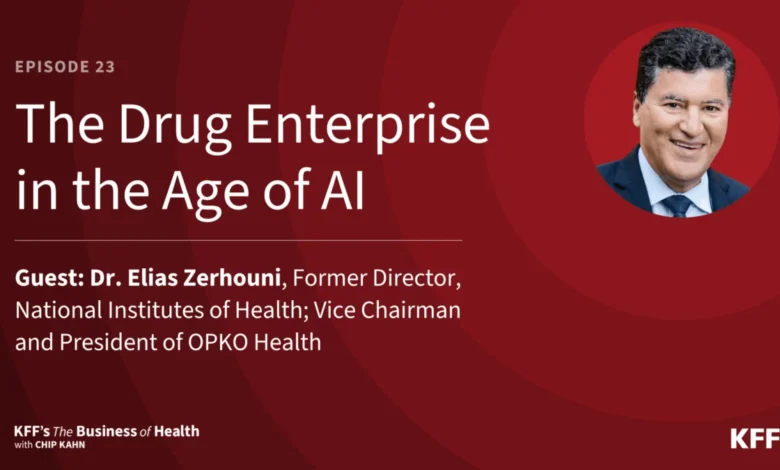
The rapid convergence of artificial intelligence and the life sciences has transformed from a futuristic aspiration into a defining operational reality for the global pharmaceutical sector. As computational power scales exponentially and machine learning models grow increasingly sophisticated, the traditional paradigm of drug discovery—historically characterized by decades of painstaking trial and error, immense financial capital, and high failure rates—is undergoing a profound structural metamorphosis. In Episode 23 of the acclaimed podcast series "The Business of Health with Chip Kahn," host Charles N. Kahn III sits down with renowned physician-scientist and biotech executive Dr. Elias Zerhouni to interrogate the true boundaries of artificial intelligence in modern medicine. The central question animating their dialogue cuts to the heart of contemporary scientific philosophy: while AI undeniably accelerates the speed at which researchers scan chemical libraries and optimize molecular structures, can algorithms ever truly make intuitive, paradigm-shifting discoveries on their own?
Dr. Zerhouni brings a uniquely comprehensive perspective to this debate. Having navigated the upper echelons of both public health administration and private-sector pharmaceutical research, his career bridges foundational academic medicine, government oversight, and commercial biotechnology. During the discussion, Dr. Zerhouni outlines a pragmatic framework for evaluating machine learning capabilities, emphasizing that while computational tools are exceptionally powerful accelerators, the fundamental spark of human creativity remains irreplaceable. To illustrate this point, he offers a compelling historical litmus test: if an advanced artificial intelligence model were fed every single piece of empirical data available in the early 1950s, it still would not have conceptualized or discovered the double helix structure of DNA. That monumental breakthrough required a leap of human intuition, conceptual synthesis, and lateral thinking that raw computational pattern-matching cannot replicate.
The conversation expands beyond theoretical philosophy to address urgent, real-world policy and economic challenges. Kahn and Dr. Zerhouni examine how artificial intelligence is actively reshaping drug development pipelines, evaluate the regulatory agility of the United States Food and Drug Administration (FDA) relative to international counterparts, and analyze the potential macro-level risks posed by a hypothetical slowdown in AI innovation or the gradual erosion of American biomedical research leadership. As global competition in biotechnology intensifies, the stakes for maintaining research excellence and regulatory modernization have never been higher.
The Evolution of Drug Development and the AI Catalyst
To understand the weight of Dr. Zerhouni’s insights, one must examine the historical context of pharmaceutical research and development. For decades, bringing a single new therapeutic compound from initial laboratory bench conception to commercial pharmacy shelves has been a notoriously grueling endeavor. Industry analyses consistently demonstrate that the traditional drug discovery lifecycle spans between ten to fifteen years, with total capital expenditures frequently exceeding two billion dollars per approved drug. Compounding these economic pressures is a notoriously low attrition rate: out of thousands of compounds that enter preclinical testing, only a tiny fraction successfully clears clinical trials and secures regulatory approval.
In recent years, artificial intelligence and deep learning have emerged as the primary vehicles intended to compress this timeline and mitigate financial risk. Machine learning algorithms are now routinely deployed to predict protein folding—exemplified by historic breakthroughs like DeepMind’s AlphaFold—identify promising drug targets, screen vast libraries of chemical compounds in virtual environments, and optimize molecular designs to maximize efficacy while minimizing toxicity. Companies are increasingly leveraging generative models to synthesize entirely novel antibodies and peptides that do not naturally exist in biological systems.
Dr. Zerhouni’s venture, ModeX Therapeutics—where he serves as co-founder—exemplifies this cutting-edge approach. Operating as a subsidiary of OPKO Health, where Dr. Zerhouni holds the positions of vice chairman and president, ModeX utilizes advanced computational frameworks and machine learning to engineer complex multispecific antibodies designed to combat infectious diseases and complex malignancies. Yet, even as he champions these technological advancements, Dr. Zerhouni maintains a grounded view of their current limitations. He distinguishes clearly between acceleration and creation. AI excels at processing vast dimensional datasets, recognizing subtle correlations across millions of biological variables, and executing iterative optimizations at speeds unattainable by human researchers. However, the formulation of entirely new hypotheses, the recognition of anomalies that defy existing paradigms, and the deep contextual understanding of biological systems remain firmly anchored in human cognition.
A Distinguished Career Shaping Global Biomedical Science
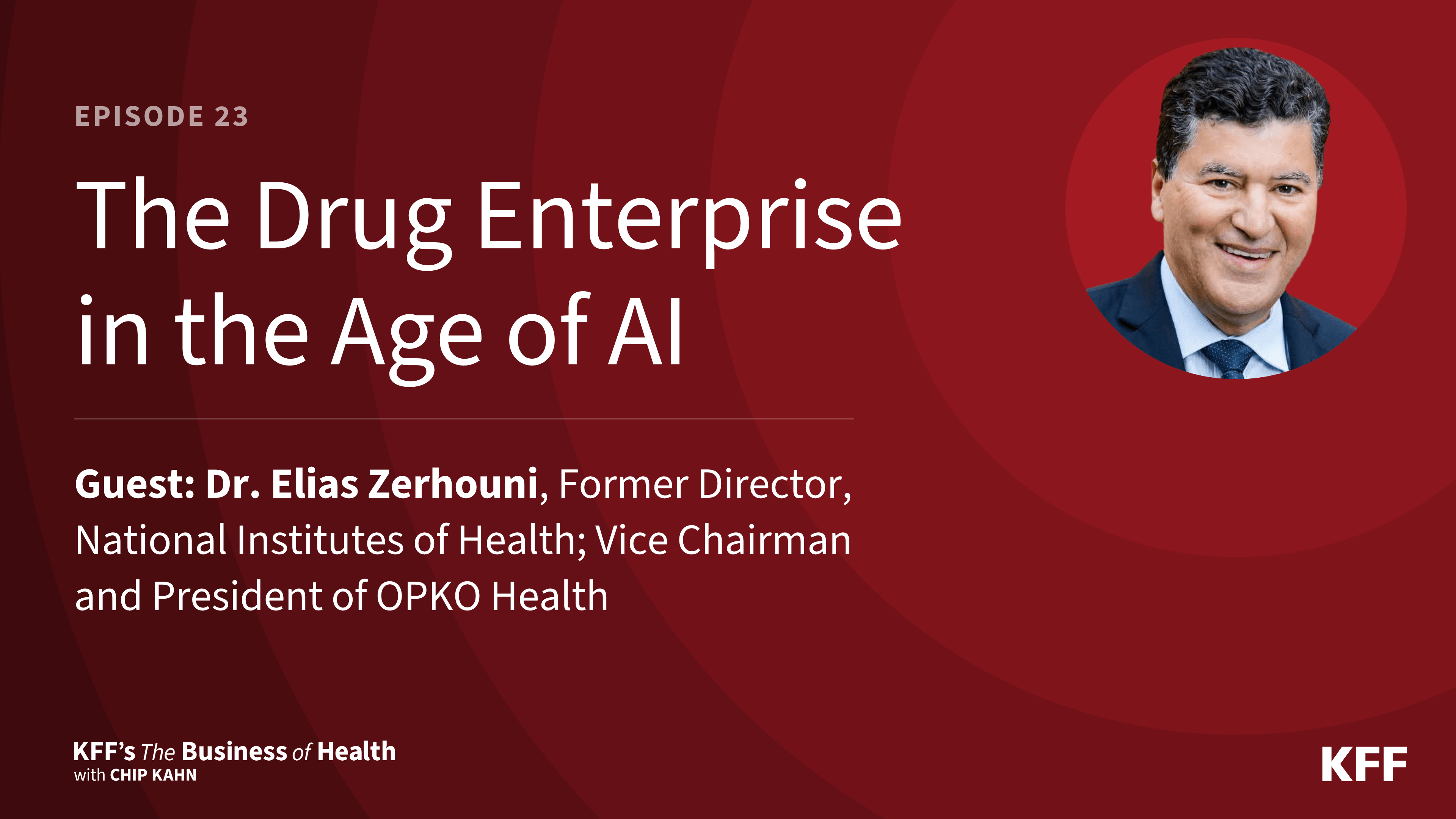
The depth of analysis provided in this episode is rooted in Dr. Elias Zerhouni’s extraordinary professional trajectory across public service, academia, and private industry. Born in Algeria, Dr. Zerhouni emigrated to the United States, where he established a stellar academic and clinical career at the Johns Hopkins University and Hospital. Over decades at Johns Hopkins, he served as a professor of radiology and biomedical engineering, chaired the Russell H. Morgan Department of Radiology and Radiological Sciences, and held leadership roles including Vice Dean for Research and Executive Vice Dean of the School of Medicine from 1996 to 2002.
His leadership in academic medicine propelled him to the national stage in 2002, when he was appointed Director of the National Institutes of Health (NIH) by President George W. Bush. In this monumental role, Dr. Zerhouni oversaw the nation’s premier biomedical research agency, managing a complex network of 27 distinct Institutes and Centers, a workforce exceeding 18,000 employees, and an annual budget that reached $29.5 billion by the end of his tenure in 2008. During his time at the helm of the NIH, he championed visionary initiatives such as the NIH Roadmap for Medical Research, designed to transform medical discovery by supporting high-risk, high-reward interdisciplinary research and tackling structural bottlenecks in the scientific enterprise.
Following his tenure at the NIH, Dr. Zerhouni’s influence continued to expand globally. In November 2009, President Barack Obama appointed him as one of the inaugural U.S. Science Envoys, a role designed to foster scientific and technological collaboration between the United States and Muslim-majority nations. Concurrently, he served as a senior fellow for the Bill & Melinda Gates Foundation, advising on global health initiatives and vaccine development strategies.
In the private sector, Dr. Zerhouni transitioned to big pharma leadership, serving as President of Global Research and Development and as a member of the Executive Committee for Sanofi from January 2011 to July 2018. Over the course of his career, he has co-founded five successful biotechnology start-ups, authored more than 200 peer-reviewed scientific publications, and secured numerous patents for his pioneering work in magnetic resonance imaging (MRI) and biomedical technology. His extensive list of accolades includes being awarded the prestigious Legion of Honor medal by the French National Order in 2008, election to the French Academy of Medicine, and appointment as Chair of Innovation at the prestigious Collège de France. He is also an elected member of both the U.S. National Academy of Medicine and the U.S. National Academy of Engineering.
The Policy Landscape: FDA Regulation and International Competitiveness
A critical component of Chip Kahn and Dr. Zerhouni’s dialogue centers on the regulatory environment governing biopharmaceutical innovation, specifically the role of the United States Food and Drug Administration (FDA) in evaluating AI-driven therapeutics and diagnostics. As algorithms begin to generate novel drug candidates at unprecedented volumes, regulatory agencies face the dual challenge of ensuring rigorous safety and efficacy standards without stifling rapid technological progress.
During the podcast, the discussion evaluates how the FDA’s review processes stack up against regulatory bodies in other major jurisdictions, such as the European Medicines Agency (EMA) and regulatory agencies in Asia. Historically, the U.S. regulatory framework has been viewed as the global gold standard for clinical trial rigor, yet critics often point out that traditional regulatory pathways were designed for conventional small-molecule drugs and monoclonal antibodies, not dynamic, self-learning algorithms or computationally synthesized biological entities.
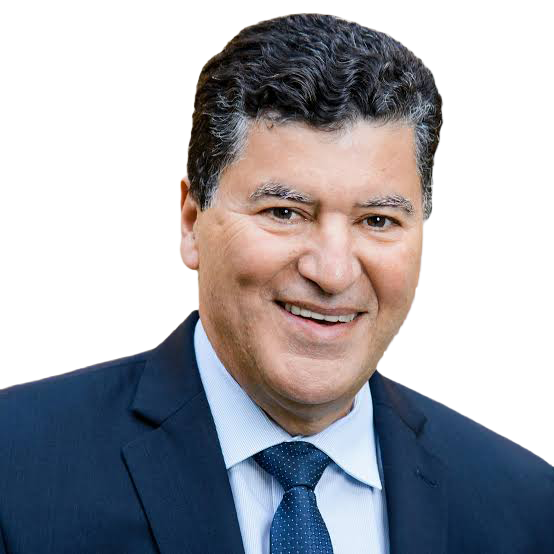
Dr. Zerhouni addresses the delicate balance regulators must maintain. If regulatory frameworks are overly rigid or slow to adapt, domestic biotechnology firms may increasingly seek early-stage clinical validation and approval pathways overseas, potentially eroding the United States’ historic competitive advantage in biomedical research and development. Conversely, lowering safety standards to accommodate technological speed could expose patients to unforeseen clinical risks. The conversation highlights the urgent need for regulatory science to evolve in tandem with artificial intelligence, fostering adaptive approval pathways that can accommodate continuous learning models and complex computational simulations.
The Macro Implications: Protecting American Research Leadership
Beyond immediate regulatory and corporate considerations, Kahn and Dr. Zerhouni explore the broader macroeconomic and geopolitical implications of potential slowdowns in artificial intelligence innovation and the gradual erosion of foundational American research support. The United States has long maintained global preeminence in biomedical research, driven by robust federal funding through the NIH, elite academic research institutions, and a vibrant venture capital ecosystem. However, rising global competition—particularly from nations making massive state-backed investments in artificial intelligence, biotechnology, and quantum computing—threatens to challenge this dominance.
Dr. Zerhouni cautions that maintaining America’s leadership position requires sustained commitment to both basic science and applied technology. While corporate venture capital is vital for translating discoveries into commercial products, basic scientific research—the kind that uncovers fundamental biological mechanisms without an immediate commercial payoff—has historically relied on public funding streams. Any contraction in public support for foundational research, combined with potential bottlenecks in AI adoption or regulatory friction, could create a compounding deficit in the discovery pipeline of the next generation of life-saving cures.
About the Host and Podcast Series
"The Business of Health with Chip Kahn," produced through KFF (Kaiser Family Foundation), serves as an essential weekly audio platform exploring the complex financial, operational, and policy-driven forces shaping the modern health care ecosystem. Host Charles N. Kahn III brings decades of high-level health policy expertise to the microphone. In addition to his role as a senior visiting fellow at KFF, Kahn serves as a visiting senior fellow at the American Enterprise Institute, a nonresident senior scholar at the University of Southern California’s Schaeffer Center for Health Policy & Economics, and co-chair of the international Future of Health collaborative.
The podcast’s dedicated series on artificial intelligence in health care addresses one of the most disruptive technological shifts in medical history. By bringing together industry pioneers, frontline clinicians, regulatory experts, and health policy leaders, the series provides listeners with a rigorous, nuanced understanding of how artificial intelligence is altering health care delivery, managing operational consequences, and shaping future policy frameworks. Episode 23 featuring Dr. Elias Zerhouni stands out as a masterclass in balancing technological optimism with scientific realism, offering vital takeaways for health care executives, policymakers, and researchers striving to navigate the future of medicine.