Study of 57,793 Adults in 24 Countries Links Varied Social Activity to Better Cognitive Scores

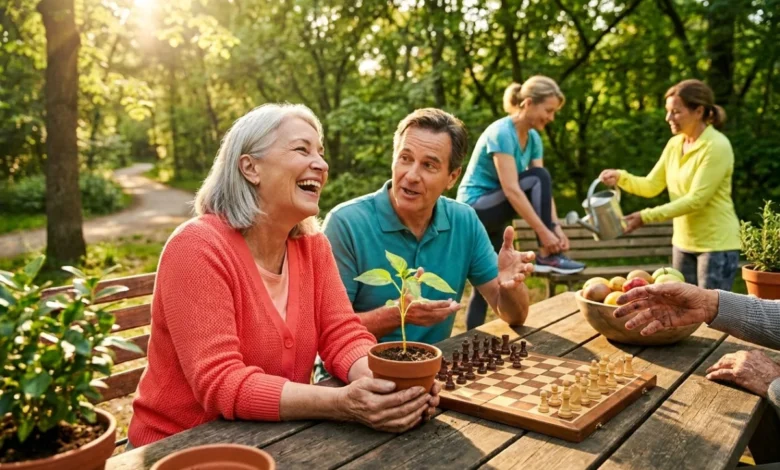
A massive, multi-national study involving 57,793 participants across 24 countries has provided compelling new evidence that social engagement serves as a critical pillar in maintaining cognitive health throughout the aging process. By tracking participants over a median period of six years, researchers have established a statistically significant correlation between regular social participation—such as volunteering and joining sports clubs—and the preservation of memory and executive thinking skills.
This research arrives at a pivotal moment in public health. As global populations age, the prevalence of cognitive impairment has become a primary focus for geriatric medicine and neurology. Despite the widespread recognition that brain health is essential, the path to achieving it remains poorly understood by the general public. A 2026 Alzheimer’s Association report highlighted a stark disconnect: while nearly 90% of American adults acknowledge the importance of brain health, only 9% report having a clear understanding of the actionable steps required to preserve it. This study aims to bridge that knowledge gap by identifying lifestyle factors that may offer protective benefits.
The Methodology of Global Cognitive Tracking
The study employed a longitudinal design, a gold-standard approach in aging research that allows scientists to observe changes in the same individuals over an extended timeframe. Participants were evaluated on their participation in a variety of social venues, ranging from community-based sports clubs and educational classes to formal volunteer organizations.
Cognitive function was not measured through a single snapshot, but rather through repeated, standardized testing of memory, attention, and executive function. By establishing a median follow-up period of six years, the research team was able to capture the trajectory of cognitive health rather than mere performance at a single point in time.
However, the researchers were transparent about the inherent limitations of such a large-scale observational study. Unlike a controlled clinical trial where variables are strictly managed, this study relied on self-reported social data. Furthermore, longitudinal studies of this nature often face the challenge of participant attrition. Over a six-year period, researchers must account for individuals who leave the study due to illness, mortality, loss of interest, or geographical relocation. In the context of cognitive aging research, attrition is particularly complex, as declining cognition itself can sometimes be the very reason a participant is no longer able to complete follow-up assessments.
Key Findings: The Power of Targeted Engagement
The data revealed a clear pattern: individuals who maintained a high level of social integration demonstrated superior cognitive outcomes compared to those who remained socially isolated. Among the wide array of activities tracked, two stood out as particularly potent: volunteering and participation in sports clubs.
These activities are unique in that they require a combination of physical movement, social interaction, and cognitive planning. The findings align with previous, smaller-scale investigations into community-based interventions. For instance, studies examining weekly attendance at social or community groups for adults aged 65 and older have historically shown a reduction in cognitive risk. Interestingly, some prior research suggests these benefits may be most pronounced in individuals who do not engage in high-intensity exercise, suggesting that the social and cognitive stimulation provided by group activities may compensate for other gaps in a wellness regimen.
Cognitive Reserve and Neuroplasticity
Why would joining a sports club or volunteering have a tangible effect on brain chemistry? The researchers propose the concept of "cognitive reserve" as a primary mechanism. Cognitive reserve refers to the brain’s resilience—its ability to adapt to age-related physiological changes and maintain function despite potential neuropathological damage.
While brain size was once thought to be the primary indicator of cognitive capacity, contemporary neuroimaging studies have shifted the focus toward brain efficiency. Scans show that individuals with higher cognitive reserve often utilize different neural pathways or demonstrate greater metabolic efficiency, allowing them to achieve the same cognitive output as younger or healthier counterparts while exerting less neural effort.
This is intrinsically linked to neuroplasticity, the brain’s remarkable ability to reorganize itself by forming new neural connections throughout life. When an individual engages in novel social activities, learns new skills, or navigates complex interpersonal environments, they effectively challenge the brain to "re-wire." This process of constant activation is believed to bolster the brain’s structural integrity, potentially delaying the clinical onset of cognitive decline.
Limitations and the Nuance of Aging Research
Despite the optimistic findings, the authors of the study urge caution. The association identified does not constitute definitive proof of causation. It is possible that individuals with higher baseline cognitive function are naturally more inclined to seek out social activities, rather than the activities themselves causing the cognitive improvement.
Furthermore, the study did not isolate the "dose" required to see results. There is no clear prescription for how many hours a week one must volunteer to achieve optimal brain health, nor did the research identify a specific biological mechanism that explains the link. The scientific community is increasingly moving away from the outdated, simplistic view that intellectual ability simply degrades as a linear function of time. Modern research views aging as a complex, multi-dimensional process where different cognitive domains—such as vocabulary, processing speed, and episodic memory—behave differently over time.
Broader Implications for Public Health
The findings of this international study suggest that the strategy for maintaining cognitive health should be holistic. While diet, cardiovascular health, and regular physical exercise remain the cornerstones of medical advice, social stimulation and intellectual challenge are increasingly being recognized as equally vital.
For public health policymakers, the study highlights the importance of creating environments that facilitate social connectivity for older adults. This could mean incentivizing community centers, supporting programs that integrate seniors into volunteer roles, or promoting intergenerational sports and hobby clubs.
The report offers a pragmatic takeaway for the general population: a "packed calendar" is not required. Rather, the key appears to be the consistency of engagement. The researchers advise individuals to identify activities they genuinely enjoy and can return to regularly. By integrating these social touchpoints into one’s routine, individuals may be able to build the cognitive reserves necessary to support healthy aging.
A Chronology of Research Evolution
To contextualize these findings, it is helpful to look at the timeline of recent cognitive aging research:
- Early 2020s: Research shifts focus from treating cognitive decline to identifying modifiable lifestyle factors that can prevent or delay it.
- 2024: Increased attention is placed on the "social determinants of health," with studies suggesting that loneliness and social isolation are as damaging to cognitive health as smoking or sedentary lifestyles.
- 2026 (Current Study): The publication of the 57,793-person study provides a massive, global data set that reinforces the link between social participation and cognitive preservation.
- Ongoing: Future studies are expected to utilize wearable technology and more frequent brain imaging to track how specific social interactions influence real-time brain activity and long-term structural health.
Conclusion: Beyond the Lab
While science continues to parse the exact biological mechanisms behind the link between social activity and cognitive health, the practical implications are clear. The brain is an organ that thrives on stimulation and interaction. Whether through the structured environment of a volunteer organization or the physical and social demands of a sports club, staying connected to one’s community appears to be a powerful strategy for protecting the mind.
As we continue to navigate an era where cognitive longevity is a top priority, the message from the research is one of empowerment. Maintaining brain health does not necessarily require expensive supplements or high-tech medical interventions; it can begin with the simple, human act of showing up, participating, and staying engaged with the world around us. By prioritizing social health, we may not only enrich our daily lives but also invest in the long-term vitality of our most important asset: our cognitive capacity.