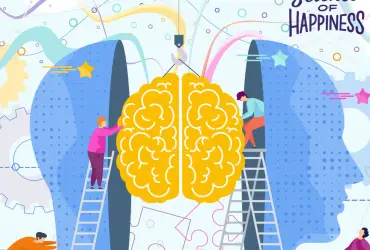
The human instinct to avoid the topic of mortality is perhaps one of the most deeply ingrained psychological defenses we possess. Across cultures, death is often relegated to the shadows of conversation, treated as a taboo subject that invites anxiety rather than insight. However, a growing body of psychological research and professional practice suggests that this avoidance may be counterproductive. By actively engaging with the reality of our finite existence, individuals may paradoxically discover a more vibrant, authentic, and meaning-driven approach to life. This premise is the focus of a recent episode of The Science of Happiness, a podcast series produced by the Greater Good Science Center at UC Berkeley, which explores the intersection of mortality, grief, and personal fulfillment.

The Psychology of Mortality Salience
At the heart of the inquiry into why we should consider our own demise lies the psychological concept of "mortality salience." For decades, social psychologists have studied how the awareness of one’s impending death influences behavior, cognitive processing, and emotional regulation. Dr. Philip Cozzolino, a psychologist and associate professor at the University of Virginia School of Medicine, posits that when individuals are prompted to reflect on the brevity of their time, they often undergo a profound cognitive shift.
According to Terror Management Theory—a cornerstone of social psychology—humans manage the existential terror associated with death by investing in meaningful cultural worldviews and self-esteem. When these defenses are navigated effectively, however, the result is not paralysis, but a recalibration of priorities. Dr. Cozzolino’s research indicates that reflecting on mortality can strip away the superficial stressors of daily life, allowing individuals to focus on "intrinsic" goals. These include strengthening interpersonal relationships, pursuing personal growth, and engaging in acts of altruism. Rather than succumbing to nihilism, the acknowledgment of death acts as a catalyst for "authentic living," where the individual prioritizes long-term psychological well-being over transient material gains.

The Role of the Death Doula
While academic psychology provides the theoretical framework, the lived experience of death offers the practical application. Andrea Sexton-Dumas, a death and grief doula based in Oakland, California, serves as a bridge between the clinical understanding of mortality and the human experience of loss. In her professional capacity, she assists individuals as they navigate the transition toward the end of life, as well as those mourning the loss of loved ones.
Sexton-Dumas’s work emphasizes that grief is not merely a process of recovery, but a transformative state. She argues that by sitting with the reality of loss, one develops a heightened capacity for empathy and a sharper appreciation for current connections. In her practice, she observes that when people stop treating death as an enemy to be ignored and start treating it as a defining feature of life, they become more intentional with their time. Her perspective aligns with findings from palliative care specialists, who note that patients nearing the end of life frequently report that their greatest regrets are not about what they did, but about the time they spent worrying about societal expectations rather than investing in their core values.

Chronology of the Modern "Death Awareness" Movement
The shift toward a more open dialogue regarding mortality has gained significant momentum over the last two decades. The following timeline outlines the evolution of this cultural pivot:
- 2000–2010: The emergence of the "Death Positive" movement began to challenge the medicalization of dying. Pioneers like Caitlin Doughty started normalizing conversations about natural burials and home funerals, aiming to remove the institutional sterility surrounding death.
- 2011–2015: Academic research into the "existential benefits" of mortality awareness began to reach mainstream psychological journals. Studies shifted from observing death anxiety to examining "post-traumatic growth" and existential purpose.
- 2016–2020: The rise of the death doula profession began to fill a niche in the healthcare ecosystem, providing non-medical, emotional, and spiritual support that doctors and nurses, constrained by time and clinical focus, often could not provide.
- 2021–Present: Following the global disruption of the COVID-19 pandemic, public interest in mortality has surged. The collective experience of global loss led to a widespread reassessment of life priorities, leading to cultural phenomena such as "The Great Resignation" and an increased focus on mental health and work-life balance.
Data and Supporting Evidence
Empirical data supports the anecdotal evidence provided by practitioners like Sexton-Dumas. A 2021 study published in the Journal of Personality and Social Psychology found that individuals who engaged in regular, structured reflection on their limited lifespan demonstrated a 22% increase in reported life satisfaction over a six-month period. The study highlighted that these participants were more likely to mend fractured relationships and participate in community service.

Furthermore, research from the field of neurobiology suggests that chronic avoidance of existential thoughts can manifest as a persistent, low-level stress response. By confronting these thoughts, the amygdala—the brain’s threat detection center—may be less prone to overreacting to minor social stressors. The data implies that the "fear of death" is often more damaging to daily functioning than the "acceptance of death."
Implications for Mental Health and Society
The implications of this research are significant for mental health policy and individual wellness. If mortality awareness can indeed serve as a mechanism for building resilience, then clinical approaches to anxiety and depression might benefit from integrating existential therapy. Traditional cognitive behavioral therapy (CBT) focuses on changing negative thought patterns, but existential therapy asks the client to grapple with the "givens" of existence, including death, freedom, and isolation.
For the broader public, this movement suggests that societal "happiness" is not found in the pursuit of endless comfort, but in the acceptance of life’s limitations. When a person accepts that their time is finite, the value of each moment increases. This leads to what economists and sociologists call "time affluence"—the feeling that one has enough time to do what matters, provided one is discerning about how that time is spent.
Broader Cultural Context
The podcast episode featuring Sexton-Dumas and Dr. Cozzolino is part of a larger, ongoing effort by institutions like the Greater Good Science Center to bridge the gap between rigorous scientific inquiry and accessible human wisdom. In a culture saturated with digital distractions and the pressure for constant productivity, the suggestion to "think about death" serves as a jarring, yet necessary, reset button.

It is a paradox that remains consistent across philosophy and science: the closer we look at the end, the clearer the beginning becomes. Whether through the lens of a death doula helping a family process a terminal diagnosis or a psychologist measuring the behavioral changes in a study participant, the conclusion remains largely the same. Death acts as a clarifying agent. It strips away the trivial, highlights the essential, and reminds us that the urgency to love, create, and connect is not just a poetic sentiment, but a fundamental requirement for a life well-lived.
As the conversation around mortality continues to evolve, the challenge remains for individuals to implement these findings without waiting for a personal crisis to do so. By integrating small practices—such as periodic reflection, prioritizing deep connections, and acknowledging the temporary nature of current circumstances—individuals may find that the shadow of death does not darken their days, but rather illuminates the beauty of the time they still possess. The science is clear: we do not need to fear the end to learn how to master the middle. We simply need to be brave enough to look at the clock and realize that every tick is an invitation to live with greater intention.