
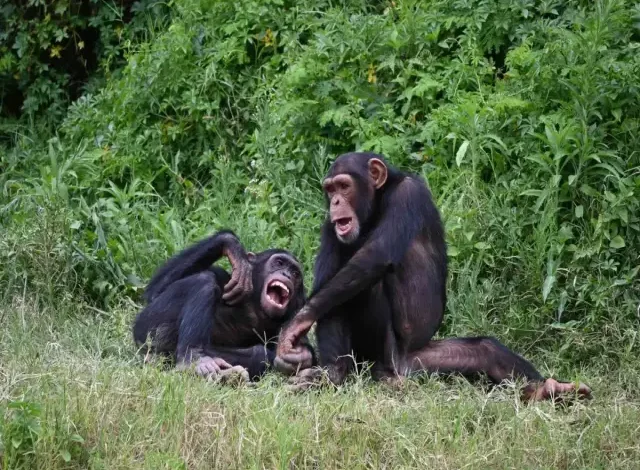
The complex social architecture of chimpanzees, our closest living relatives, has long been a subject of intense scientific scrutiny. While researchers have previously established that these primates engage in selective grooming and reciprocal food sharing—behaviors that mirror the prosocial nature of human cooperation—a critical question has remained unanswered: How does the status of a relationship influence antisocial behavior, such as theft? A recent study conducted by researchers at the University of California, Berkeley, has provided significant evidence that friendship, defined by close bonds and repeated positive interactions, acts as a regulatory mechanism for aggression and greed among chimpanzees.
The research, published in the journal Evolution and Human Behavior in September 2026, utilized a controlled experimental environment at the Ngamba Island Chimpanzee Sanctuary in Uganda to observe how social bonds dictate interactions involving "stolen" food. By analyzing the behavioral patterns of 26 chimpanzees over an extensive 800-hour observation period, the team identified that these animals do not merely interact randomly; rather, they maintain distinct hierarchies of intimacy that dictate their willingness to harm or exploit one another.
Establishing the Social Baseline: Methodology and Observation
To ensure the study captured authentic social dynamics, the researchers first established a rigorous definition of "friendship" within the sanctuary’s population. Using longitudinal observation, the team tracked grooming patterns, physical proximity, and the frequency of cooperative interactions. This phase of the study was essential to differentiate between mere group members and those who had formed enduring, supportive relationships.
Once these social bonds were mapped, the researchers introduced an experimental setup designed to measure "thieving" behavior. Two separate rooms were linked by a mechanism that allowed one chimpanzee, the "thief," to control the fate of food trays occupied by a "victim." The trays were baited with pineapple, a highly desirable resource. The thief was given the option to pull a rope to steal the fruit from the victim’s tray.
The results were statistically significant. In interactions involving non-friends, theft occurred in 70% of the trials. When the same actors were paired with a "friend," the rate of theft dropped to 61%. While a nine-percentage-point difference might appear modest to a layperson, the researchers emphasized that the within-subject design—where every chimpanzee acted as both a thief and a victim across various relationship types—renders the data highly robust. This methodology effectively controlled for individual temperament and hunger levels, isolating "relationship status" as the primary variable driving the reduction in theft.
The Emotional Calculus of Conflict
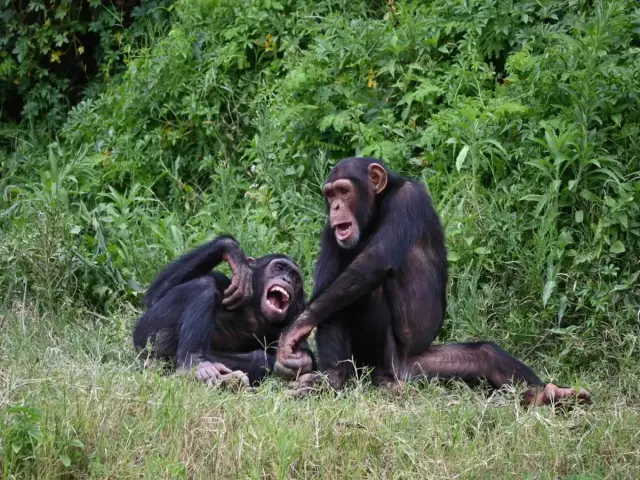
Beyond the raw frequency of theft, the study delved into the emotional responses of the participants. By measuring physical displays of aggression—such as stomping, fist-pounding, and vocalized screeching—the researchers discovered that the "moral" landscape of the chimpanzee community is governed by complex expectations.
When a victim was robbed by a non-friend, their distress was prolonged, and the thief often exhibited sustained negative emotional signaling, indicating a high level of inter-individual hostility. Conversely, when a friend committed the theft, the victim’s angry reaction was sharp but significantly shorter in duration. Similarly, the thieving friend showed less hostility, suggesting an intuitive understanding that their actions violated a social contract. This shift in emotional intensity suggests that chimpanzees hold their friends to a different standard, and perhaps more importantly, that they recognize when they have breached that standard.
Theoretical Context and Evolutionary Biology
The findings from the Social Origins Lab at UC Berkeley contribute to a growing body of literature that challenges the notion of "human exceptionalism" regarding social morality. For decades, the prevailing view in evolutionary psychology was that the moral principles of justice, fairness, and reciprocal altruism were uniquely human traits, arising only after the development of sophisticated language and symbolic culture.
However, Oded Ritov, the paper’s lead author and a Ph.D. candidate, argues that the evidence points to a much deeper, more ancient foundation. "Collaborative relationships are essential for health, survival, and well-being," Ritov stated. "We are increasingly realizing that this is not a phenomenon unique to humans; it is an evolutionary trait that we share with our primate cousins. These friendships are not just about convenience; they are about mutual expectations."
The study aligns with previous work conducted by Jan Engelmann, an associate professor of psychology at UC Berkeley and the paper’s senior author. Engelmann has long argued that while other primates exhibit relationship-specific intentions, the evidence of "expectations" in chimpanzees represents a major discovery. If chimpanzees expect special treatment from their friends and feel a corresponding obligation to provide it, then the building blocks of human moral systems—such as the prohibition of theft or the obligation to share—may have been present in the primate lineage long before the emergence of Homo sapiens.
Implications for the Study of Cooperation
The implications of this research extend far beyond the observation of chimpanzee behavior. By identifying these "basic building blocks" of social order, researchers are better equipped to understand the evolutionary trajectory of large-scale human cooperation. If, as the study suggests, friendship functions as a buffer against antisocial behavior, it provides a plausible explanation for how early human groups moved from small, kin-based units to larger, more complex societies.
The ability to inhibit impulses for the sake of a relationship is a cornerstone of civilized life. If a chimpanzee can exercise restraint to maintain a bond, it suggests that the evolutionary pressure to cooperate was likely a response to the survival benefits of long-term social stability. In the context of the study, the "pineapple trials" serve as a proxy for the broader distribution of resources in a wild environment. When resources are contested, the preservation of a social alliance often outweighs the immediate caloric gain of a stolen snack.
Future Directions and Scholarly Reaction
The academic community has received the findings with significant interest, noting that the study provides a replicable, empirical framework for measuring abstract social constructs like "friendship" and "expectation" in non-human animals. While some critics in the field have historically cautioned against anthropomorphizing primate behavior, the methodology employed by the Berkeley team—which relies on observed behavioral outcomes rather than subjective interpretations of internal states—offers a strong defense against such critiques.
Moving forward, the Social Origins Lab intends to expand this research to investigate whether these expectations regarding fairness and friendship vary across different social contexts or environmental stressors. There is also a growing interest in how these findings might inform conservation efforts. Understanding the complex emotional lives of chimpanzees underscores the ethical imperative to protect their natural habitats and maintain the integrity of their social structures, which are far more fragile and sophisticated than previously acknowledged.
As the scientific community continues to peel back the layers of our shared evolutionary history, the distance between "human" and "animal" continues to shrink. The case of the thieving chimpanzees suggests that while we may be the only species to codify our moral expectations in written law, the underlying desire for fairness, the sting of betrayal, and the restorative power of friendship were likely written into our DNA millions of years ago. By observing our closest relatives, we are essentially looking into a mirror, gaining a clearer view of the deep-seated emotional, social, and moral architecture that defines our own human experience.