Silent Heart Damage: How Chronic Everyday Stress and Inflammation Fuel Cardiovascular Disease


The modern human experience is increasingly defined by relentless pressures—financial strain, professional burnout, socioeconomic disadvantage, and psychological distress—that push the human body far beyond its evolutionary design. While these burdens are frequently discussed in the context of mental exhaustion, a landmark genomic and clinical study involving nearly half a million adults reveals that the physical toll of everyday life extends deep into the cardiovascular system. Chronic stress and lifestyle pressures leave a lasting, often undetectable, physical mark on the human heart, fundamentally altering its architecture long before the first clinical symptom ever manifests.
Led by researchers at the Medical Research Council (MRC) Laboratory of Medical Sciences (LMS) and Imperial College London, this sweeping epidemiological investigation stands as the largest of its kind. By examining the intersection of genetics, blood chemistry, lifestyle habits, and advanced cardiac imaging, the scientific team has uncovered a compelling biological mechanism that connects the socioeconomic realities of daily life to structural heart disease. The findings suggest that millions of people may be walking around with "hidden inflammation" that silently remodels heart tissue over decades, dramatically escalating the baseline risk of catastrophic medical events such as myocardial infarctions (heart attacks) and strokes.
The scale of the investigation, combined with its profound implications for public health policy and preventative medicine, opens new frontiers in cardiology. As healthcare systems globally grapple with an escalating burden of chronic non-communicable diseases, this research reframes cardiovascular health not merely as a consequence of diet and exercise, but as a complex manifestation of human biology intersecting with societal structures, economic status, and mental wellbeing.
Unpacking the Mechanism of Silent Inflammation
To understand how daily stress translates into structural heart damage, it is necessary to examine the foundational biological processes of inflammation. In an acute context, inflammation is an essential, life-saving mechanism. When the body encounters a physical injury, a pathogen, or a sudden trauma, the immune system mounts a rapid response, marshaling white blood cells and specialized proteins to neutralize the threat and begin tissue repair. Once the danger passes, this inflammatory response typically subsides, returning the body to a state of homeostasis.
However, when individuals face persistent, inescapable stressors—such as chronic poverty, sustained occupational burnout, unremitting anxiety, or prolonged exposure to unhealthy environments—the immune system can become trapped in a state of low-grade, chronic activation. Instead of switching off, the body maintains a mild, simmering immune response over months, years, or decades. This persistent, low-level immune activity does not cause immediate, acute illness, which is precisely why it remains undetected by routine clinical check-ups. Yet, over time, this hidden biological friction exacts a heavy toll on vital organs, most notably the cardiovascular system.
In this recent investigation, researchers utilized data from the UK Biobank, an exhaustive biomedical database containing genetic, lifestyle, and health information from approximately 480,000 adult participants. To measure chronic inflammation accurately, the research team focused on a specific biomarker found in blood plasma: glycoprotein acetyls (GlycA). GlycA serves as a robust systemic marker of chronic inflammation because it reflects the structural modifications of circulating acute-phase proteins produced by the liver in response to ongoing immune signaling.
By combining GlycA measurements with high-resolution cardiac magnetic resonance (CMR) imaging and comprehensive genetic profiling, the researchers were able to construct a detailed picture of how chronic systemic inflammation interacts with the physical structure and function of the heart over time.
Structural Remodeling: How the Heart Changes Under Pressure
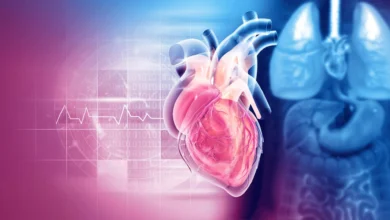
The most striking revelation of the study centers on physical remodeling—the actual physical transformation of the heart muscle in response to chronic inflammatory signaling. When systemic inflammation remains elevated, it triggers cellular and extracellular changes within myocardial tissue.
The data revealed that participants with higher levels of systemic inflammation exhibited distinct structural alterations compared to those with low inflammation levels. Specifically, individuals in the highest inflammation brackets tended to develop:
- Thicker heart walls: The myocardium hypertrophied, or thickened, as a compensatory or pathological response to ongoing physiological stress.
- Smaller heart chambers: The internal volume of the ventricles decreased, limiting the heart’s capacity to fill efficiently with blood during each cardiac cycle.
- Impaired diastolic function: The heart demonstrated poorer filling capabilities, an early indicator of stiffening heart muscle that frequently precedes clinical heart failure.
Crucially, these physical alterations do not happen overnight. They progress slowly and silently over many years. Because the heart is remarkably resilient in compensating for early structural inefficiencies, individuals can experience significant myocardial remodeling without registering any noticeable symptoms such as shortness of breath, chest pain, or exercise intolerance. This silent progression allows the damage to compound unchecked until a critical threshold is breached, often culminating in a sudden cardiac event.
Quantifying the Risk: 43 Percent Higher Incidence of Heart Attack and Stroke
The clinical consequences of this silent structural remodeling are profound. When the research team cross-referenced inflammation biomarkers and cardiac imaging data with long-term health outcomes among the participant cohort, the statistical correlation was unmistakable.
Individuals who fell into the top 20% for systemic inflammation levels faced a 43% higher risk of experiencing a heart attack or stroke compared to participants in the bottom 20%. Most importantly, this elevated risk persisted even after controlling for traditional risk factors and remained robust among individuals who had no prior history of diagnosed cardiovascular disease.
This statistical finding bridges a long-standing gap in clinical cardiology. For decades, physicians have observed that standard risk factors—such as hyperlipidemia (high cholesterol), hypertension, smoking, and sedentary lifestyles—do not fully account for all cardiovascular events. A significant proportion of heart attacks occur in individuals who lack classic risk profiles. Chronic, inflammation-driven structural remodeling provides a missing biological link, explaining how psychological stress, socioeconomic deprivation, and environmental pressures independently drive cardiovascular pathology.
The Convergence of Social Factors, Mental Health, and Genetics
One of the most complex dimensions highlighted by the research team is the profound interplay between societal structures, mental health, and individual biology. Chronic inflammation is not distributed randomly across a population; it is deeply intertwined with social determinants of health.
Professor Declan O’Regan, British Heart Foundation Chair of Cardiovascular AI at Imperial College London and Head of the Computational Cardiac Imaging Group at the LMS, noted the breadth of variables influencing this inflammatory pathway. "The surprising thing was how much social factors and mental health are linked to inflammation and damage to the heart—as well as more well-known risk factors like smoking and inactivity," he explained.
Socioeconomic disadvantage—encompassing financial insecurity, unstable housing, food scarcity, and chronic neighborhood stress—forces the human body into a prolonged state of hyper-vigilance. The neuroendocrine system responds to these environmental pressures by releasing stress hormones such as cortisol and catecholamines, which in turn modulate immune function and promote systemic inflammation. When combined with behavioral coping mechanisms associated with high-stress environments, such as poor diet, tobacco use, and reduced physical activity, the inflammatory cascade is further amplified.
However, the study also underscored the role of individual genetic predisposition. Not everyone exposed to socioeconomic hardship or lifestyle risk factors develops the same degree of inflammation or heart damage. The genomic analysis revealed strong genetic factors at play, indicating that some individuals possess natural genetic resilience that buffers them against inflammatory damage, while others are inherently more susceptible.
Despite these genetic variations, the researchers emphasize a message of agency and hope: genetic susceptibility and difficult life circumstances do not render cardiovascular disease an absolute inevitability. Understanding these pathways illuminates actionable points for intervention, both at the individual level and through broader public health initiatives.
Official Responses and Medical Implications
The publication of these findings has drawn widespread attention from leading medical institutions and cardiovascular research organizations, underscoring the paradigm shift represented by the study.
Professor Bryan Williams, Chief Scientific and Medical Officer at the British Heart Foundation, elaborated on the dual nature of inflammation and its clinical significance. "Inflammation is part of the body’s healing process, but there is also a darker side to it," Professor Williams stated. "This large-scale study found people with higher levels of inflammation experienced silent changes to the structure of their hearts and had a higher risk of major cardiac events including heart attacks and strokes."
Williams emphasized that the research provides vital insights into how human genetics and environmental factors converge. By identifying specific inflammatory proteins—particularly those belonging to the interleukin-1 and TNF (Tumor Necrosis Factor) families—as key drivers of heart damage, the study points toward future pharmacological solutions. Several of these specific inflammatory proteins are already being targeted by novel anti-inflammatory medications currently undergoing clinical trials for other conditions. This raises the realistic prospect that targeted anti-inflammatory therapies could eventually be repurposed or developed specifically to prevent cardiovascular disease before any structural symptoms or clinical events occur.
Furthermore, the researchers suggest a practical clinical application for everyday healthcare: incorporating routine inflammation blood tests, such as GlycA measurements, alongside genetic risk scoring. By combining these diagnostic tools, primary care physicians could potentially identify asymptomatic individuals at elevated risk years before a heart attack or stroke occurs, allowing for early, targeted interventions.
Broader Public Health Impact and Future Directions
The implications of this research extend far beyond the walls of cardiology clinics, presenting significant challenges for public policy, occupational health, and socioeconomic planning. If chronic stress and socioeconomic deprivation are fundamental drivers of systemic inflammation and subsequent heart damage, then true cardiovascular prevention must transcend traditional lifestyle counseling.
Public health strategies must increasingly address the upstream structural determinants of health. Reducing poverty, improving housing stability, addressing systemic health inequalities, and providing robust mental health support systems are, fundamentally, cardiovascular health interventions.
Simultaneously, at the individual level, the findings reinforce the importance of mitigating modifiable risk factors that contribute to chronic immune activation. Addressing behaviors known to stoke the fires of inflammation—such as quitting smoking, managing obesity through balanced nutrition, increasing physical activity, and developing effective stress-management practices—remains a cornerstone of preventative medicine.
As funding bodies such as the Medical Research Council, the British Heart Foundation, and the NIHR Imperial Biomedical Research Centre continue to support translational research in this field, the medical community moves closer to a more integrated understanding of human health. By recognizing that the heart keeps a detailed, physical record of our daily lives, modern medicine is better equipped to protect it, bridging the gap between social reality and cellular biology.
Related posts: