MIT Researchers Develop Revolutionary In Vivo Technique to Reprogram Immune Cells for Cancer and Autoimmune Disease Treatment

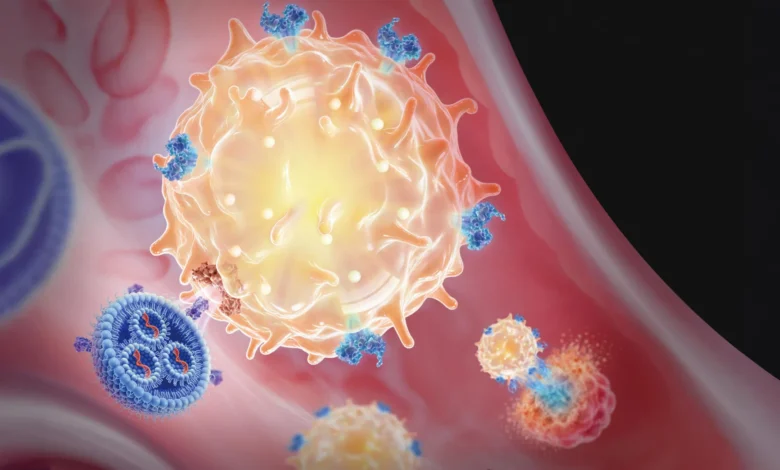
In a significant leap forward for immunotherapy, researchers at the Massachusetts Institute of Technology (MIT) have pioneered a novel method to transform natural killer (NK) cells into potent cancer fighters directly within the human body. This breakthrough, detailed in the journal Nature Biotechnology, marks a departure from traditional, ex vivo cell engineering, potentially democratizing access to complex personalized medicines by replacing multi-week, multi-million dollar laboratory manufacturing processes with a simple nanoparticle injection.
The Evolution of Immunotherapy: From Bench to Bedside
For the past decade, the medical landscape has been dominated by chimeric antigen receptor (CAR) T-cell therapies. Since the FDA’s initial approval of such treatments in 2017, they have become a cornerstone for treating B-cell-derived blood cancers, such as acute lymphoblastic leukemia and various lymphomas. The standard protocol involves harvesting a patient’s T-cells, transporting them to a specialized clean-room facility, genetically modifying them with viral vectors to express receptors that hunt specific cancer antigens, expanding their numbers, and finally re-infusing them into the patient.
While transformative for many patients, this process is fraught with logistical and clinical hurdles. The manufacturing cycle can take several weeks, during which a patient’s condition may deteriorate. Furthermore, the reliance on high-cost, centralized manufacturing facilities limits accessibility to major academic medical centers, keeping costs prohibitively high—often exceeding $400,000 per treatment course.
The Shift Toward Natural Killer Cells
The MIT research team, led by Professor Daniel Anderson and including lead authors Yuang Chen, Julia Monkovic, and Haseeb Mughal, focused their efforts on Natural Killer (NK) cells. Unlike T-cells, which are prone to "fratricide" when engineered to attack other T-cells, NK cells offer a distinct biological advantage. They can be programmed to identify and eliminate malignant T-cells without the risk of the engineered cells attacking one another, a common failure point in previous attempts to treat T-cell-based malignancies or autoimmune conditions.
The core of the MIT innovation lies in the use of lipid nanoparticles (LNPs). By encapsulating messenger RNA (mRNA) within these fatty shells, the researchers have created a "delivery vehicle" that can navigate the body to find specific immune cells. Once the LNP attaches to an NK cell, it deposits the mRNA, which instructs the cell to manufacture the chimeric antigen receptor (CAR) on its own surface. Essentially, the body becomes the bioreactor, bypassing the need for external cell culture.
Chronology of the Discovery
The project represents a multi-year effort within the Koch Institute for Integrative Cancer Research. The development cycle followed a rigorous trajectory:
- Design Phase: The team engineered LNPs with surface-bound antibody fragments designed to act as "GPS," ensuring the particles selectively latch onto NK cells rather than other immune components.
- mRNA Optimization: Researchers refined the mRNA cargo to ensure high-efficiency translation into functional CAR proteins within the NK cell membrane.
- Preclinical Validation (Mice): Initial trials targeted melanoma, where the nanoparticles achieved an 80 percent modification rate of targeted NK cells.
- Humanized Mouse Models: The team progressed to "humanized" mice to simulate the human immune environment, successfully demonstrating the complete elimination of T-cell lymphoma tumors.
- Autoimmune Testing: In the final phase of the reported study, the researchers demonstrated the reversal of autoimmune hepatitis, successfully clearing autoreactive T-cells and allowing damaged liver tissue to regenerate.
Data-Driven Implications for Patient Care
The efficacy demonstrated in murine models is compelling. In the melanoma experiments, three out of five mice reached complete remission. In the T-cell lymphoma models, five injections of the nanoparticle therapy resulted in the total eradication of tumors, matching the success rates of traditional, labor-intensive CAR-NK manufacturing.
Perhaps most significant is the finding regarding autoimmune hepatitis. By deploying a single nanoparticle injection, the team successfully halted the autoimmune destruction of hepatocytes. This suggests that the platform’s utility extends far beyond oncology into chronic inflammatory and autoimmune disorders, such as multiple sclerosis and rheumatoid arthritis, where the immune system is currently misfiring against healthy host tissue.
Expert Perspectives and Scientific Reactions
"The manufacturing challenges with CAR NK cells are significant," explains Professor Daniel Anderson. "The idea here is you can deliver a nanoparticle that will modify your own NK cells with a CAR construct and teach them to attack tumor cells." By decentralizing the manufacturing process, Anderson’s team is targeting the "bottleneck" of modern immunotherapy: the infrastructure.
Robert Langer, a David H. Koch Institute Professor and co-contributor to the study, underscored the broader implications of the work. "This study is an excellent example of the power of nano delivery systems and their ability to potentially treat cancer and other diseases," Langer noted.
Independent experts in the field of synthetic biology have lauded the study for its "in vivo" approach. By removing the need for ex vivo expansion, the technique avoids the risks of cytokine release syndrome or neurotoxicity associated with massive, simultaneous infusions of lab-grown cells. Instead, the gradual, in vivo reprogramming may allow for a more controlled, physiological activation of the immune system.
Challenges and Future Considerations
Despite the optimism, the transition from preclinical models to human trials remains a formidable challenge. The primary obstacle is "off-target" delivery. While the current antibody-fragment strategy is highly selective, human immune systems are significantly more complex than those of laboratory mice. Ensuring that the LNPs reach their intended targets without triggering an innate inflammatory response—or being cleared prematurely by the liver or spleen—will be a primary focus of future phase-I clinical safety trials.
Furthermore, the duration of the CAR expression on the NK cells remains a question. Because the therapy is based on transient mRNA delivery rather than permanent DNA integration (as seen in some viral-vector CAR-T therapies), the treatment may require periodic "booster" injections. While this could be viewed as a drawback, it may also provide a safety mechanism: if the engineered cells cause adverse effects, the treatment can be discontinued, and the engineered population will naturally decline as the mRNA degrades.
Broader Impact on the Pharmaceutical Industry
The implications for the pharmaceutical sector are vast. If successful in human trials, this "off-the-shelf" nanoparticle therapy could disrupt the multi-billion dollar CAR-T market. By shifting the focus from custom cell manufacturing to standardized nanoparticle production, companies could theoretically produce these treatments in massive batches at a fraction of the current cost.
This shift would also alleviate the strain on hospital infrastructure. Hospitals would no longer need sophisticated cell-processing centers or the associated complex supply chains for cryopreserved cell products. Instead, they would handle the treatment much like a standard pharmaceutical injection.
Conclusion
As the research moves toward potential clinical development, the MIT team’s findings provide a roadmap for the next generation of immunotherapy. By teaching the body to engineer its own defenses, science is moving toward a future where the most advanced cancer treatments are as accessible as a common vaccine. While significant regulatory and safety hurdles remain, the ability to reprogram immune cells directly inside the body represents a fundamental change in how we conceptualize the treatment of the world’s most persistent and complex diseases. Funding from the National Cancer Institute, the Marble Center for Cancer Nanomedicine, and Sanofi continues to support the next stages of this essential medical inquiry.
Related posts: