WHO Chief Concludes First Day of Jordan State Visit Highlighting Universal Health Coverage, Refugee Care, and Mental Health Initiatives

The World Health Organization (WHO) Director-General, Dr. Tedros Adhanom Ghebreyesus, has completed the inaugural day of a high-profile two-day state visit to the Hashemite Kingdom of Jordan. The visit serves to underscore the robust, multifaceted partnership between the global health agency and the Jordanian government, focusing heavily on universal health coverage (UHC), mental health integration, and vital humanitarian health responses across the Middle East.
Amid ongoing regional instability and immense pressure on health infrastructure, the visit highlighted Jordan’s exemplary role in hosting millions of refugees and providing specialized medical evacuations for vulnerable populations, particularly children from the Gaza Strip. The diplomatic and technical mission also saw high-level engagement from international philanthropies, notably the participation of Prince Harry and Meghan, the Duke and Duchess of Sussex, through Archewell Philanthropies.
High-Level Meetings and Strategic Dialogues with King Abdullah II
A central pillar of Dr. Tedros’s itinerary was an official audience with His Majesty King Abdullah II. This crucial meeting underscored Jordan’s prominent leadership in championing health as both a domestic foundation and an essential global priority. Discussions between the WHO Director-General and the Jordanian monarch centered on bolstering resilience within national health systems, expanding equitable access to medical care, and sustaining international support for emergency health responses across the region.
Particular attention was dedicated to the plight of the Palestinian people, specifically critically ill or injured patients evacuated from Gaza into Jordanian medical facilities, alongside the millions of refugees currently residing within the Kingdom’s borders.
Expressing his profound gratitude, Dr. Tedros commended the Jordanian leadership. "I wish to express my appreciation to His Majesty King Abdullah II for his commitment to advancing universal health coverage," Dr. Tedros stated. "I also extend my thanks to His Majesty and the people of Jordan for their solidarity and generosity in providing health services to more than three million refugees, primarily from Gaza and Syria, who are living in the country."
Furthermore, Dr. Tedros lauded the Kingdom’s broader humanitarian footprint, pointing specifically to the pioneering Medical Corridor initiative spearheaded by King Abdullah II. This vital logistics and clinical pathway delivers critical, life-saving care to ill and injured children hailing from Gaza, demonstrating the nation’s unwavering dedication to putting humanitarian values above political divides.
On-the-Ground Engagements: Witnessing Life-Saving Care
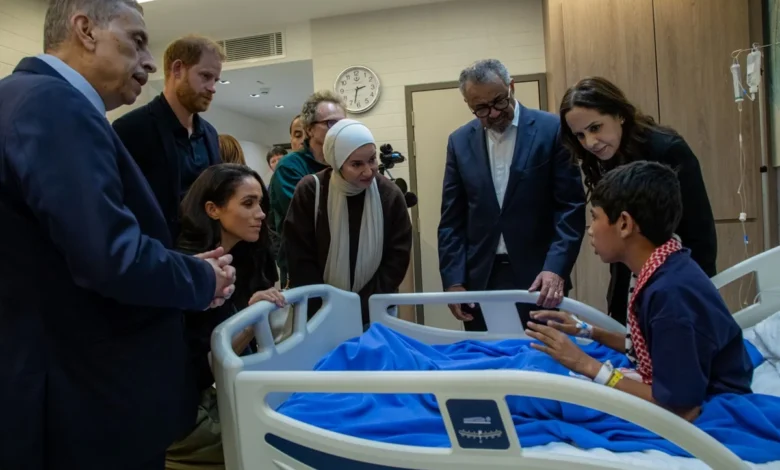
Following diplomatic consultations, Dr. Tedros transitioned from policy discussions to frontline observation by visiting a WHO-supported hospital in Jordan that specializes in pediatric care for children evacuated from the Gaza conflict. During the hospital tour, the WHO chief engaged directly with young patients, their families, and the dedicated medical personnel working tirelessly under immense pressure.
Frontline health workers here manage complex, life-saving treatments ranging from severe conflict-related trauma and amputations to advanced oncology care and chronic pediatric conditions. The visit starkly illuminated the operational significance of the medical evacuation corridor traversing Jordan. It simultaneously reinforced the urgent appeal for sustained, predictable international financial backing to ensure that children and other severe casualties can continue to access indispensable healthcare services without administrative or financial interruption.
In parallel with clinical visits, Dr. Tedros convened a strategic high-level roundtable discussion. The gathering brought together key health partners, international donor governments, sister United Nations agencies, and prominent philanthropic organizations. The primary objective of the summit was to align funding priorities for strengthening Jordan’s domestic health architecture while securing financial pipelines for ongoing humanitarian health initiatives. Key discussion points included scaling up specialized mental health services and addressing the structural strains faced by host nations accommodating large-scale refugee populations.
Advancing Universal Health Coverage and Mental Health Integration
As part of his bilateral engagements, Dr. Tedros held extensive talks with Jordan’s Minister of Health. Their discussions drilled down into structural reforms aimed at consolidating Jordan’s health system and accelerating progress toward universal health coverage.
Jordan has long been recognized as a regional and global leader in embedding a robust primary healthcare framework to achieve UHC. Notably, the country has successfully integrated mental health services into routine primary care settings, ensuring that psychological support is treated with the same urgency and accessibility as physical ailments. This milestone has been closely supported by the WHO through the Director-General’s Special Initiative for Mental Health, serving as a blueprint for other resource-constrained or crisis-affected nations.
The Role of Philanthropy and International Allies
Adding a notable dimension to the state visit, Dr. Tedros was accompanied during several key engagements by Prince Harry and Meghan, the Duke and Duchess of Sussex. Participating in their capacity as founders of Archewell Philanthropies, the royal couple joined the delegation as long-standing advocates and supporters of the WHO’s global mandate.
Archewell Philanthropies has historically backed various WHO-led initiatives, spanning from equitable global access to COVID-19 vaccines to targeted medical evacuation efforts and comprehensive mental health programs in crisis zones. During this visit, Prince Harry actively participated as an ally of the WHO’s mental health campaigns, emphasizing the critical need to prioritize psychosocial investments across diverse communities, particularly focusing on the vulnerabilities of men, adolescents, and children caught in humanitarian emergencies.
Reflecting on this partnership, Dr. Tedros noted, "I want to thank our partners, including Prince Harry, Duke of Sussex and Meghan, Duchess of Sussex, whose commitment to mental health and humanitarian action has helped bring visibility, resources and hope to some of the world’s most vulnerable communities. Their collaboration is helping to advance WHO’s mission to ensure health for all."
Echoing these sentiments, Prince Harry shared his perspective on the ground realities observed in Jordan. "It is an honour to join the Director-General of the World Health Organization in Jordan, a country that is leading by example in compassion, resilience and innovation," said Prince Harry. "Through our work with Archewell Philanthropies, my wife and I have seen first-hand the impact of WHO’s efforts to support mental health and deliver life-saving care in emergencies."
The Duke of Sussex further emphasized the long-term imperative of psychological care in post-crisis recovery. "We remain deeply committed to advancing awareness, reducing stigma and expanding access to mental health support for all those affected by conflict and crisis. Mental health is fundamental to recovery, dignity and long-term peace, and we are proud to stand with WHO and partners around the world to make it a global priority."
Chronology and Upcoming Itinerary for Day Two
The two-day state visit is structured to provide a comprehensive view of Jordan’s health ecosystem, balancing high-level political diplomacy with grassroots community interventions.
As the mission moves into its second and final day, Dr. Tedros’s schedule features several high-impact site visits:
- National Center for Rehabilitation of Addicts: The WHO chief will tour this specialized facility, which receives WHO backing to deliver integrated medical, psychological, and social rehabilitation services.
- Community Engagement: Meetings are scheduled with local community leaders and prominent women’s groups, including the Jordanian Hashemite Fund for Human Development (JOHUD), to evaluate grassroots health resilience and gender-inclusive health programming.
- King Hussein Cancer Center: Dr. Tedros will visit the renowned institution to review recent advancements in oncology treatment, research, and regional medical collaboration.
- Humanitarian Operations Hub: The visit will conclude with final consultations with international partners managing humanitarian logistics, reinforcing Jordan’s indispensable status as a regional hub for medical evacuations, emergency response coordination, and resilient health infrastructure development.
Broader Context, Data, and Strategic Implications
The timing of Dr. Tedros’s visit to Jordan highlights the immense pressures currently facing the Middle Eastern health landscape. Jordan, a nation with a relatively modest economic footprint and scarce natural resources, has historically punched above its weight in global humanitarian solidarity.
According to demographic and humanitarian data, Jordan hosts in excess of three million registered refugees. This figure includes populations displaced by decades of regional conflict, predominantly originating from neighboring Syria as well as ongoing crises in the Palestinian territories. Managing this influx has exerted severe structural and financial strains on Jordan’s public infrastructure, particularly its healthcare networks, water supply, and waste management systems.
Despite these systemic pressures, Jordan has maintained an open-door policy for humanitarian cases, integrating refugees into public vaccination campaigns, maternal and child health programs, and primary healthcare clinics. The establishment of the medical evacuation corridor for Gaza patients represents the latest iteration of this humanitarian commitment, wherein critically wounded or ill civilians—frequently children suffering from trauma, severe burns, or advanced cancers—are transferred out of the besieged enclave for specialized clinical interventions unavailable locally.
Public health analysts note that the WHO’s active engagement in Jordan serves a dual strategic purpose. First, it provides critical technical and financial scaffolding to a frontline state that acts as a stabilizer for regional health security. Second, it models a scalable framework for integrating mental health and refugee healthcare into national universal health coverage frameworks—a challenge facing numerous nations globally amid rising geopolitical conflicts and mass displacements.
As global humanitarian funding faces increasing donor fatigue and competing international crises, Dr. Tedros’s high-level mission serves as a potent reminder of the dividends yielded by sustained international partnership. By spotlighting Jordan’s resilience, the WHO aims to catalyze renewed financial commitments from donor states and philanthropic entities, ensuring that the Kingdom can maintain its vital role as a beacon of humanitarian health action in a volatile region.
Related posts: