Digital Twins of Life: How Buck Institute Researchers Are Using Software to Simulate Cellular Aging and Transform Medicine


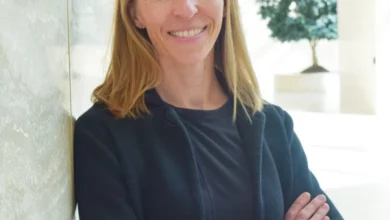
The Buck Institute for Research on Aging has long stood at the vanguard of longevity science, probing the complex biological mechanisms that govern human decline and degenerative disease. Within this bustling hub of biogerontology, scientists are increasingly turning to advanced computational modeling to accelerate discoveries that once took decades in physical laboratories. At the forefront of this digital revolution is Dr. Emma Glass, a research scientist in the laboratory of Dr. James Yurkovich. Glass, who joined the institute after completing her doctorate in biomedical engineering, is spearheading initiatives to build whole-cell simulation software and analyze critical data for clinical trials. Her work sits at the intersection of applied mathematics, computational microbiology, and geroscience—a burgeoning field that seeks not merely to treat individual age-related diseases, but to target the fundamental aging process itself.
The Genesis of a Computational Pioneer: From Virginia to the Bay Area
The journey toward modeling biological systems at a granular level requires a rare fusion of disciplines. For Glass, a native of Virginia, that foundation was laid during her undergraduate studies at the College of William and Mary, where she earned a Bachelor of Science degree in Applied Mathematics. Recognizing the immense potential of applying rigorous quantitative frameworks to living systems, she pursued a Ph.D. in Biomedical Engineering at the University of Virginia, specializing in computational microbiology.
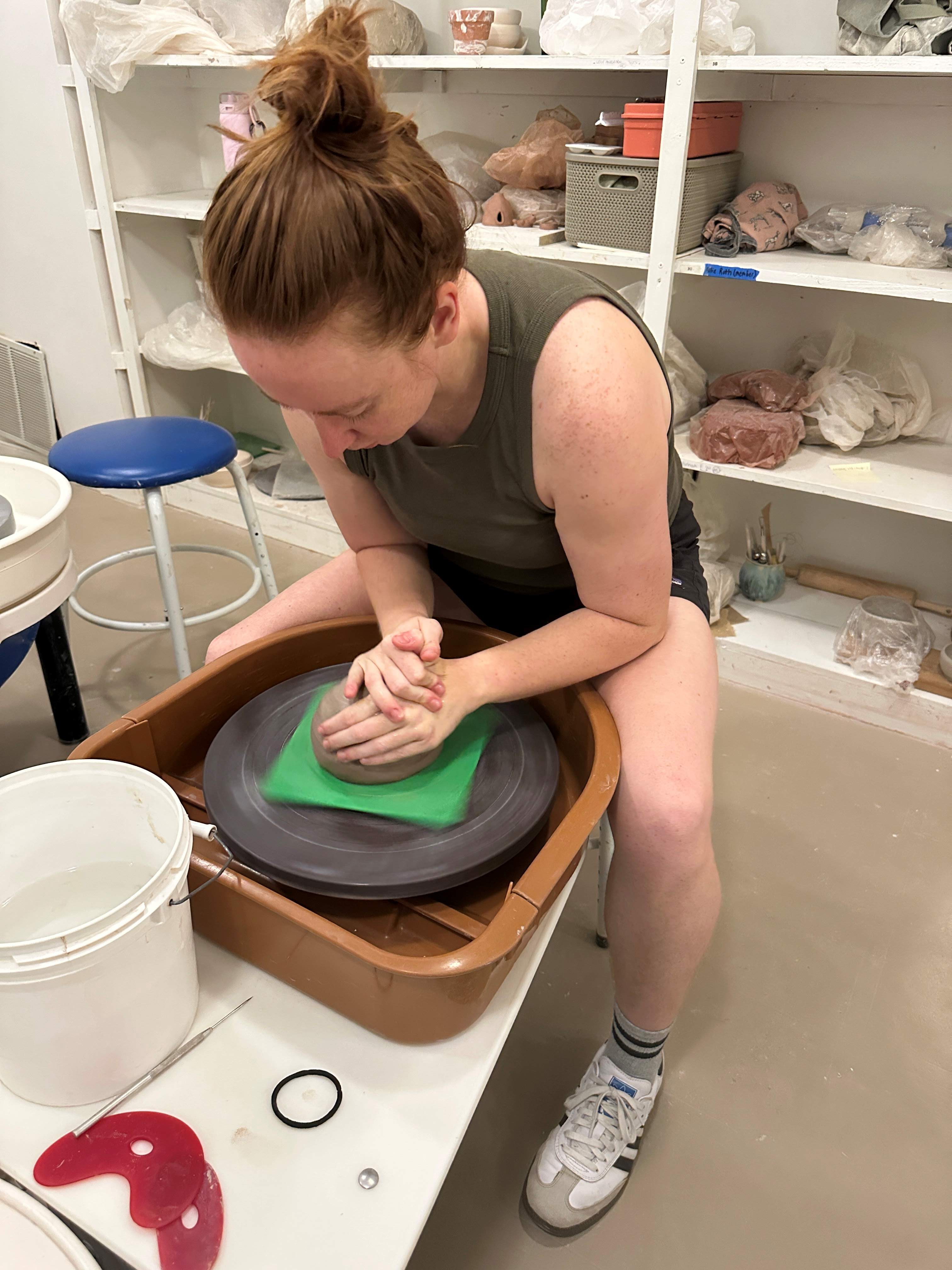
Her academic trajectory prepared her for the immense data-processing challenges characteristic of modern biomedical research. When an opportunity arose at the Buck Institute roughly a year ago, Glass recognized a unique intersection for her skill set. The institute offered a rare environment where computational modeling could be directly coupled with translational longevity research. Away from the laboratory, Glass maintains a balanced lifestyle typical of the vibrant scientific community in Northern California, engaging in nature exploration throughout the Bay Area, reading, knitting, playing ultimate frisbee, and practicing pottery. Yet her primary professional focus remains locked on the computer screens displaying lines of complex code that simulate the building blocks of life.
Decoding the Microscopic World: The DARPA-Funded Initiative
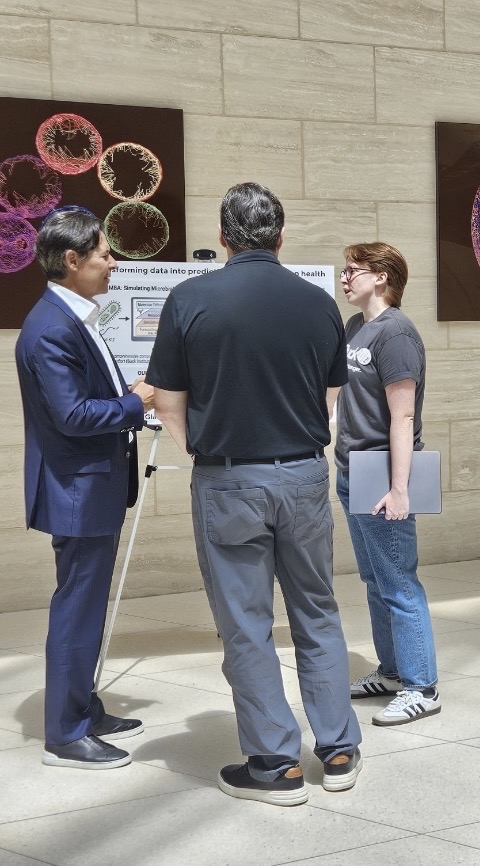
The core of Glass’s current research is anchored by a high-stakes initiative funded by the Defense Advanced Research Projects Agency (DARPA). The project centers on the creation of a sophisticated computational simulation capable of predicting, with remarkable accuracy, the behavior of Escherichia coli (E. coli) under diverse environmental conditions. By leveraging these digital models to evaluate the efficacy of various antimicrobials, researchers can calculate the precise concentration of an antibiotic required to halt bacterial growth entirely within a virtual environment, bypassing traditional, time-consuming petri dish experiments.
While the immediate application of this technology holds profound implications for infectious disease management and pharmacology, its broader utility extends directly to the overarching mission of the Buck Institute. The E. coli whole-cell simulator serves as a foundational proof-of-concept—a biological blueprint designed to pave the way for the eventual simulation of complex human cells. By understanding how a single, simpler bacterial cell responds to stressors, mutations, and chemical interventions, researchers can establish the mathematical architecture necessary to model why human cells structurally and functionally decline as chronological age advances.

Collaborative Science and the Power of Big Data
Tackling a scientific challenge of this magnitude requires moving beyond the traditional, isolated laboratory model. In Yurkovich’s lab, research is driven by a multidisciplinary paradigm known as "team science." This collaborative approach is explicitly structured around two core thrusts of the DARPA project: "Measure and Inform," which focuses on the high-throughput generation of empirical biological data, and "Simulate and Predict," which concentrates on translating those empirical observations into predictive computational models.
This workflow relies heavily on robust internal and external partnerships. Glass and her colleagues work in close coordination with other faculty members across the Buck Institute to produce the massive, high-dimensional experimental datasets required to ground their mathematical models in biological reality. Simultaneously, external alliances with industry partners provide specialized technological expertise necessary for scaling these computational frameworks. The Buck Institute’s institutional dedication to applying artificial intelligence and big data analytics to healthspan research has cultivated an ecosystem where mathematicians, computer scientists, and molecular biologists operate in seamless synchronization.
Bridging the Gap: Simplifying Complex Systems Biology
To the lay observer, the concept of a "whole-cell computer simulation" can appear abstract. In practical terms, traditional biomedical research demands thousands of physical experiments to observe how a living cell reacts to a new therapeutic compound or an environmental shift—a process that is both resource-intensive and protracted. Glass’s work replaces or drastically accelerates this trial-and-error phase by translating the known biochemical properties of an organism into a comprehensive digital twin.
By inputting the genomic, proteomic, and metabolic parameters of a cell into a software platform, researchers can initiate simulations to observe cellular outcomes instantaneously. Scientists can digitally introduce a drug candidate and immediately analyze whether the cell proliferates, mutates, or undergoes apoptosis (programmed cell death). Translating this capability from bacteria to human cells represents the ultimate objective: a future where researchers can visualize cellular aging in real time on a computer monitor, identifying specific vulnerabilities and testing potential restorative interventions long before they enter clinical trials.
Transformative Implications for Clinical Practice and Public Health
The downstream effects of successful whole-cell simulation promise to reshape modern healthcare across multiple horizons. In the short term, predictive antimicrobial modeling enables clinicians to rapidly determine the most effective antibiotic treatments for specific bacterial infections, potentially mitigating the global crisis of antibiotic resistance by reducing ineffective prescriptions and optimizing dosing strategies.
Over the long term, however, the extensibility of these simulation platforms offers an even more radical transformation. Mastering the mechanics of single-cell simulation lays the groundwork for modeling tissues, organs, and eventually integrated human body systems. Such advancements point toward an era of personalized longevity simulations. In this future paradigm, healthcare providers could leverage a patient’s specific digital biological twin to test how tailored lifestyle interventions, dietary modifications, or pharmacological agents would influence their individual cellular aging trajectory. This transition promises to shift medicine away from generalized, reactive treatments toward proactive, mathematically precise healthspan management.
A Decade of Anticipation: The Next Frontier in Geroscience
Looking toward the next five to ten years, the scientific community stands on the precipice of a paradigm shift. Programs like the DARPA-funded initiatives are actively pushing computational biology toward systems that are orders of magnitude more complex than those available today. Within the decade, experts anticipate the emergence of the first high-fidelity digital models of human cells.
For researchers at the Buck Institute, this evolution represents the realization of a long-held ambition. The ability to probe the molecular mechanisms of biological aging with unprecedented computational depth will transform aging research from an observational science into a predictive and preventive discipline. By shifting the medical framework from watching the inevitable decline of the human body to actively simulating and intervening against cellular decay, scientists like Emma Glass are helping to build a future where longer life is consistently matched by enduring health.