Digital Avatars of Life: How Computational Biologists at the Buck Institute Are Simulating Cells to Defeat Aging


The quest to extend the human healthspan—the period of life spent in good health, free from chronic disease and debilitating frailty—has entered a profound new technological frontier. At the forefront of this revolution is the Buck Institute for Research on Aging, where interdisciplinary scientists are merging advanced artificial intelligence, big data analytics, and computational biology. Among these pioneering researchers is Dr. Emma Glass, a research scientist in the laboratory of James Yurkovich. Glass and her colleagues are currently designing sophisticated whole-cell simulation software that could radically transform not only pharmacology and infectious disease treatment, but also our foundational understanding of biological aging.
While aging has historically been viewed as an inevitable and irreversible biological decline, modern geroscience approaches the phenomenon as a modifiable process. By constructing digital twins of living cells, researchers are moving past the trial-and-error paradigm of traditional wet-lab experimentation. Instead, they are laying the groundwork for predictive, computerized medicine that aims to intercept cellular decay long before macroscopic symptoms of aging manifest in the human body.
The Genesis of Whole-Cell Modeling and the DARPA Connection
The scope of Glass’s current research extends far beyond traditional academic inquiry, receiving crucial backing from the Defense Advanced Research Projects Agency (DARPA). Through initiatives like the DARPA Synergistic Discovery and Design (SD2) and related predictive modeling programs, federal defense and research funding has increasingly prioritized computational biology for its dual capacity to secure public health against rapid pathogenic threats and unlock the mechanisms of human longevity.
Glass’s academic trajectory uniquely positions her at this intersection of disciplines. A native of Virginia, she earned her Bachelor of Science in Applied Mathematics from the College of William & Mary before pursuing a Ph.D. in Biomedical Engineering at the University of Virginia, where her doctoral research centered on computational microbiology. Joining the Buck Institute just over a year ago, Glass found an ecosystem explicitly designed to transition theoretical computational models into actionable geroscience interventions.
Her primary undertaking at the Yurkovich lab involves developing software architecture capable of accurately predicting the physiological behavior of the bacterium Escherichia coli across diverse environmental conditions. By translating the complex molecular machinery of a living cell into a digital algorithm, researchers can simulate how the organism reacts to various antimicrobial compounds. Crucially, this computational modeling allows scientists to calculate the exact concentration of an antibiotic required to halt bacterial growth without ever touching a physical petri dish.
Bridging Microbes and Human Longevity

To the lay observer, simulating the lifecycle and drug-responses of a single bacterium may seem distant from the complexities of human aging. However, within the architecture of systems biology, E. coli serves as a critical proof-of-concept. Bacterial cells, while simpler than eukaryotic human cells, possess the fundamental metabolic, genetic, and regulatory networks that govern all cellular life.
By mastering the simulation of a bacterium, computational biologists establish a scalable framework. The algorithms, data pipelines, and predictive capabilities refined on microbial models provide a foundational blueprint that can eventually be scaled up to simulate mammalian and human cells.
This translational bridge is the ultimate mission of the Buck Institute. As human cells age, they accumulate genomic instability, epigenetic alterations, mitochondrial dysfunction, and cellular senescence. Pinpointing the exact inflection points where these molecular pathways begin to falter requires an unprecedented level of computational resolution. Digital cell simulations offer a virtual laboratory where researchers can stress-test interventions—such as senolytic drugs, caloric restriction mimetics, or gene therapies—observing their efficacy on cellular health markers within seconds rather than months or years.
The Mechanics of Team Science: Measuring, Informing, and Predicting
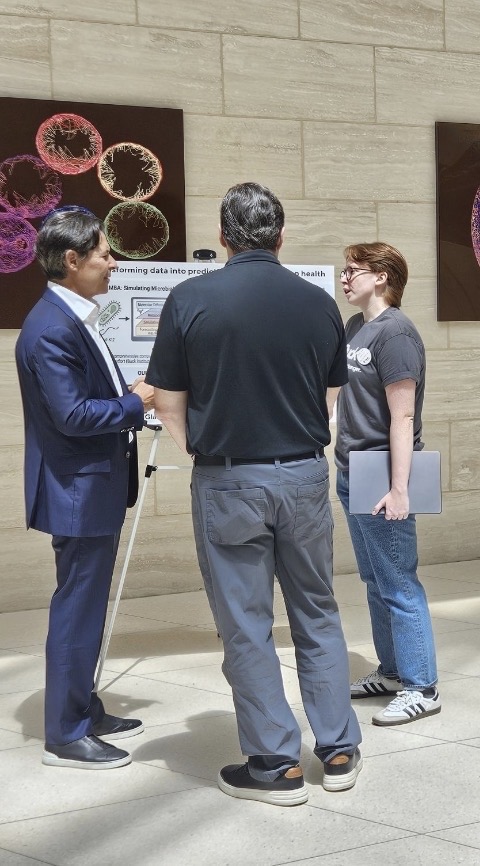
Achieving high-fidelity cellular simulations is not a solitary endeavor; it requires an intensive ecosystem of "team science." The workflow within the Yurkovich lab is bifurcated into two foundational thrusts: the "Measure and Inform" pipeline, which generates vast, empirical biological datasets, and the "Simulate and Predict" pipeline, which translates that empirical data into mathematical equations and predictive software.
Generating the sheer volume of data required to ground these models in biological reality necessitates robust institutional collaboration. Glass works closely alongside fellow faculty members at the Buck Institute, whose laboratories specialize in high-throughput transcriptomics, proteomics, and metabolomics. Furthermore, external partnerships with industry leaders provide the scalable computing infrastructure and specialized software engineering expertise necessary to handle massive datasets.
This collaborative model reflects a broader transformation in the life sciences. Modern biological discovery relies less on the isolated genius working at a bench and more on synergistic consortia where computer scientists, mathematicians, structural biologists, and clinicians pool their expertise. The Buck Institute’s intentional cultivation of an AI-driven research culture has accelerated this transition, attracting quantitative scientists who might otherwise have gravitated toward Silicon Valley tech firms rather than biomedical research.
From Reactive Healthcare to Personalized Longevity Simulations
The everyday implications of this research span multiple time horizons, offering immediate utility in clinical microbiology while promising a paradigm shift in preventive medicine. In the short term, whole-cell simulation software drastically accelerates the timeline for evaluating infectious disease treatments. Clinicians facing drug-resistant bacterial strains could eventually leverage predictive modeling to rapidly determine the most effective combinatorial antibiotic therapies tailored to a specific infection profile, bypassing the lengthy timelines of traditional culture-and-susceptibility testing.
Over the long term, however, the implications for human healthspan are profound. As the simulation frameworks scale from single prokaryotic cells to complex human tissues and organ systems, medicine could transition from a reactive, one-size-fits-all model to a proactive, mathematically precise science.
In a future enabled by mature digital cellular twins, physicians could run personalized longevity simulations for patients. By inputting an individual’s genetic profile, metabolic data, and lifestyle metrics into a secure computational platform, healthcare providers could forecast how specific dietary modifications, exercise regimens, pharmaceutical interventions, or environmental stressors would impact that specific patient’s cellular aging rate. This level of predictive personalization would allow individuals to optimize their healthspan proactively, mitigating chronic diseases of aging decades before clinical onset.
The Horizon: A Decade of Cellular Transformation

Looking ahead to the next five to ten years, the field of computational geroscience stands on the precipice of historic breakthroughs. Programs like those funded by DARPA are continually pushing the boundaries of simulation complexity, challenging researchers to model biological systems that are magnitudes more intricate than current benchmarks.
Within the decade, experts anticipate the emergence of the first high-fidelity digital models of human cells. For researchers at the Buck Institute, this milestone will represent a watershed moment. It will transform the study of biological aging from an observational science—watching the inevitable decay of biological systems—into an exact predictive and preventive science.
By harnessing the power of applied mathematics and high-performance computing, scientists like Emma Glass are helping to construct a future where aging is no longer an immutable mystery, but a masterable biological variable. As these digital avatars of life become more sophisticated, humanity moves ever closer to a reality where living better longer is not merely an aspiration, but a predictable, engineered outcome.