
The Buck Institute for Research on Aging has welcomed Dr. Ashley Webb as a new faculty member, bringing with her a distinguished career dedicated to unraveling the intricate molecular mechanisms of brain aging and neurodegeneration. As an Associate Professor, Dr. Webb’s arrival signifies a significant expansion of the Buck’s expertise in crucial areas of aging research, promising to foster new collaborations and accelerate discoveries in the quest to understand and mitigate age-related cognitive decline.
Dr. Webb’s journey into the world of science began not in a sophisticated laboratory, but with a childhood fascination for the problem-solving prowess of researchers. This early spark of curiosity, nurtured by a natural aptitude for mathematics and science, solidified her path. "Even when I was an undergraduate, I wanted to be in the lab. I was the quintessential lab rat type of student," Dr. Webb recalls, her voice reflecting a deep-seated passion that has guided her academic and professional life. This innate drive to be at the forefront of scientific inquiry has been a constant throughout her career, shaping her choices and ultimately leading her to one of the world’s foremost institutions dedicated to aging research.
Her formal education laid a robust foundation for her specialized focus. Dr. Webb earned her Ph.D. in Molecular and Cellular Biology from the University of Washington. During her doctoral studies, she gained invaluable experience through rotations in labs focused on neurodevelopment, an area that would prove foundational to her later work in brain aging. This early exposure to the complexities of how the brain develops provided a crucial perspective for understanding how it declines.
Following her doctoral work, Dr. Webb pursued a postdoctoral fellowship at Stanford University under the mentorship of Dr. Anne Brunet. This period was instrumental in honing her skills and deepening her understanding of aging at a molecular level. Dr. Brunet’s lab is renowned for its pioneering research into the molecular mechanisms of aging and longevity, including investigations into the processes that drive the rejuvenation of aged stem cells. Working in such a dynamic and forward-thinking environment provided Dr. Webb with a comprehensive understanding of the multifaceted nature of aging, from cellular regeneration to organismal longevity. This experience was critical in shaping her approach to tackling complex biological questions.
The choice of laboratory environment proved to be a significant factor in Dr. Webb’s academic decisions. She emphasizes that beyond the scientific merit of the research, the culture and community within a lab played a pivotal role in her success and well-being. "During grad school I ended up joining a lab that was not only doing exciting science, but also where I felt like it was the best environment. There were lots of grad students and I had a mentor who really supported me," she explains. "Even if things weren’t going well scientifically, I would still want to go to the lab and be around the people, and it would be a supportive community in that way." This philosophy underscores her commitment to fostering a similar environment at the Buck. "That’s the environment I’m trying to grow here in my lab at the Buck. And I think I did successfully grow a supportive environment when I was an assistant professor at Brown University. Mentoring the next generation of scientists is a top priority for me." This dedication to nurturing young talent is a hallmark of leading research institutions and is crucial for the sustained progress of scientific discovery.
A personal milestone also significantly influenced the trajectory of Dr. Webb’s research. The experience of raising young children, she notes, positively shaped her interests and expertise, particularly in the analytical and bioinformatic aspects of her work. "When my kids were very little I started focusing more and more on the analytical and bioinformatic aspects of the work. That was a great way to advance projects, and I could do it at my own pace," she shares. "I wasn’t quite as dependent on the timeline of the cells or the mice. I could actually start and stop the analysis at any time." This ability to adapt her research approach to her life circumstances demonstrates her resourcefulness and strategic thinking, allowing her to maintain scientific momentum even during demanding personal periods. The increasing reliance on computational biology and bioinformatics in modern research makes this an increasingly valuable skill set.
The decision to leave Brown University, where she held the esteemed position of Associate Professor of Molecular and Cell Biology and Biochemistry, was a thoughtful one. Brown University is recognized for its strong academic programs and vibrant community, and its aging research community, though smaller, is world-renowned. However, the unique proposition of the Buck Institute proved to be an irresistible draw. "Brown is an amazing university. There’s a great community there. Their aging community is small, but world-renowned. But for me, the opportunity to come to a place like the Buck, where everybody – all the faculty, trainees, and staff – have the same mission was too compelling," Dr. Webb states. "There’s this shared vision at the Buck to take on the extremely difficult problem of understanding the biology of aging and improving healthspan. And to me, there’s nothing else like it. The opportunity to be a part of the Buck community was just a really exciting thing." This shared mission and singular focus on aging research are defining characteristics of the Buck Institute, attracting top scientists worldwide who are dedicated to extending the period of healthy human life.
While initially driven by curiosity and the thrill of discovery, Dr. Webb has developed a profound appreciation for the collaborative nature of scientific advancement. "The Buck’s collaborative environment is another reason I’m excited to be here," she says. "Now that the logistics involved in relocating my lab are finally starting to settle, I have more time to engage in deep conversations with my colleagues." This emphasis on collaboration is not merely a preference but a strategic advantage. The complexity of aging research often requires interdisciplinary approaches, bringing together diverse expertise to tackle multifaceted challenges.
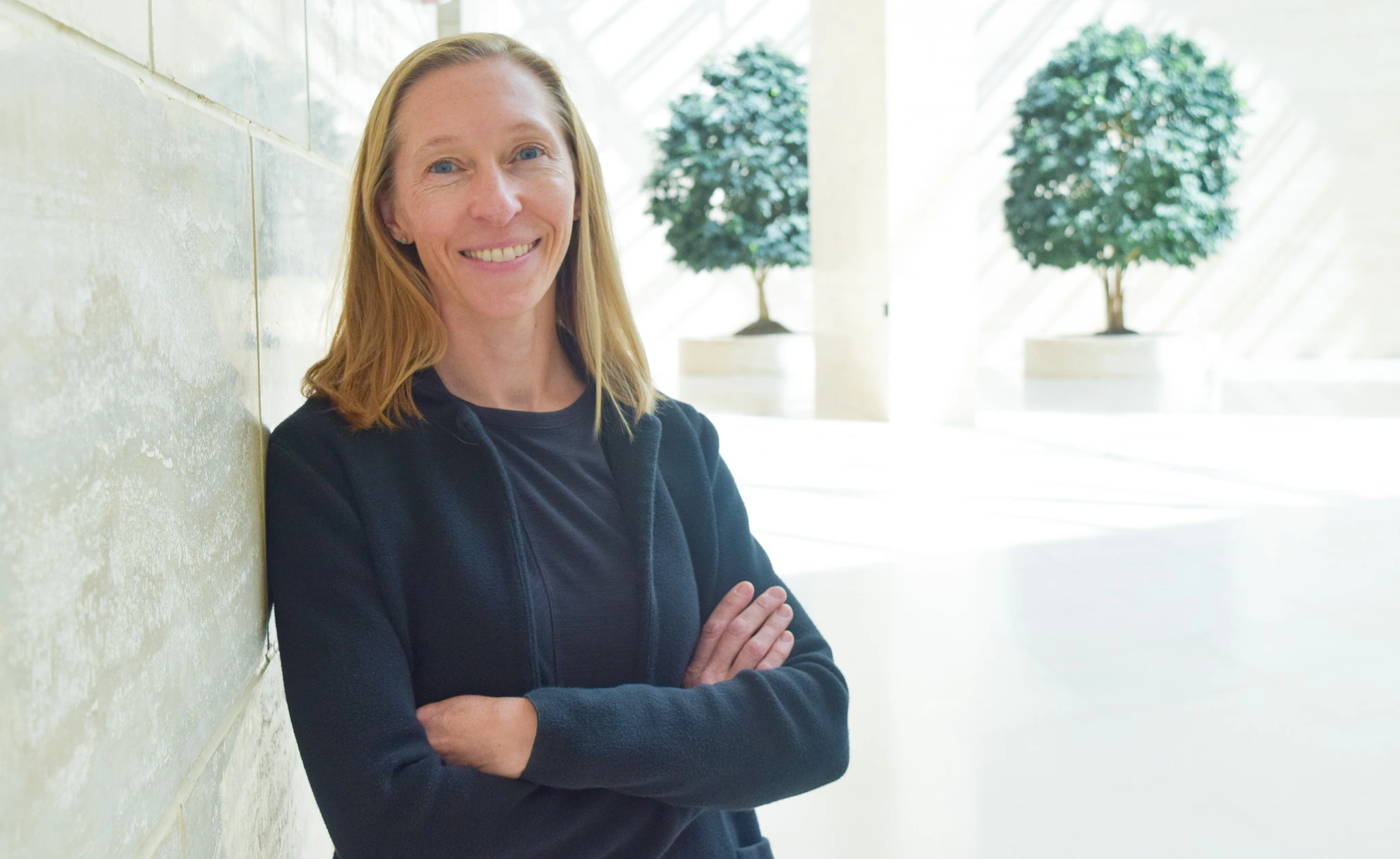
Dr. Webb has already begun to forge new research connections at the Buck, signaling the immediate impact of her arrival. She is actively collaborating with Dr. Julie Andersen on a project investigating the intricate relationship between mitophagy, the cellular process of clearing damaged mitochondria, and neurogenesis, the birth of new neurons. This research holds significant promise for understanding how cellular health in the brain impacts its capacity for renewal and repair. Furthermore, she is engaging in discussions with Dr. Pankaj Kapahi to explore the critical role of the hypothalamus, a small but vital region of the brain, in the aging process. The hypothalamus regulates numerous bodily functions, and its decline with age can have widespread consequences. Dr. Webb is also initiating work with Dr. Jennifer Garrison to investigate sex differences in brain aging, a crucial area of research as the impacts of aging can manifest differently between men and women.
Background and Context of Dr. Webb’s Arrival
The Buck Institute, established in 1999, has consistently been at the forefront of aging research, aiming to understand the fundamental biology of aging and translate that knowledge into interventions that extend human healthspan. Its commitment to a singular focus on aging distinguishes it from many larger, more generalized research institutions. This specialized environment allows for a concentrated effort, fostering a unique ecosystem of scientists, trainees, and staff all working towards the common goal of improving healthy aging.
Dr. Webb’s recruitment is part of a broader strategic initiative by the Buck to expand its capabilities in key areas of aging biology, particularly those related to neurological health. The increasing global population of older adults, coupled with the growing prevalence of age-related neurodegenerative diseases such as Alzheimer’s and Parkinson’s, underscores the urgency and importance of this research. The economic and societal burden of these conditions is substantial, making advancements in understanding and preventing them a global health priority.
Timeline of Dr. Webb’s Scientific Journey
- Early Life: Developed an early interest in science and problem-solving.
- Undergraduate Studies: Demonstrated a strong aptitude for math and science, solidifying a commitment to a scientific career.
- Doctoral Studies (University of Washington): Earned a Ph.D. in Molecular and Cellular Biology, with rotations in neurodevelopmental labs.
- Postdoctoral Fellowship (Stanford University): Worked under Dr. Anne Brunet, focusing on the molecular mechanisms of aging and longevity, including stem cell rejuvenation.
- Assistant Professor (Brown University): Established her own research program, focusing on brain aging and neurodegeneration, and fostering a supportive lab environment. Gained experience in analytical and bioinformatic approaches.
- Associate Professor (Brown University): Continued to advance her research and mentoring efforts.
- July 2023: Joined the Buck Institute for Research on Aging as an Associate Professor, bringing her extensive expertise and collaborative spirit.
Supporting Data and Implications
The global burden of neurodegenerative diseases is staggering. For instance, Alzheimer’s disease, the most common form of dementia, affects millions worldwide. In the United States alone, over 6 million people are estimated to be living with Alzheimer’s, a number projected to rise significantly in the coming decades. This highlights the critical need for research into the underlying mechanisms of brain aging and the development of effective interventions.
Dr. Webb’s research on the molecular mechanisms of brain aging has direct implications for developing therapeutic strategies. By understanding how cellular processes like mitochondrial function and neurogenesis are affected by age, scientists can identify targets for drugs or lifestyle interventions that could slow or even reverse age-related cognitive decline. Her work on mitophagy, for example, could lead to strategies that enhance the brain’s ability to clear out damaged cellular components, a process that is often impaired with age and contributes to neuronal dysfunction.
The focus on sex differences in brain aging is also critically important. Research indicates that women, on average, live longer than men but are also at a higher risk for certain age-related conditions, including Alzheimer’s disease. Understanding the biological basis of these differences is essential for developing personalized and effective treatments.
Broader Impact and Future Directions
Dr. Webb’s arrival at the Buck Institute is more than just the addition of a single talented scientist; it represents a reinforcement of the institute’s commitment to tackling one of humanity’s most pressing challenges: extending healthspan and improving the quality of life in later years. Her expertise in neurodegeneration complements existing strengths at the Buck, creating synergistic opportunities for groundbreaking discoveries.
The collaborative environment she aims to cultivate within her lab and across the institute is vital. Scientific progress is rarely made in isolation. By fostering open communication and shared resources, the Buck can accelerate the pace of discovery, translating fundamental biological insights into tangible benefits for human health.
"My lab has some very exciting questions that we are poised to answer," Dr. Webb states with evident enthusiasm. "Being at the Buck places us in a larger community of investigators in the biology of aging where we can form new connections and collaborations to advance our understanding of brain aging." This forward-looking perspective underscores the potential for Dr. Webb’s work to not only advance the field of aging research but also to directly contribute to the development of strategies that will enable more people to live healthier, more fulfilling lives as they age. Her presence at the Buck signifies a renewed commitment to unraveling the mysteries of the aging brain and paving the way for a future where cognitive vitality is maintained well into old age.
Related posts: