Digital Twins of Life: How Buck Institute Researchers Are Using Computer Simulations to Decode Aging and Revolutionize Medicine


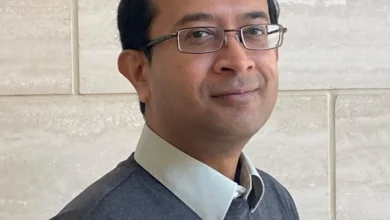
The quest to extend the human healthspan—the period of life spent in good health, free from chronic disease—has entered a profoundly digital era. At the Buck Institute for Research on Aging in Novato, California, scientists are shifting the paradigm of longevity science from physical experimentation in wet laboratories to computational modeling on computer screens. Through its monthly "Faces of Discovery" series, the Buck Blog highlights the researchers driving these innovations. Among them is Dr. Emma Glass, a research scientist in James Yurkovich’s laboratory, whose work sits at the intersection of applied mathematics, computational microbiology, and geroscience.
Glass, a Virginia native with a Bachelor of Science in Applied Mathematics from William and Mary and a Ph.D. in Biomedical Engineering from the University of Virginia, joined the Buck Institute just over a year ago. Her day-to-day work centers on developing whole-cell simulation software and handling data analysis for the TIME clinical trial. Funded largely by the Defense Advanced Research Projects Agency (DARPA), Glass and her colleagues are building sophisticated digital models of single-celled organisms, specifically Escherichia coli (E. coli), with the ultimate goal of laying the foundational architecture needed to simulate human cells.
The Convergence of Computational Mathematics and Geroscience
For decades, the standard approach in biological research has been empirical: scientists mix reagents, administer compounds to petri dishes, and observe physical reactions. While this method remains a cornerstone of science, it is inherently limited by time, financial cost, and logistical scaling. Enter computational systems biology, a field that utilizes mathematical algorithms and high-performance computing to predict biological behavior before a single physical test is run.
Glass’s path to the Buck Institute was forged by a personal fascination with wellness and longevity science. Recognizing that the tools of computational microbiology could be powerful catalysts in aging research, she transitioned her expertise to the geroscience sector. The core hypothesis driving her team is straightforward yet revolutionary: if scientists can accurately simulate the complex internal mechanics of a single bacterium on a computer, they can eventually scale that technology to model human cells, tissues, and eventually entire organ systems.
This work represents a profound shift in how researchers approach biological complexity. Rather than viewing aging merely as an inevitable process of systemic decay to be observed, modern computational biologists view it as a multi-variable equation that can be analyzed, predicted, and ultimately mitigated through mathematical precision.
Inside the DARPA-Funded Research: Predicting Bacterial Behavior Without a Petri Dish
The immediate focus of Glass’s research is tied directly to a high-stakes initiative funded by DARPA. The project tasks researchers with creating a computational simulation capable of predicting, with extreme accuracy, how E. coli behaves when subjected to various environmental stressors and therapeutic interventions.
In practical terms, the simulation can calculate the exact concentration of an antibiotic required to halt bacterial growth without requiring physical intervention in a laboratory setting. By feeding comprehensive biological datasets into the software, the team can run digital experiments that instantly reveal how the organism reacts to different drug dosages—whether it dies, adapts, or grows at an accelerated rate.

This capability has immediate, high-value applications in infectious disease management. In traditional clinical settings, determining the correct antibiotic dosage and identifying resistant strains can be a time-sensitive, trial-and-error process. Computational simulation streamlines this discovery pipeline, allowing researchers and clinicians to predict optimal treatments for specific infections with unprecedented speed.
However, the long-term vision extends far beyond bacteriology. The E. coli model serves as a proof-of-concept and a structural blueprint. Because bacteria share fundamental metabolic and genetic pathways with higher organisms, mastering single-cell simulation at a microbial level provides the methodological stepping stones required to tackle the exponential complexity of eukaryotic—and human—cells.
Team Science and the Synergy of Big Data and AI
Solving complex biological problems requires an ecosystem of collaboration, a philosophy that defines daily operations at the Buck Institute. Glass’s research relies heavily on what the institute terms "team science," a multidisciplinary approach that brings together experimental biologists, data scientists, and industry partners.
The DARPA project is divided into two primary operational thrusts: "Measure and Inform," which focuses on generating massive, high-throughput experimental datasets, and "Simulate and Predict," which is dedicated to building and refining the computational models. These two tracks cannot exist in isolation. Experimental biologists at the Buck generate the rigorous biological data needed to ground the digital models in reality, while computational scientists translate those biological realities into algorithmic code.
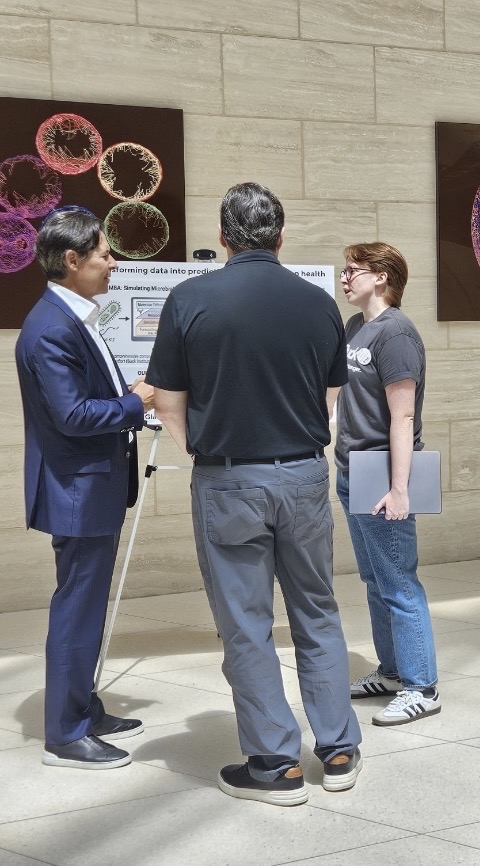
Furthermore, external collaborations with industry partners provide the specialized infrastructure necessary to scale these technologies beyond academic settings. The Buck Institute’s overarching institutional focus on leveraging artificial intelligence and big data to understand aging has created a fertile environment for researchers to cross disciplinary boundaries, combining quantitative modeling with geroscience expertise.
Translating Complex Biology for Everyday Understanding
For the layperson, molecular biology can often feel abstract or inaccessible. Yet, the implications of digital cell modeling touch on fundamental human experiences of health and disease.
To explain her work outside the confines of the laboratory, Glass often uses a straightforward analogy: traditional biology requires scientists to run thousands of physical experiments to see how a cell responds to a medicine, a process akin to building a physical prototype of every car design by hand before testing it on a track. Her work, by contrast, is like building a high-fidelity digital wind tunnel and crash-test simulator.
By encoding everything known about a cell’s biochemical pathways into a computer, researchers can hit "play" and observe digital cellular responses in real time. Translating this capability from bacteria to human cells means researchers will eventually be able to visualize how human cells change, degrade, and age on a computer screen. By identifying the exact mechanisms of cellular damage on a digital platform, scientists can test and optimize interventions designed to halt or reverse that damage long before clinical trials begin.
Broader Implications for Medicine and Personalized Longevity
The implications of whole-cell simulation extend far beyond the walls of the Buck Institute, pointing toward a fundamental transformation in clinical medicine. In the short term, advancements in bacterial simulation promise more rapid, targeted treatments for bacterial infections, offering a vital tool in the global fight against antibiotic resistance.
Looking toward the next five to ten years, the field stands on the precipice of an even greater shift. As programs like DARPA’s push computational models toward tenfold increases in systemic complexity, the scientific community anticipates the arrival of the first high-fidelity digital models of human cells.
This technological evolution could pave the way for personalized longevity simulations. In a future shaped by this research, a physician might utilize a patient’s unique genetic and metabolic data to run predictive simulations on how specific diets, lifestyle modifications, or pharmacological interventions will impact their cellular aging process. Such a capability would transition modern healthcare away from a reactive, one-size-fits-all model and toward a proactive, mathematically precise framework for managing human healthspan.
The Horizon of Geroscience: From Observation to Prevention
As the scientific community looks toward the coming decade, the convergence of artificial intelligence, high-performance computing, and geroscience is poised to unlock biological insights that were once confined to science fiction. For researchers at the Buck Institute, the transition from observing the biological decline associated with aging to actively predicting and preventing it represents the ultimate mission objective.

Dr. Emma Glass and her colleagues in the Yurkovich lab exemplify a new generation of scientists who view biological systems through the lens of data and code. By laying the groundwork today with microbial simulations, they are building the tools that will define the future of medicine—a future where human beings can live not only longer lives, but healthier, more vibrant ones powered by the precision of computational discovery.