Digital Twins of Life: How Buck Institute Researchers Are Using Software to Decode Aging


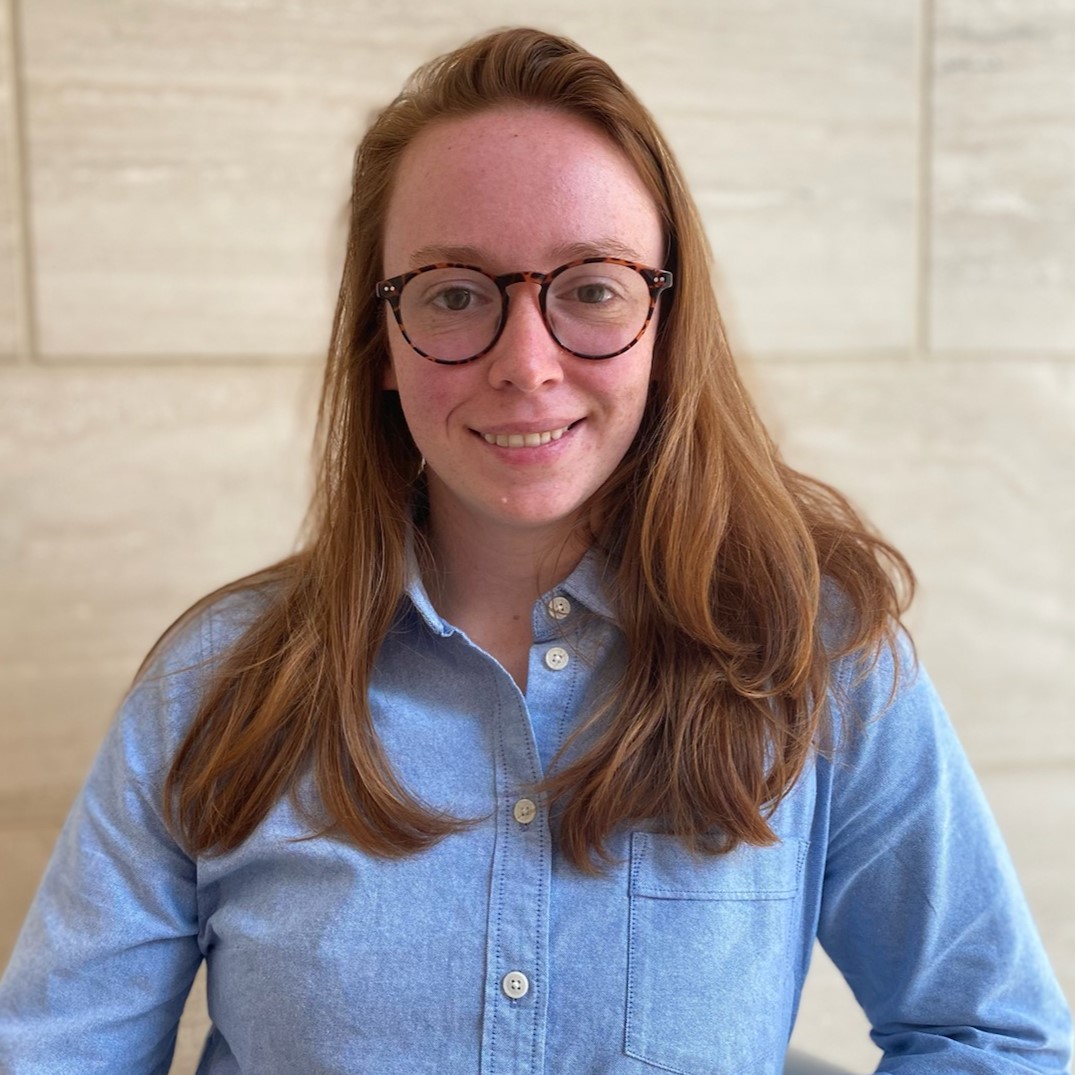
The pursuit of human longevity has long relied on physical experimentation, wet-lab trials, and the slow, incremental gathering of biological data. However, a quiet revolution is underway at the intersection of computer science and cellular biology. At the Buck Institute for Research on Aging, scientists are building software that could fundamentally transform how medicine approaches aging, disease, and human healthspan. Among the researchers driving this charge is Dr. Emma Glass, a research scientist in the laboratory of Dr. James Yurkovich. Glass, who joined the Buck Institute following doctoral work in biomedical engineering, is helping develop whole-cell simulation software and data analysis pipelines for major clinical initiatives, such as the TIME clinical trial. Funded heavily by visionary defense and research grants, her work aims to shift medicine away from reactive treatments and toward predictive, mathematically precise health management.
The Rise of Computational Biology and the Path to the Buck Institute
The journey toward digital cellular modeling requires a rare hybrid of skill sets: advanced applied mathematics, rigorous biomedical engineering, and a deep understanding of microbiology. Glass’s academic trajectory reflects this multidisciplinary necessity. A native of Virginia, she earned her Bachelor of Science in Applied Mathematics from the College of William & Mary before pursuing a Doctor of Philosophy in Biomedical Engineering at the University of Virginia. During her doctoral studies, she immersed herself in computational microbiology, realizing early on that the future of medicine would be heavily shaped by computational power rather than physical trial-and-error alone.
When an opportunity arose at the Buck Institute for Research on Aging, Glass recognized an ideal convergence for her skill set. The Buck Institute, widely recognized as the world’s first independent research organization dedicated solely to longevity and age-related disease, provides an ecosystem where big data, artificial intelligence, and aging biology intersect. Joining the Yurkovich lab a little over a year ago, Glass found herself positioned at the bleeding edge of a field that seeks not merely to treat the symptoms of old age, but to understand and reverse the fundamental mechanisms of cellular decline. Outside of her computational research, Glass maintains a balanced life in Northern California, engaging with the natural environment of the San Francisco Bay Area through hiking, ultimate frisbee, reading, pottery, and knitting—activities that ground her analytical work in tangible craftsmanship.
Decoding the Microscopic World: The DARPA Initiative
At the heart of Glass’s current research is a high-stakes project funded by the Defense Advanced Research Projects Agency (DARPA). The overarching objective is to construct a sophisticated computational simulation capable of predicting, with absolute fidelity, how E. coli bacteria behave when exposed to complex, changing environments.
Rather than relying on physical petri dishes to test antimicrobial resistance, Glass and her colleagues utilize algorithms to calculate the exact concentration of an antibiotic required to halt bacterial growth. This predictive capability allows researchers to determine optimal treatment vectors for specific infections long before physical testing takes place.
While the immediate application involves bacterial responses and antimicrobial efficacy, the ultimate horizon of this research extends far beyond microbiology. The E. coli whole-cell simulator serves as an indispensable proof-of-concept—a biological blueprint. By successfully modeling a single bacterium with absolute precision, the research team is developing the methodological architecture required to eventually simulate human cells. Understanding why human cells lose their functional integrity and decline over decades requires a foundational understanding of cellular dynamics that only whole-cell simulations can provide.
Team Science and the Architecture of Modern Discovery
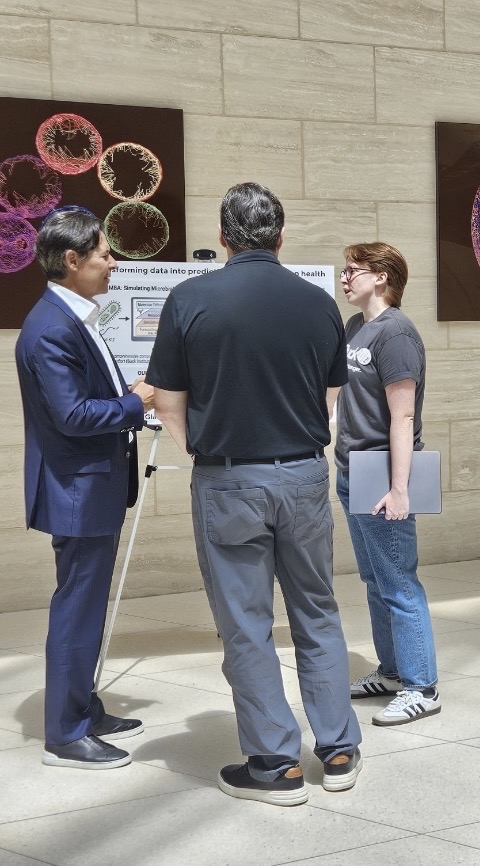
Tackling a scientific hurdle as monumental as whole-cell simulation requires a departure from traditional, siloed academic research. At the Buck Institute, Glass and her peers operate within a framework known as "team science." This collaborative model is structured around two core pillars defined by the DARPA project: "Measure and Inform," which focuses on the rigorous generation of biological data, and "Simulate and Predict," which centers on computational modeling.
In practice, this means Glass does not work in isolation. Her daily schedule involves tight coordination with fellow faculty members across the Buck Institute who generate the massive, empirical datasets required to ground digital models in biological reality. Furthermore, the lab maintains strategic partnerships with external industry leaders who supply specialized software engineering and scalable technological infrastructure. This integration of artificial intelligence, machine learning, and high-performance computing creates an environment where mathematicians, microbiologists, and clinicians can synchronize their efforts. By leveraging the institute’s institutional focus on AI-driven healthspan research, the team can process variables at a scale that would have been computationally impossible a decade ago.
Translating Complexity: A Blueprint for the Layperson
To understand the practical implications of whole-cell simulation without getting lost in bioinformatics jargon, one must look at the current limitations of pharmaceutical development. Conventionally, when biomedical researchers wish to observe how a living cell reacts to a novel pharmacological compound or environmental stressor, they must conduct thousands of empirical physical experiments. This traditional pipeline is notoriously resource-intensive, requiring extensive manual labor, expensive reagents, and years of iterative laboratory testing.
Glass’s work essentially digitizes this trial phase. By translating biological knowledge of E. coli into a comprehensive software environment, researchers can run virtual experiments instantaneously. Scientists can introduce a drug into the digital simulation and observe the cellular response in real-time: Does the metabolic pathway fail? Does the cell accelerate its growth? Does the compound neutralize the pathogen?
Scaling this capability upward represents the holy grail of aging research. If scientists can successfully translate this digital architecture from bacterial cells to human somatic cells, researchers will be able to visualize the biological degradation of human tissue on a computer monitor. By observing precisely how human cells mutate, falter, and age under varying conditions, researchers can systematically test interventions in silico, isolating the most promising restorative treatments before ever introducing them to human trials.
Economic, Clinical, and Societal Implications
The broader implications of whole-cell simulation software extend across multiple sectors of modern society, touching clinical medicine, pharmacology, and public health economics. In the near term, the capability to accurately predict bacterial susceptibility to antimicrobials offers a powerful weapon against the global crisis of antibiotic resistance. By matching specific bacterial strains to precise therapeutic dosages digitally, clinicians can reduce recovery times, eliminate trial-and-error prescriptions, and curb the overuse of broad-spectrum drugs.
However, the long-term economic and societal impacts of extending this framework to human longevity are staggering. Healthcare systems worldwide face mounting fiscal pressures driven by aging populations suffering from chronic, age-related morbidities such as cardiovascular disease, neurodegeneration, and metabolic decline. Personalized longevity simulations could fundamentally alter this paradigm.
Imagine a near-future medical infrastructure where a primary care physician utilizes a patient’s digital cellular twin to run predictive simulations. Instead of relying on generalized epidemiological guidelines, doctors could test how specific lifestyle modifications, nutritional shifts, or pharmaceutical interventions would impact an individual’s unique cellular aging trajectory over a span of decades. This transition from reactive, one-size-fits-all medicine to proactive, mathematically precise health optimization could compress morbidity, keeping populations healthier for a significantly greater portion of their lives.

The Next Decade: From Single Cells to Body Systems
Looking forward over the next five to ten years, the field of computational biology stands at a historic inflection point. Programs like the DARPA SMS initiative are only the opening salvos in a broader technological push to increase simulation complexity by orders of magnitude.
For Emma Glass and her colleagues at the Buck Institute, the upcoming decade will be defined by the transition from single-cell simulations to multi-cellular tissue and systemic body models. Achieving high-fidelity digital models of human cells will render visible mechanisms of biological aging that were previously obscured by the sheer complexity of in vivo biology.
As the boundary between computational science and human longevity research continues to dissolve, institutions like the Buck Institute are shifting the scientific mandate. Rather than merely documenting the physical decline associated with growing older, researchers are laying the mathematical groundwork to predict, intercept, and ultimately prevent it. Through the convergence of applied mathematics, high-performance computing, and collaborative team science, the blueprint for a healthier human lifespan is rapidly moving from the realm of science fiction into operational reality.