Decoding Longevity: Inside Emma Glass and the Buck Institute Quest to Build Digital Human Cells


The pursuit of human longevity has entered a radically digital era. At the forefront of this scientific evolution is Dr. Emma Glass, a research scientist in the laboratory of James Yurkovich at the Buck Institute for Research on Aging. Glass and her colleagues are not peering exclusively down traditional microscopes or growing cultures in physical petri dishes; instead, they are building complex software to simulate life itself. Their ultimate goal is as ambitious as it is revolutionary: to construct high-fidelity digital blueprints of cells that can predict how biological systems respond to disease, therapeutics, and the inevitable progression of time.
The initiative positions the Buck Institute—a premier independent research organization dedicated solely to extending the healthy years of human life—at the intersection of computational biology, artificial intelligence, and geroscience. By translating the complex biological mechanisms of single-celled organisms into computable algorithms, Glass’s work aims to transform how researchers understand cellular decline and, ultimately, how medicine approaches aging.
From Applied Mathematics to Computational Microbiology
Glass’s path to the Buck Institute bridges multiple scientific disciplines. A native of Virginia, she earned her Bachelor of Science in Applied Mathematics from the College of William & Mary, establishing a rigorous quantitative foundation before pursuing a Doctor of Philosophy in Biomedical Engineering at the University of Virginia. Her doctoral research focused on computational microbiology, merging complex mathematical modeling with biological systems.
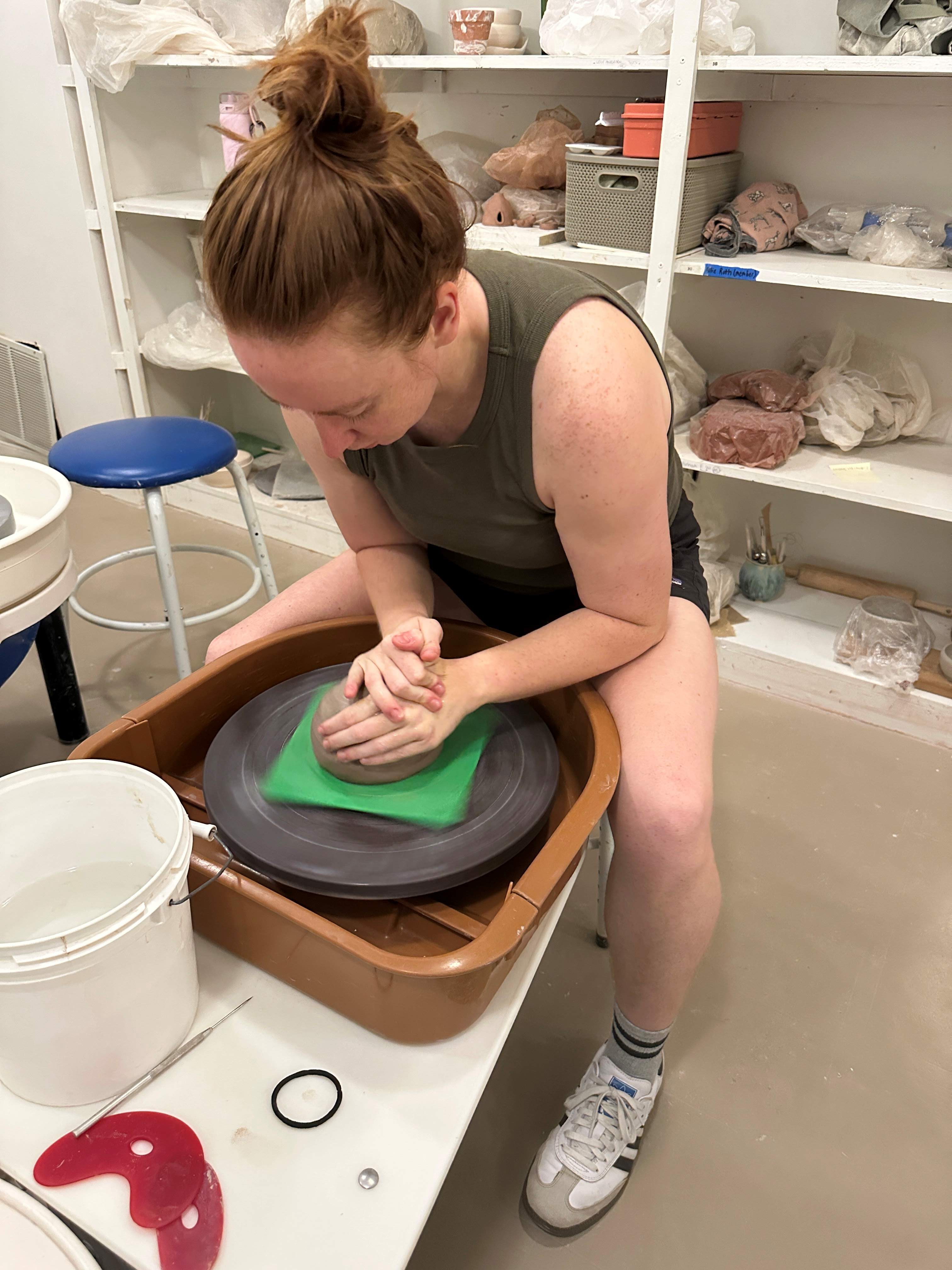
When Glass joined the Buck Institute a little over more than a year ago, she integrated her computational background directly into Yurkovich’s lab. There, her primary responsibilities include developing whole-cell simulation software and handling advanced data analysis for the TIME clinical trial. Outside of her research pursuits, Glass remains active in the Northern California community, engaging in nature exploration around the San Francisco Bay Area, reading, knitting, playing ultimate frisbee, and practicing pottery. Yet, her professional focus remains squarely fixed on unlocking the computational secrets of biological aging.
The DARPA Mandate: Simulating E. Coli to Forecast Biology
The engine driving a significant portion of this research is a high-stakes initiative funded by the Defense Advanced Research Projects Agency (DARPA). The project centers on creating a sophisticated computational simulation capable of predicting the exact behavioral and metabolic responses of Escherichia coli (E. coli) when exposed to various environmental stressors and chemical agents.
In traditional pharmacological research, testing antimicrobial efficacy or drug toxicity requires thousands of physical iterations, consuming immense amounts of time, labor, and financial capital. Glass’s computational model bypasses physical bottlenecks by simulating these interactions digitally. By inputting parameters regarding bacterial physiology and environmental conditions, the software can calculate the precise concentration of an antibiotic required to inhibit bacterial growth without a single physical test tube being touched.
While the immediate application focuses on optimizing treatments for specific bacterial infections and combating rising antimicrobial resistance, the broader strategic intent aligns with the Buck Institute’s core mission. The E. coli whole-cell simulator serves as an indispensable proof-of-concept—a methodological stepping stone designed to validate the architecture required to eventually simulate human cells.

Team Science and the Power of Multi-Disciplinary Collaboration
Tackling a scientific hurdle as monumental as whole-cell simulation requires a departure from traditional, siloed academic research. At the Buck Institute, Glass and her peers operate within a framework known as "team science."
This collaborative structure is divided into two primary operational thrusts under the DARPA project: "Measure and Inform," which is dedicated to high-throughput biological data generation, and "Simulate and Predict," which focuses on model construction and algorithmic refinement. Glass emphasizes that collaboration is the fundamental catalyst enabling her team to navigate such profound biological complexity.
The Yurkovich lab does not work in isolation. Researchers collaborate closely with internal Buck faculty members to produce the massive, empirical datasets required to ground digital models in biological reality. Furthermore, external partnerships with industry leaders provide specialized technical expertise necessary to scale these computational pipelines. The Institute’s institutional focus on integrating artificial intelligence into healthspan research has cultivated a fertile ecosystem where data scientists, machine learning experts, and molecular biologists can operate in synchronized harmony.
Demystifying Digital Biology for the Public
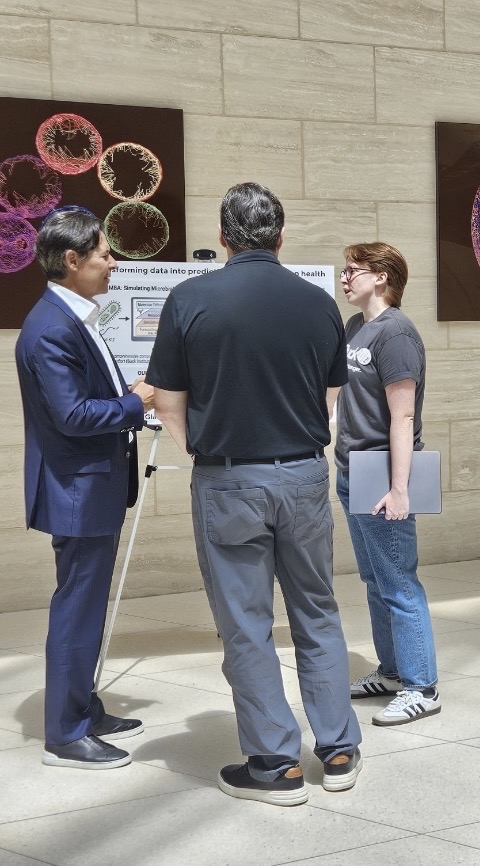
Translating complex systems biology into accessible concepts remains a vital challenge for researchers spearheading public-facing technological shifts. When asked to explain her research to a layperson without an advanced biological background, Glass relies on a digital analogy.
Conventional science observes cellular reactions by running physical experiments repeatedly, a method constrained by biological and physical limits. Glass’s work essentially constructs a video-game-like digital twin of a bacterium. Researchers can manipulate variables within the software interface—introducing novel pharmaceutical compounds or altering environmental parameters—and instantly observe whether the digital cell proliferates, mutates, or dies.
The long-term vision is to scale this capability from simple bacterial models up to complex mammalian and human cells. If scientists can successfully visualize how a human cell changes, degrades, and ages on a computer screen, they can systematically test interventions designed to halt or reverse that cellular damage, ultimately preserving human health well into advanced age.
Translating Code into Clinical and Everyday Impact
The implications of whole-cell simulation extend across a spectrum of timelines, offering both immediate clinical utility and long-term paradigm shifts in healthcare.
In the short term, predictive bacterial and cellular simulations promise to revolutionize infectious disease management. By rapidly forecasting which specific antibiotics will yield optimal outcomes against particular pathogens, clinicians can bypass trial-and-error prescribing, mitigating the spread of drug-resistant superbugs and improving patient recovery rates.
However, the more profound societal impact lies in the methodology’s extensibility. Mastering the simulation of a single bacterium provides a foundational framework that can theoretically be scaled to simulate human tissues, organs, and eventually, entire physiological systems.
Such capabilities point toward a future of personalized longevity medicine. Rather than relying on generalized healthcare guidelines, patients could theoretically undergo personalized cellular simulations. Physicians could test how specific dietary modifications, lifestyle interventions, or pharmacological treatments would interact with an individual’s unique cellular aging profile before prescribing them in the real world. This transition moves modern medicine away from reactive, one-size-fits-all treatments toward proactive, mathematically precise healthspan management.
A Decade of Anticipation: Toward 10x More Complex Systems
Looking forward, the next five to ten years promise unprecedented acceleration in the field of computational geroscience. Programs like the DARPA-backed initiatives represent only the foundational phase of what is achievable in cellular modeling, pushing the scientific community toward systems ten times more complex than those currently manageable.

Over the coming decade, Glass anticipates the emergence of the first high-fidelity digital models of human cells. For researchers embedded at the Buck Institute, this milestone will represent a historic watershed moment. It will allow scientists to interrogate the molecular mechanisms of biological aging at a level of resolution previously confined to science fiction.
By shifting the medical paradigm from merely observing the physical decline associated with chronological aging to predicting and preemptively neutralizing it, researchers like Emma Glass are helping build a future where humanity lives not only longer, but significantly better.
Related posts: