WHO Director-General Concludes High-Level Jordan Visit Highlighting Humanitarian Leadership, Universal Health Coverage, and Mental Health Integration

The healthcare landscape of the Middle East faces complex operational hurdles, driven by ongoing regional conflicts, large-scale displacement, and strained national infrastructures. Against this demanding backdrop, World Health Organization (WHO) Director-General Dr. Tedros Adhanom Ghebreyesus successfully concluded the first day of a pivotal two-day State visit to the Hashemite Kingdom of Jordan. The diplomatic and technical mission underscored the enduring, multifaceted partnership between the WHO and the Jordanian government, placing a specific spotlight on universal health coverage (UHC), innovative mental health integration, and vital humanitarian health actions across the region.
The core of the high-level visit centered on a formal audience with His Majesty King Abdullah II. This crucial meeting served to highlight Jordan’s steadfast leadership in championing health as both a national cornerstone and an essential global priority. High-level discussions between the WHO chief and the Jordanian monarch focused intensively on reinforcing national health systems, expanding equitable access to specialized medical care, and sustaining international and regional support for emergency response frameworks. Particular emphasis was dedicated to the plight of the Palestinian population, specialized medical evacuees transported from Gaza to Jordanian medical facilities for critical treatment, and the millions of refugees historically and presently hosted within the kingdom’s borders.
Expressing profound gratitude for the nation’s humanitarian posture, Dr. Tedros articulated his appreciation for King Abdullah II’s unwavering dedication to universal health access. He extended formal thanks on behalf of the global health community to both the monarch and the people of Jordan for their extraordinary solidarity and generosity. Jordan currently provides comprehensive healthcare services, education, and social support to more than three million registered refugees, predominantly originating from neighboring Syria and, more recently, from the conflict zones of Gaza.
Furthermore, Dr. Tedros lauded Jordan’s broader humanitarian leadership, explicitly drawing attention to His Majesty’s pioneering Medical Corridor initiative. This vital logistical and clinical lifeline facilitates the safe transit and delivery of advanced medical care to critically ill and injured children evacuated directly from Gaza. Through these concerted efforts, Jordan continually demonstrates to the international community what it genuinely means to place health, human dignity, and compassion above geopolitical divides.
Chronology of Day One Engagements and Field Missions
The itinerary for the first day of the State visit was meticulously structured to balance high-level diplomatic strategy with direct, ground-level evaluations of healthcare delivery. Following his morning consultations at the Royal Palace, Dr. Tedros transitioned directly into the field to witness the operational realities of regional medical evacuations.
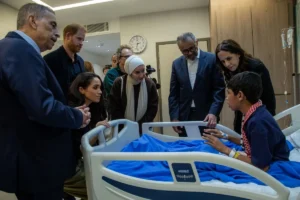
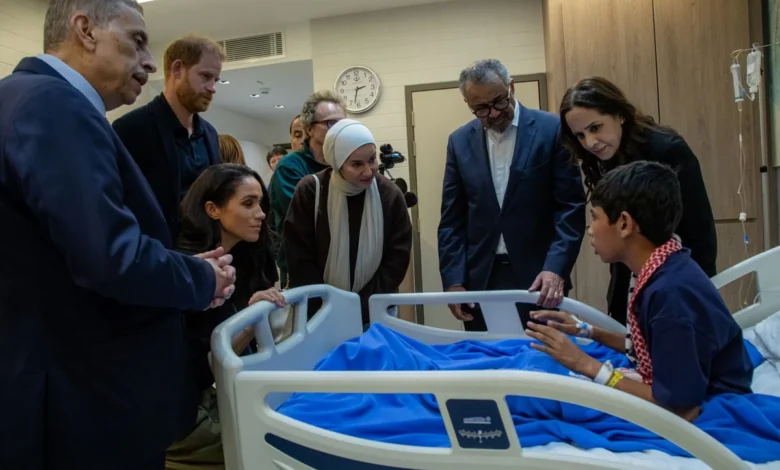
The Director-General conducted an inspection visit to a specialized, WHO-supported hospital facility in Amman, which has been instrumental in providing intensive pediatric care to children evacuated from Gaza. During this moving field visit, Dr. Tedros engaged directly with young patients undergoing protracted treatments, their accompanying family members, and the frontline health workers, nurses, and physicians who labor tirelessly to deliver life-saving interventions for severe traumatic injuries, pediatric oncology, and other complex, life-threatening conditions. The visit served to powerfully reinforce the irreplaceable nature of the medical evacuation corridor operating through Jordan, while simultaneously issuing a stark reminder of the urgent requirement for sustained, predictable international funding to ensure that vulnerable children and other critical casualties can continuously access life-saving health services.
Following his hospital tour, Dr. Tedros convened an intensive, high-level roundtable meeting in the capital. This strategic gathering brought together key international health partners, donor governments, specialized United Nations agencies, and prominent philanthropic foundations. The agenda centered squarely on coordinating and scaling up financing priorities aimed at bolstering Jordan’s domestic health system architecture. Discussions also addressed ongoing humanitarian health interventions, specifically focusing on expanding community-level mental health services and alleviating the fiscal and operational pressures faced by nations hosting disproportionately large refugee populations. The Director-General welcomed the robust collaboration and reaffirmed commitments demonstrated by international stakeholders to continue investing strategically in the health infrastructure of Jordan and the wider Eastern Mediterranean region.
Concluding the dense schedule of the first day, Dr. Tedros held critical bilateral negotiations with Jordan’s Minister of Health. These talks concentrated on technical pathways to accelerate Jordan’s journey toward comprehensive universal health coverage. Notably, Jordan has established itself as a global benchmark by successfully institutionalizing a primary healthcare approach that systematically integrates mental health services into routine, community-level clinical care. This integration ensures that citizens and residents alike can access psychological support as an ordinary component of medical treatment, a model actively supported by the WHO through the Director-General’s Special Initiative for Mental Health.
High-Profile Advocacy and the Role of Archewell Philanthropies
Adding a prominent international advocacy dimension to the diplomatic mission, Dr. Tedros was accompanied throughout several key engagements by Prince Harry, the Duke of Sussex, and Meghan, the Duchess of Sussex. Participating in their official capacities as co-founders of Archewell Philanthropies and long-standing global advocates for the World Health Organization, the couple lent significant visibility to the mission’s core objectives.
Archewell Philanthropies has historically maintained a robust partnership with the WHO, supporting initiatives that range from advocating for equitable global distribution and access to COVID-19 vaccines to financing medical evacuation logistics and pioneering mental health support programs in crisis-affected regions. During the joint engagements in Amman, Prince Harry actively participated as a key ally of the WHO’s mental health mandate. He emphasized the critical imperative of investing heavily in psychological support frameworks across diverse communities and emergency settings, drawing focused attention to the distinct mental health vulnerabilities experienced by men, adolescents, and young children caught in the crossfire of geopolitical conflicts.
Reflecting on the collaborative visit, Dr. Tedros stated, "I want to thank our partners, including Prince Harry, Duke of Sussex, and Meghan, Duchess of Sussex, whose commitment to mental health and humanitarian action has helped bring visibility, resources, and hope to some of the world’s most vulnerable communities. Their collaboration is helping to advance WHO’s mission to ensure health for all."
Echoing these sentiments, Prince Harry shared his perspective on the ground realities observed during the mission: "It is an honour to join the Director-General of the World Health Organization in Jordan, a country that is leading by example in compassion, resilience, and innovation. Through our work with Archewell Philanthropies, my wife and I have seen first-hand the impact of WHO’s efforts to support mental health and deliver life-saving care in emergencies. We remain deeply committed to advancing awareness, reducing stigma, and expanding access to mental health support for all those affected by conflict and crisis. Mental health is fundamental to recovery, dignity, and long-term peace, and we are proud to stand with WHO and partners around the world to make it a global priority."
Contextualizing Jordan’s Healthcare Landscape and Regional Pressures
To fully comprehend the significance of the WHO Director-General’s visit, it is essential to examine the socio-economic and geopolitical framework within which Jordan operates. As a nation with limited natural resources, Jordan has historically punched well above its weight in humanitarian governance. Hosting over three million refugees—accounting for a substantial fraction of the total population—places an immense, structural burden on the kingdom’s water, energy, education, and, most critically, public health infrastructure.
The Syrian crisis, which began over a decade ago, tested Jordan’s capacity to absorb displaced populations into its public health system, a challenge the government met by granting refugees access to primary healthcare services on par with Jordanian citizens. However, the subsequent intensification of the humanitarian crisis in Gaza introduced a novel layer of acute medical distress. Thousands of individuals, particularly children suffering from blast injuries, severe burns, and untreated advanced cancers, require immediate tertiary care that local health systems in Gaza can no longer provide due to infrastructural collapse.
Jordan’s establishment of the medical evacuation corridor transformed the kingdom into a vital medical triage and treatment hub. Yet, this noble undertaking relies heavily on external donor financing, inter-agency coordination with the WHO, and robust logistical pipelines. The high-level meetings convened by Dr. Tedros in Amman were specifically designed to secure long-term financial pledges from international donors, mitigating the risk of donor fatigue and ensuring that Jordan’s healthcare system does not buckle under the compounded weight of regional crises.
Furthermore, Jordan’s progressive integration of mental health services into its primary healthcare network serves as a regional blueprint. Mental health disorders in post-conflict and refugee-hosting environments are notoriously prevalent, frequently manifesting as post-traumatic stress disorder (PTSD), severe depression, and anxiety among children and adolescents. By embedding psychological support units directly into local health clinics, Jordan reduces the social stigma associated with mental health treatment while drastically improving healthcare accessibility.
Anticipated Itinerary and Agenda for Day Two
Building upon the robust foundation laid during the first 24 hours, the second day of Dr. Tedros’s State visit promises an equally intensive exploration of specialized Jordanian health institutions and community development initiatives.
The Director-General’s schedule for the final day includes a high-profile visit to Jordan’s National Center for the Rehabilitation of Addicts. Supported technically by the WHO, this specialized facility provides comprehensive, integrated medical, psychological, and social services aimed at evidence-based treatment and harm reduction. This engagement will allow Dr. Tedros to observe Jordan’s progressive public health approach to substance use disorders, treating them as medical conditions requiring clinical intervention rather than purely punitive measures.
In addition to clinical facilities, Dr. Tedros is scheduled to meet directly with grassroots community leaders and prominent women’s empowerment organizations, including the esteemed Jordanian Hashemite Fund for Human Development (JOHUD). These discussions will focus on community-led resilience, maternal and child health, and the empowerment of women as primary agents of health education and disease prevention at the local level.
The technical segment of the second day will feature an analytical walkthrough of the renowned King Hussein Cancer Center (KHCC). As a premier regional center of excellence in oncology, KHCC plays a transformative role in providing advanced cancer therapy not only to Jordanian nationals but also to medical evacuees from across the Middle East. Discussions at the center are expected to center on innovations in cancer care, clinical research partnerships, and strategies to enhance regional collaboration in specialized medicine.
The high-level State visit will formally conclude with a series of wrap-up bilateral engagements involving key institutional partners who underwrite humanitarian operations in the kingdom. These final meetings aim to cement the commitments made during the visit, reinforcing Jordan’s irreplaceable standing as a regional epicenter for medical evacuations, rapid emergency health response, and long-term health system resilience.
Broader Implications and Analytical Outlook
The visit of WHO Director-General Dr. Tedros Adhanom Ghebreyesus to Jordan carries profound implications for international public health diplomacy and humanitarian burden-sharing. In an era marked by competing global crises and tightening international aid budgets, missions of this caliber serve as crucial advocacy instruments. They remind traditional donor nations and emerging philanthropies that localized stability in the Middle East is fundamentally tethered to regional health security.
By spotlighting Jordan’s exemplary model of refugee integration, universal health coverage expansion, and pioneering mental health inclusion, the WHO is actively championing policy frameworks that can be replicated in other fragile, displacement-heavy settings globally. Furthermore, the active participation of high-profile advocates such as Prince Harry and Meghan, Duchess of Sussex, demonstrates the expanding utility of cross-sectoral partnerships in mobilizing public awareness and financial resources for neglected health priorities.
Ultimately, the visit underscores a timeless humanitarian truth: that health is a fundamental human right, independent of nationality, legal status, or political affiliation. As Jordan continues to maintain its open-door policy for the distressed and the displaced, the sustained backing of the World Health Organization and the international community remains an absolute prerequisite. This partnership ensures that the kingdom can continue to shoulder its monumental humanitarian responsibilities without compromising the health, dignity, and future of its own citizenry.
Related posts: