Scientific endeavors, by their very nature, are journeys into the unknown. Researchers often embark with precise objectives and sophisticated tools, meticulously planning their approach to unravel complex phenomena. However, the natural world, and the human systems that interact with it, frequently present unexpected detours, leading to discoveries that transcend initial research questions. Such was the case for a team from the University of Colorado Boulder (CU Boulder) conducting an atmospheric study in an agricultural region of Oklahoma. What began as an investigation into the formation and evolution of minuscule airborne particles unexpectedly led to the groundbreaking identification of the first airborne detection of Medium Chain Chlorinated Paraffins (MCCPs) in the Western Hemisphere. This significant finding, detailing a previously unquantified presence of a toxic organic pollutant, was recently published in the peer-reviewed journal ACS Environmental Au.
Unforeseen Discovery in the Oklahoma Air
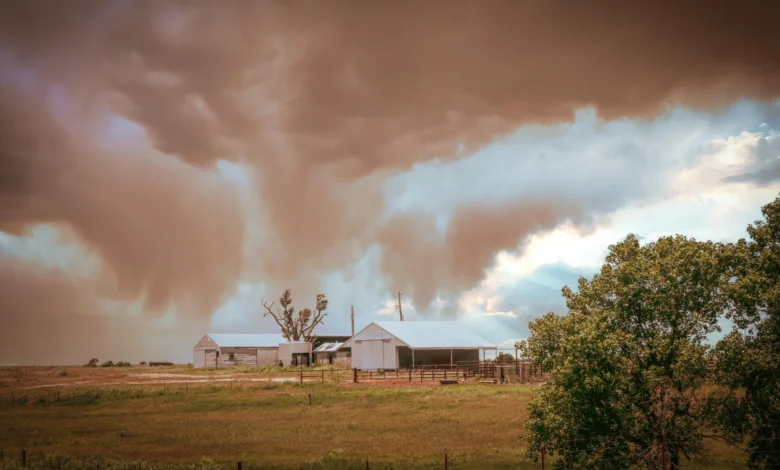
The CU Boulder research team was initially focused on understanding the intricate processes by which tiny particles form and transform in the atmosphere, a critical area of study for air quality and climate modeling. Equipped with advanced instrumentation, they established a monitoring station in an agricultural setting in Oklahoma, a region characterized by extensive farming practices and proximity to industrial activities. Their goal was to collect continuous, high-resolution data on aerosol composition and dynamics.
"It’s very exciting as a scientist to find something unexpected like this that we weren’t looking for," stated Daniel Katz, a CU Boulder chemistry PhD student and the lead author of the study. "We’re starting to learn more about this toxic, organic pollutant that we know is out there, and which we need to understand better."
The unexpected revelation came as Katz meticulously analyzed the extensive datasets generated by their nitrate chemical ionization mass spectrometer, a highly sensitive instrument designed to identify specific chemical compounds present in the air. During his analysis, he noticed peculiar isotopic patterns that did not align with any known atmospheric constituents or expected research targets. These anomalies, persistent and distinct, prompted a deeper investigation. Through meticulous cross-referencing and advanced analytical techniques, Katz and his colleagues were able to link these unique signatures to chlorinated paraffins, specifically identifying them as MCCPs. This marked a pivotal moment: the first documented instance of MCCPs being detected in the air over the Western Hemisphere.
The Significance of MCCPs: A Growing Environmental Concern
Medium Chain Chlorinated Paraffins (MCCPs) are a class of synthetic organic chemicals that have raised significant environmental and health concerns globally. Their persistence in the environment, potential for long-range transport, and documented toxicity have placed them under the scrutiny of international regulatory bodies. Currently, MCCPs are under evaluation for potential regulation by the Stockholm Convention, a landmark international treaty dedicated to eliminating or restricting the production and use of persistent organic pollutants (POPs) that pose risks to human health and the environment.
While MCCPs have been previously detected in remote locations such as Antarctica and industrialized regions of Asia, their airborne presence in the Western Hemisphere had remained largely unquantified until this study. The inability to accurately measure these compounds in the air in this region had created a knowledge gap, hindering efforts to assess potential exposure pathways and environmental impacts.
The widespread industrial applications of MCCPs contribute to their environmental prevalence. They are commonly utilized as plasticizers in PVC (polyvinyl chloride) and rubber, as flame retardants in textiles and paints, and as additives in metalworking fluids and lubricants. A significant pathway for their entry into the environment, and subsequently into the atmosphere, is through wastewater treatment processes. During the treatment of wastewater, MCCPs can concentrate in biosolids, also known as sewage sludge. This biosolid material is frequently applied to agricultural lands as fertilizer.
The researchers hypothesize that the MCCPs detected in the Oklahoma air likely originated from agricultural fields in the vicinity where biosolid fertilizer, potentially containing these pollutants, had been applied. "When sewage sludges are spread across the fields, those toxic compounds could be released into the air," Katz explained. "We can’t show directly that that’s happening, but we think it’s a reasonable way that they could be winding up in the air. Sewage sludge fertilizers have been shown to release similar compounds." This proposed mechanism highlights a critical link between industrial waste management, agricultural practices, and atmospheric pollution.
A Potential Consequence of Prior Regulation
The discovery of MCCPs in the Oklahoma air takes on added significance when considered in the context of regulations already in place for their chemical relatives, Short Chain Chlorinated Paraffins (SCCPs). SCCPs have been subject to stringent regulation for years, including under the Stockholm Convention and by the U.S. Environmental Protection Agency (EPA) since 2009. These earlier regulations were driven by compelling evidence demonstrating SCCPs’ capacity for long-distance travel, their persistence in ecosystems, and their potential adverse effects on human health.
However, a potential unintended consequence of these successful SCCP regulations may be the increased reliance on MCCPs. As industries faced restrictions on SCCPs, they may have turned to MCCPs as substitutes, leading to an escalation in their production and use. This phenomenon, often referred to as "regrettable substitution," is a recurring challenge in chemical management.
"We always have these unintended consequences of regulation, where you regulate something, and then there’s still a need for the products that those were in," commented Ellie Browne, a CU Boulder chemistry professor, CIRES Fellow, and co-author of the study. "So they get replaced by something." This suggests that the regulatory landscape for persistent chemicals needs to be comprehensive, considering not only the immediate risks of a regulated substance but also the potential for shifts to closely related, and possibly equally problematic, alternatives.
Advanced Instrumentation and Methodological Breakthrough
The success of the CU Boulder team in detecting MCCPs in the air is a testament to their sophisticated analytical capabilities and the meticulous data collection undertaken during their month-long field study. The core of their detection system was a nitrate chemical ionization mass spectrometer. This instrument operates by ionizing air molecules using nitrate ions, a gentler ionization process that is particularly effective for detecting a wide range of organic compounds without causing extensive fragmentation. Its high sensitivity allows for the identification of even trace amounts of specific substances in complex atmospheric samples.
The research team conducted continuous air monitoring at the Oklahoma site, collecting data around the clock for the entire duration of the study. This sustained data acquisition provided a comprehensive snapshot of the atmospheric composition, enabling the identification of transient and persistent chemical signatures.
The breakthrough came not from a pre-existing method for MCCP detection in air, but from the unexpected anomalies in the data. Katz’s keen observation of unusual isotopic patterns – the relative abundance of different isotopes of the same element – was crucial. Chlorinated paraffins, including MCCPs, are characterized by specific isotopic signatures due to the presence of chlorine atoms. By recognizing these unique patterns, which deviated from known atmospheric compounds, Katz and his colleagues were able to isolate the signal corresponding to MCCPs. This required a sophisticated understanding of mass spectrometry, isotopic analysis, and the chemical properties of chlorinated paraffins, effectively developing a new method for airborne MCCP detection through careful data interpretation.
Parallels with "Forever Chemicals" and the Path Forward
The similarities between MCCPs and per- and polyfluoroalkyl substances (PFAS), often referred to as "forever chemicals," are noteworthy and underscore the broader challenges in managing persistent chemical pollutants. PFAS are a large group of synthetic chemicals known for their extreme persistence in the environment, meaning they break down very slowly, if at all, leading to their accumulation in ecosystems and living organisms. Concerns over PFAS contamination in soil have already prompted significant policy changes. Notably, in response to these concerns, the Oklahoma Senate recently enacted a ban on biosolid fertilizer, reflecting a growing awareness of the potential risks associated with land application of treated sewage sludge.
The identification of MCCPs in the air by the CU Boulder team opens a new chapter in understanding their environmental fate and transport. Now that a reliable method for detecting airborne MCCPs has been established, the crucial next step is to systematically track their concentrations over time. Researchers aim to quantify how these levels fluctuate across different seasons, influenced by factors such as temperature, wind patterns, and agricultural activity. Furthermore, a deeper understanding of the atmospheric chemistry and potential transformation pathways of MCCPs is required.
"We identified them, but we still don’t know exactly what they do when they are in the atmosphere, and they need to be investigated further," Katz emphasized. "I think it’s important that we continue to have governmental agencies that are capable of evaluating the science and regulating these chemicals as necessary for public health and safety."
The implications of this discovery extend beyond the specific agricultural region of Oklahoma. The methodology developed by the CU Boulder team can be applied to air quality monitoring programs worldwide, potentially revealing the widespread presence of MCCPs in other areas. This could lead to a more accurate assessment of global MCCP emissions and exposure.
Broader Implications for Environmental Policy and Public Health
The findings from the Oklahoma study have significant implications for environmental policy and public health strategies. The confirmation of airborne MCCPs in the Western Hemisphere necessitates a re-evaluation of existing monitoring programs and regulatory frameworks. It highlights the critical need for proactive surveillance of emerging contaminants, especially those with known persistence and toxicity.
The potential link between biosolid fertilizer application and airborne MCCPs raises questions about current waste management practices and agricultural inputs. While biosolid recycling offers valuable nutrient recovery, its potential to reintroduce pollutants into the environment demands careful consideration and advanced treatment technologies. Policy makers and environmental agencies may need to implement more rigorous testing protocols for biosolid fertilizers, focusing on a broader range of persistent organic pollutants.
Furthermore, the pattern of substituting regulated chemicals with similar, less-studied alternatives underscores the importance of a "chemical-by-chemical" approach to regulation. A more holistic strategy that considers the broader class of chemicals and potential substitutes would be more effective in preventing regrettable substitutions and ensuring long-term environmental protection.
The scientific community’s response to this discovery is likely to involve increased research into the atmospheric chemistry, transport, and potential health impacts of MCCPs. Studies focusing on the transformation products of MCCPs in the atmosphere, their deposition onto land and water bodies, and their potential for bioaccumulation in food chains will be crucial.
For the public, this discovery serves as a reminder of the complex and often invisible environmental challenges we face. It emphasizes the importance of scientific research in identifying and quantifying these threats, and the role of informed public discourse in driving effective policy solutions. The continued dedication of researchers like those at CU Boulder, their willingness to pursue unexpected findings, and their commitment to sharing their knowledge are vital for safeguarding public health and ensuring a sustainable future. The journey of scientific discovery, even when it veers off the planned path, is essential for illuminating the hidden aspects of our environment and guiding us toward informed action.