Scientists Have Developed a New Gel That Could Make It Possible to Regrow Damaged Tooth Enamel and Revolutionize Modern Dentistry

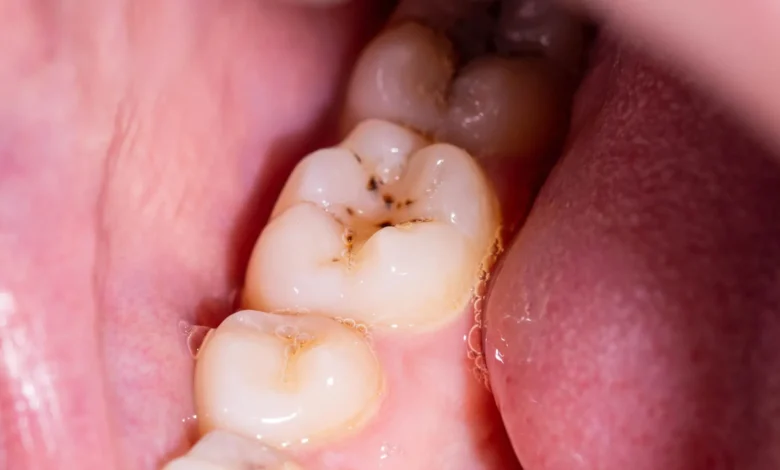
For generations, the irreversible loss of tooth enamel has been considered an inevitable consequence of aging, poor diet, and dental trauma. Unlike bone, which possesses an inherent capacity for self-repair, human enamel—the hardest substance in the body—is composed of non-living, acellular mineral tissue. Once the enamel surface is breached or eroded, the body lacks the biological machinery to regenerate it, leaving the underlying dentin exposed and the tooth vulnerable to decay, sensitivity, and eventual structural failure. However, a breakthrough from the University of Nottingham’s School of Pharmacy and the Department of Chemical and Environmental Engineering may have fundamentally altered this paradigm.
Researchers have developed a sophisticated, biomimetic gel capable of regenerating tooth enamel by organizing essential minerals into a structurally integrated layer. This innovation, recently published in the journal Nature Communications, marks a significant departure from traditional restorative dentistry, moving the field from passive protection toward active biological regeneration.
The Biological Mechanism: Epitaxial Mineralization
The innovation centers on a material that mimics the biological signaling processes that occur during early childhood when teeth are first formed. During natural tooth development, specialized proteins guide the arrangement of hydroxyapatite crystals, the primary mineral component of enamel. The Nottingham research team has synthesized a protein-based gel that replicates this "template" function without the use of fluoride, which is the cornerstone of most contemporary dental care products.
When applied to a compromised tooth surface, the gel acts as a scaffold. It attracts calcium and phosphate ions—minerals already present in human saliva—and organizes them into a precise, crystalline architecture. This process, known as epitaxial mineralization, ensures that the newly formed mineral phase grows in alignment with the existing, healthy enamel. By dictating the orientation of these crystals, the gel allows the new tissue to achieve the same mechanical hardness and structural integrity as the original, native enamel.
Addressing the Crisis of Global Oral Health
The implications of this technology are far-reaching when considering the global burden of oral disease. According to the World Health Organization (WHO), oral diseases remain a major public health challenge, affecting nearly 3.5 billion people worldwide. Dental caries (tooth decay) and severe periodontitis are among the most prevalent conditions, often leading to chronic pain, social isolation, and significant economic burdens on healthcare systems.
In many regions, the progression of tooth decay is directly linked to the loss of enamel, which allows bacteria to penetrate the dentin and reach the pulp, eventually requiring invasive procedures such as root canals or extractions. Furthermore, enamel erosion caused by acidic diets and gastroesophageal reflux disease (GERD) is becoming increasingly common. By providing a non-invasive way to rebuild this protective barrier, the Nottingham gel could potentially reduce the global reliance on restorative materials like composite resins or metal amalgams, which often require the removal of healthy tooth structure to accommodate fillings.
Chronology of the Research and Development
The journey toward this discovery began years ago with a focus on biomaterials and the synthesis of protein-based frameworks. The research team, led by Professor Alvaro Mata, sought to bridge the gap between chemical engineering and restorative dentistry.
- Initial Research Phase: The team spent several years analyzing the molecular architecture of enamel, specifically focusing on how proteins facilitate the precipitation and orientation of minerals.
- Proof of Concept: The laboratory successfully demonstrated that the synthetic protein gel could facilitate the growth of an enamel-like layer in controlled, simulated environments.
- Stress-Testing Phase: Following the successful formation of the mineral layer, the team subjected the regenerated material to rigorous mechanical testing. These tests simulated the extreme conditions of the human mouth, including the abrasive forces of daily brushing, the pressure of chewing, and the chemical degradation caused by acidic foods and beverages.
- Validation of Results: The findings confirmed that the regenerated enamel possessed mechanical properties indistinguishable from natural enamel, confirming the stability and durability of the treatment.
- Establishment of Mintech-Bio: With the laboratory phase concluded, the team launched the start-up company Mintech-Bio to facilitate the translation of the gel from the university bench to the dental clinic.
Clinical Implications for Dentine Sensitivity
Beyond enamel regeneration, the material shows significant promise in treating dentin hypersensitivity—a condition that affects millions of people. When enamel is lost, the microscopic tubules within the underlying dentin are exposed. These tubules provide a direct pathway for external stimuli, such as temperature changes or pressure, to reach the nerve endings in the tooth pulp, causing sharp, sudden pain.
The Nottingham gel has demonstrated the ability to form a robust, mineralized seal over these exposed tubules. By physically blocking these channels, the treatment could provide long-term relief for patients suffering from sensitivity, potentially replacing short-term, desensitizing toothpastes with a permanent structural solution. Additionally, this bonding capability could improve the adhesion of traditional dental restorations, reducing the failure rate of fillings and crowns that often peel away due to the lack of a stable foundation.
Expert Perspectives and Official Responses
Dr. Abshar Hasan, lead author of the study and a postdoctoral fellow at the University of Nottingham, highlighted the necessity of recreating the internal architecture of the tooth. "Dental enamel has a unique structure, which gives it its remarkable properties," Dr. Hasan stated. "When our material is applied to demineralized or eroded enamel, or exposed dentine, it promotes the growth of crystals in an integrated and organized manner. We have tested this under conditions simulating real-life situations—brushing, chewing, and acidic exposure—and found that the regenerated enamel behaves just like healthy, natural tissue."
Professor Alvaro Mata, who oversees the biomedical engineering department, emphasized the focus on scalability and clinical accessibility. "We are very excited because the technology has been designed with the clinician and patient in mind," Professor Mata noted. "It is safe, can be easily and rapidly applied, and it is scalable."
The team’s focus on "clinician-readiness" suggests that the treatment would not require complex, specialized equipment, but could instead be administered during routine dental check-ups, potentially replacing or augmenting standard fluoride varnish applications.
Future Outlook and Challenges
Despite the excitement surrounding this breakthrough, the research team remains pragmatic about the path to commercialization. While laboratory simulations have yielded excellent results, the transition to the human oral environment presents unique challenges. The human mouth is a highly dynamic ecosystem, influenced by varying pH levels, the oral microbiome, and diverse dietary habits. Clinical trials will be essential to ensure that the gel maintains its structural integrity over months and years of use.
If successful, the impact on dentistry would be seismic. For over a century, the profession has focused primarily on the "drill and fill" model—removing decayed tissue and replacing it with inert materials. This new technology introduces the era of "regeneration," where the focus shifts to restoring the tooth to its biological ideal.
Mintech-Bio has set an ambitious goal to bring a commercial product to market as early as next year. This timeline suggests a high level of confidence in the underlying chemistry and the safety profile of the protein-based material. As the dental community awaits further clinical data, the prospect of reversing enamel loss—once thought impossible—offers a beacon of hope for patients suffering from chronic dental degradation. By effectively merging the precision of nanotechnology with the biology of tooth formation, researchers at the University of Nottingham have provided a potential solution to one of the most persistent problems in clinical medicine, promising a future where teeth can be renewed rather than simply repaired.
Related posts: