Assessing the Impact of the Second Trump Administration on PEPFAR: A Comprehensive Analysis of FY 2025 Fourth-Quarter Performance Data

Since the inauguration of the second Trump administration, the President’s Emergency Plan for AIDS Relief (PEPFAR)—historically lauded as one of the most successful global health initiatives in history, with an estimated 26 million lives saved—has undergone a series of profound operational disruptions, structural shifts, and strategic realignments. As part of a sweeping comprehensive foreign aid review, the landmark U.S. bilateral HIV/AIDS program has faced unprecedented changes, including temporary stop-work orders, strict statutory caps on service continuity, the abrupt cancellation of numerous long-standing funding awards, and a fundamental overhaul of American global health architecture.
Central to this administrative pivot is the launch of the "America First Global Health Strategy." This newly enacted framework pivots away from traditional disease-specific vertical programming toward a deeply integrated approach. It prioritizes bilateral agreements directly with partner country governments, concentrates heavily on the provision of frontline commodities, and emphasizes broader health systems strengthening over targeted interventions. While global health economists, modeling groups, and field surveys have long attempted to forecast the potential fallout of these modifications, concrete empirical assessments have been severely hampered by an acute lack of transparent, publicly accessible program data.
For more than a decade, PEPFAR’s flagship data platform served as a robust repository for financial expenditures and programmatic results, tracking progress through the Monitoring, Evaluation, and Reporting (MER) system. However, in early 2025, the U.S. government temporarily took the data platform offline. When the portal was eventually restored, it notably omitted all program-level data for the entirety of fiscal year 2025, leaving global health stakeholders, academic researchers, and lawmakers in the dark regarding the immediate operational impacts of the administration’s foreign aid reforms.
The Data Release: A Narrow Window into FY 2025
This data blackout partially lifted on April 17, 2026, when the U.S. Department of State released Fiscal Year (FY) 2025 fourth-quarter (Q4) MER data, covering the period from July 1 to September 30, 2025. This release marked the very first installment of program-level data made available to the public since the sweeping policy alterations enacted the previous year. According to the State Department, data for the first three quarters of FY 2025 were withheld due to complex data reporting bottlenecks, administrative transition hurdles, and implementation challenges stemming from the ongoing foreign aid restructuring.
To circumvent the absence of cumulative annual metrics and to establish a reliable baseline of programmatic health, analysts from KFF and Boston University conducted a comparative evaluation. By juxtaposing PEPFAR’s FY 2025 Q4 results against Q4 figures from the preceding four fiscal years across a targeted subset of MER indicators, researchers sought to control for seasonal reporting variances. Nevertheless, experts emphasize that this snapshot approach cannot fully capture the cumulative disruptions, localized service freezes, or structural deterioration that may have transpired across the broader 12-month fiscal cycle.
Furthermore, editorial updates released on April 23, 2026, refined specific metrics within the analysis—most notably shifting the focus on pediatric care from the number of HIV-positive infants with diagnostic samples collected within their first 12 months of life to the more immediate metric of HIV-exposed infants tested within the earliest months of life. Despite these methodological limitations and the narrow window provided by a single quarter of data, the Q4 release offers the first quantitative insights into how PEPFAR is functioning under the America First mandate.
Mixed Treatment Outcomes Amid Administrative Shifts
An analysis of PEPFAR’s Q4 treatment metrics reveals a complex, highly mixed operational landscape. On one hand, certain core pillars of the treatment cascade demonstrated remarkable resilience. The total number of individuals living with HIV who remained stable on antiretroviral therapy (ART) held steady compared to prior fiscal years, signaling that millions of established patients successfully maintained access to life-prolonging medications despite widespread administrative turbulence. Similarly, indicators tracking viral load suppression rates among patients on ART showed sustained stability, indicating that adherence regimens remained largely intact for those already integrated into the treatment pipeline.
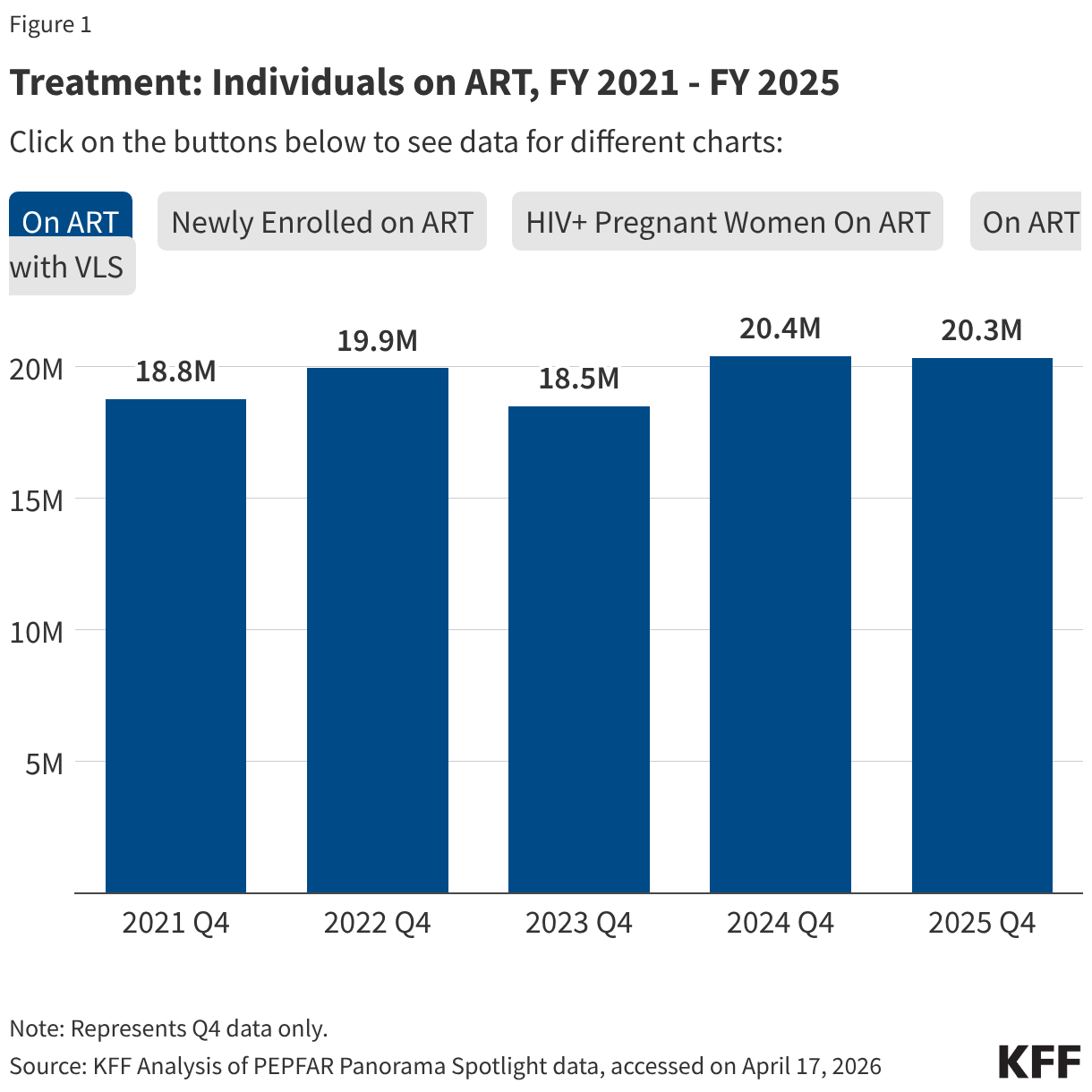
Conversely, indicators measuring new programmatic expansion revealed noticeable contractions. Most notably, the number of individuals newly enrolled on antiretroviral therapy experienced a downward drift in FY 2025 Q4 compared to previous fourth-quarter periods. This metric is widely regarded as a critical barometer of health system outreach and early case identification. The dip suggests that administrative hurdles, reduced community-level mobilization, and localized funding freezes may have impeded the identification and timely initiation of treatment for newly diagnosed individuals.
Meanwhile, specialized treatment pipelines yielded varied outcomes. The number of pregnant women living with HIV who were actively maintained on ART showed relative stability, yet broader maternal and child health interventions faced distinct reporting and operational headwinds.
Fluctuations in Testing and Diagnostic Services
HIV testing and diagnostic tracking for the final quarter of FY 2025 displayed significant volatility when measured against historical benchmarks. Both the total number of individuals tested for HIV and the absolute number of individuals testing positive for the virus registered declines in FY 2025 Q4 relative to the same period in FY 2024.
Public health analysts stress that interpreting these testing trends requires nuanced context. A drop in overall testing volumes and positive diagnoses can be interpreted through two competing lenses. Optimistically, it could reflect a genuine epidemiological contraction in new infections, driven by historical prevention gains. Pessimistically, and perhaps more plausibly given the timing of the data, the decline may simply reflect diminished testing capacity, reduced outreach worker presence in frontline communities, and structural barriers to accessing diagnostic facilities resulting from the reorganization of U.S. foreign assistance.
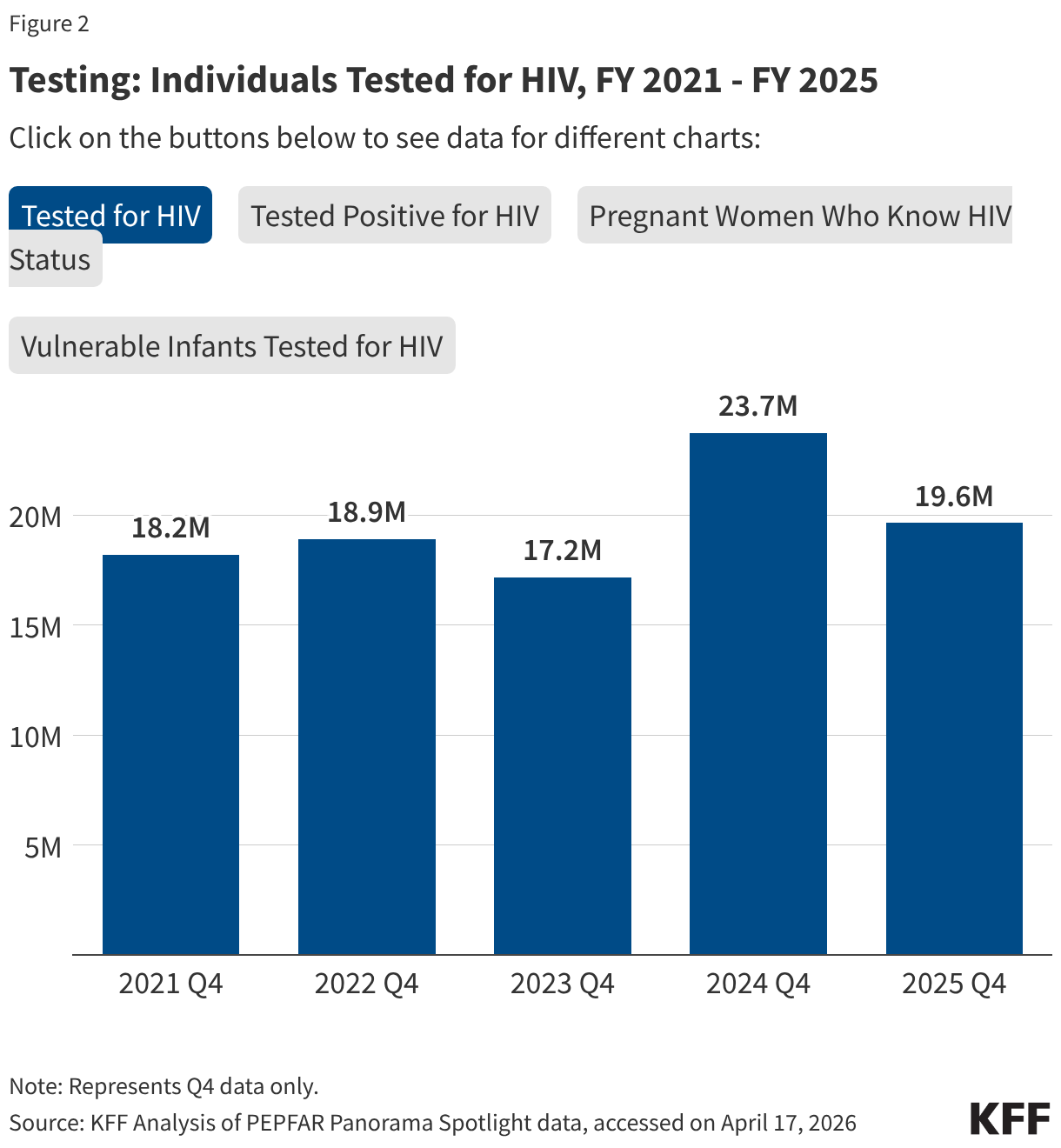
Additional indicators—such as the percentage of pregnant women attending antenatal care who successfully learned their HIV status and the volume of vulnerable infants screened for the virus—exhibited localized fluctuations. While baseline services in many established urban clinics persisted, rural and community-based testing outreach programs experienced noticeable friction during the administrative transition.
Sharp Contractions in Prevention Infrastructure
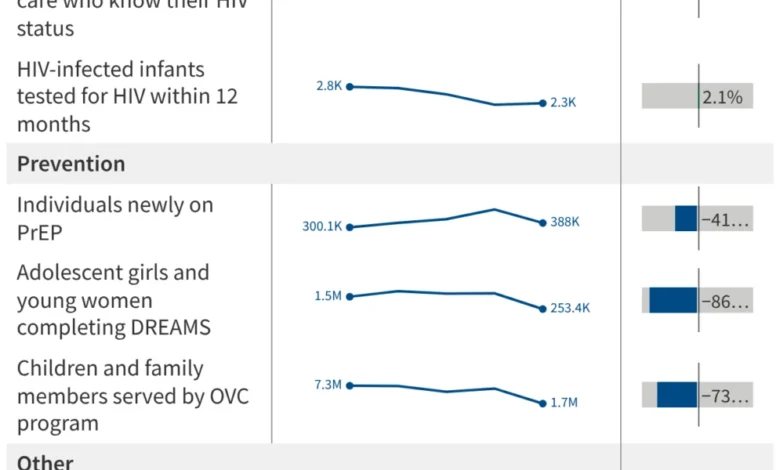
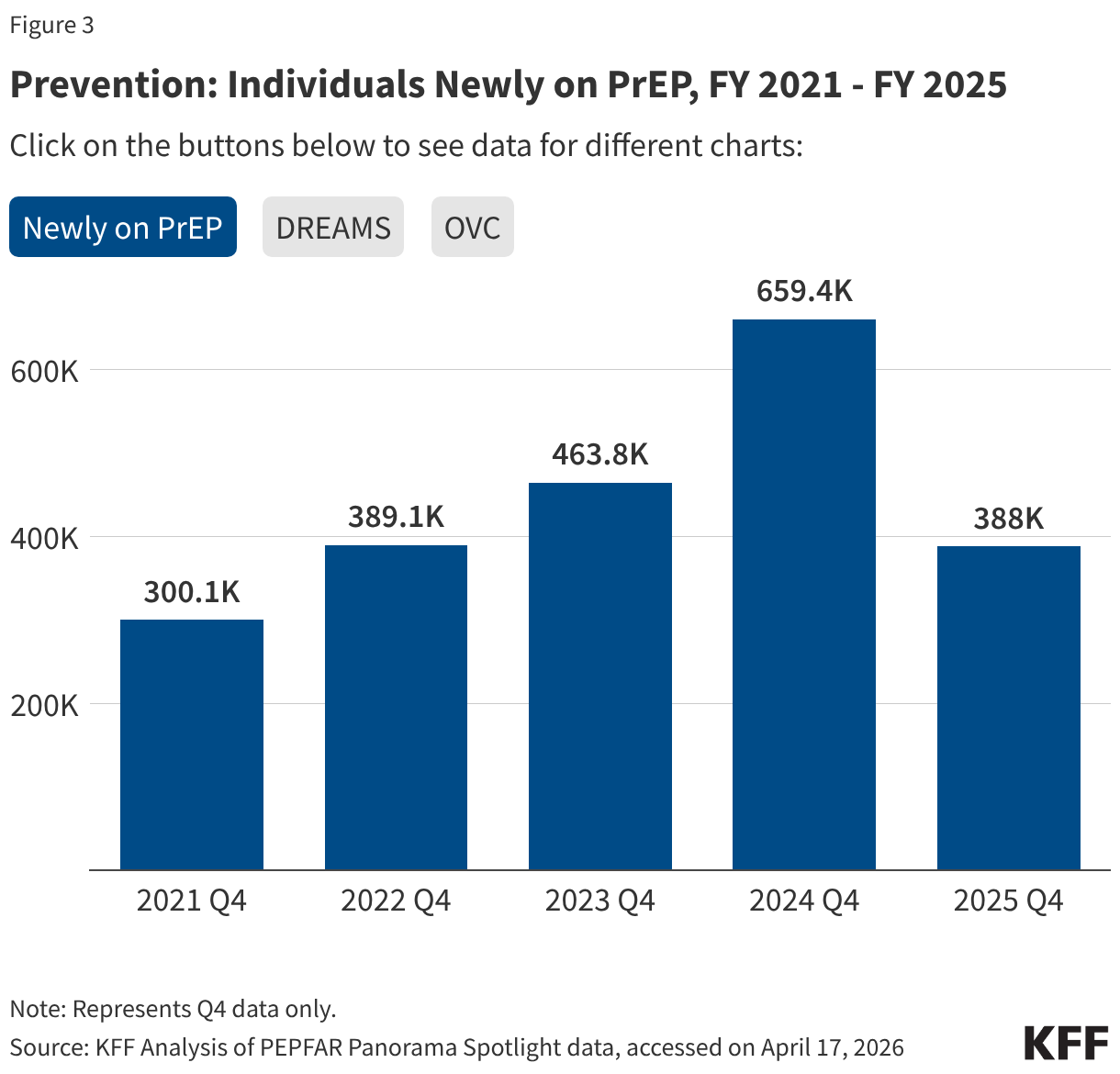
The most pronounced negative impacts visible in the FY 2025 Q4 data are concentrated within PEPFAR’s prevention portfolio. Services designed to avert new infections—particularly those targeting high-risk and vulnerable populations—saw substantial, statistically meaningful declines.
Most notably, the number of individuals newly initiated on pre-exposure prophylaxis (PrEP), a highly effective biomedical intervention for preventing HIV acquisition, dropped sharply. The second Trump administration had previously signaled a scaling back of targeted PrEP distribution as part of its broader shift away from specific vertical prevention models.
Simultaneously, programmatic output for the DREAMS (Determined, Resilient, Empowered, AIDS-free, Mentored, and Safe) partnership—a flagship initiative dedicated to reducing HIV vulnerability among adolescent girls and young women through a combination of structural, behavioral, and biomedical interventions—experienced significant rollbacks. Because adolescent girls and young women in sub-Saharan Africa bear a disproportionate burden of new infections, public health experts have repeatedly warned that prolonged disruptions to PrEP and DREAMS programming could unleash a delayed wave of preventable HIV transmissions in the years ahead. Support services administered through orphans and vulnerable children (OVC) programs also faced reporting challenges and operational contractions.
Varying Fortunes in TB Integration and Co-Infections
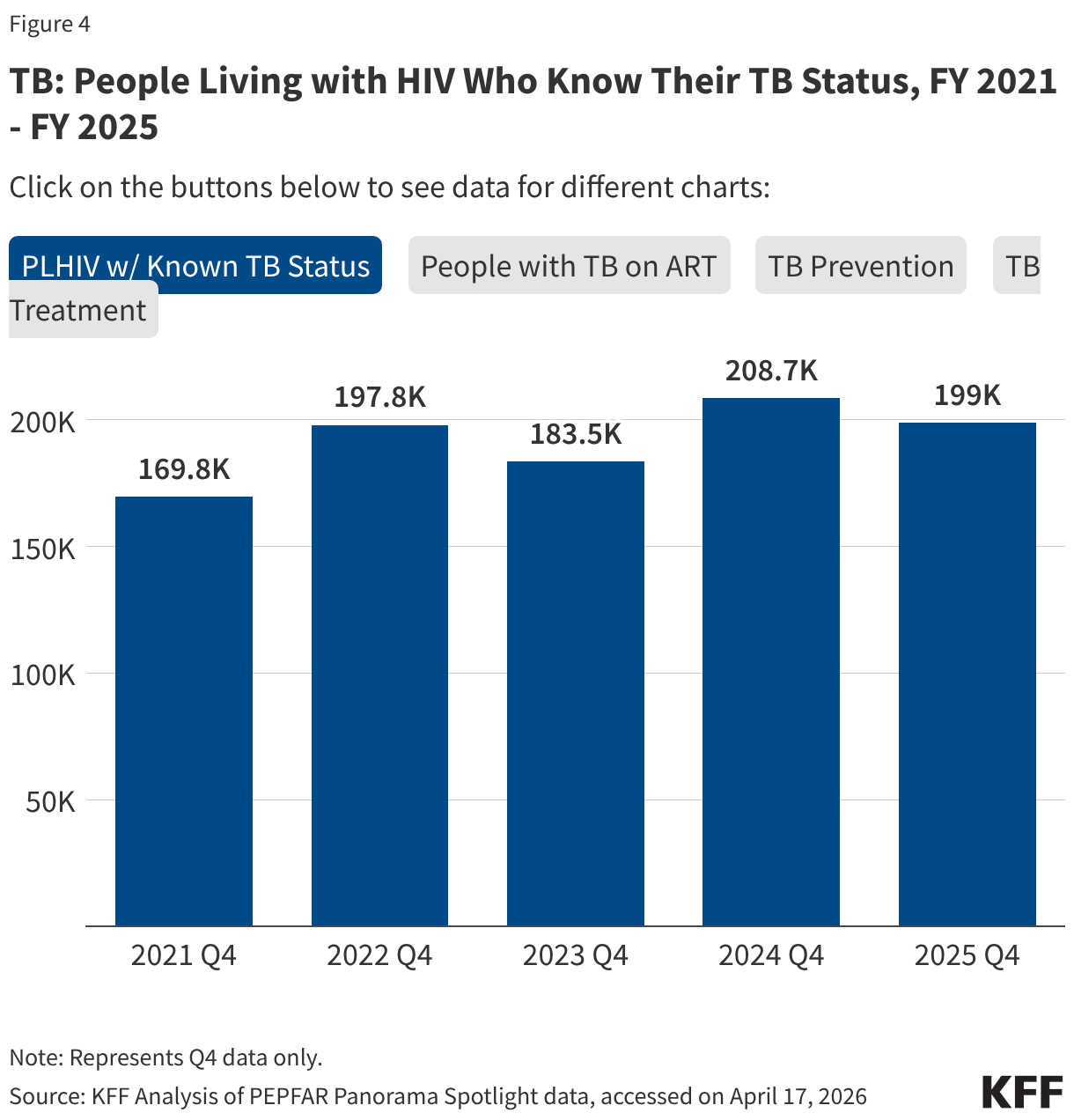
Given the lethal synergistic relationship between human immunodeficiency virus and tuberculosis (TB), PEPFAR has historically invested heavily in joint TB/HIV collaborative activities. The Q4 data reveals a bifurcated picture regarding these co-infection services.
On a positive note, the total volume of individuals living with HIV who were co-infected with tuberculosis and actively receiving antiretroviral therapy remained robust, reflecting the deep institutional embedding of TB/HIV co-management within clinical settings. Furthermore, indicators measuring the proportion of people living with HIV who successfully ascertained their TB infection status showed resilience in high-burden clinical environments.
However, metrics tracking the initiation of TB preventive therapy among eligible individuals on ART exhibited inconsistencies across reporting regions. While clinical treatment protocols for active co-infections were largely preserved, preventative modalities experienced localized supply chain bottlenecks and administrative friction tied to the transition toward integrated primary healthcare models.
Cervical Cancer Screening and Treatment Parity
For years, PEPFAR has expanded its mandate to address the heightened vulnerability to cervical cancer among women living with HIV, who face a significantly elevated risk of developing human papillomavirus (HPV)-related malignancies compared to HIV-negative women.
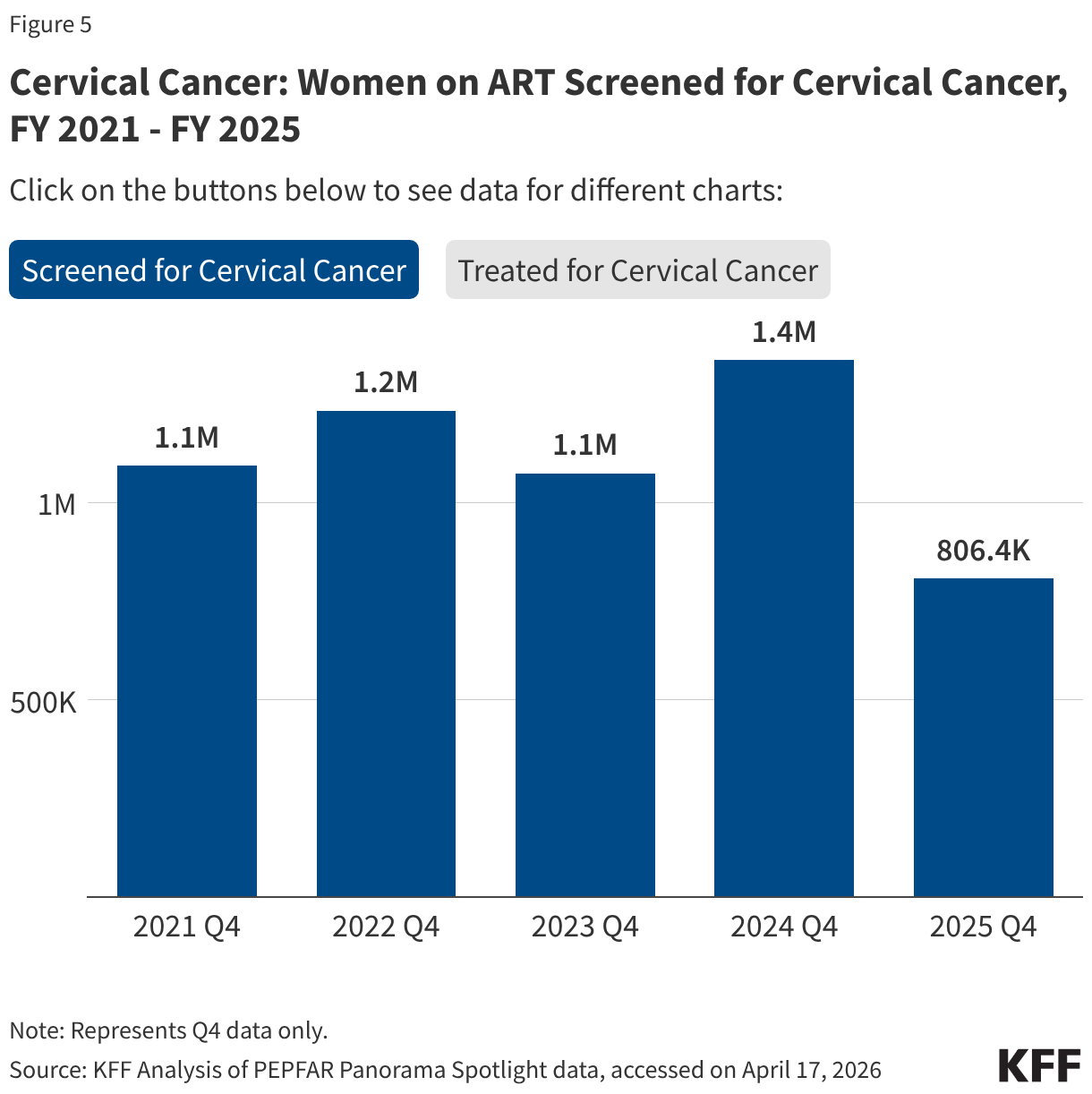
The FY 2025 Q4 data reveals a divergence between screening outreach and subsequent clinical care. The total volume of women on ART who underwent routine cervical cancer screening declined during the quarter, pointing to reduced availability of primary screening camps and community-based health fairs. However, among women who did screen positive, the proportion successfully receiving timely clinical treatment—including cryotherapy, thermocoagulation, or loop electrosurgical excision procedures (LEEP)—held steady. This indicates that while initial screening pipelines suffered from reduced outreach, specialized clinical treatment pathways remained capable of delivering care to those who successfully navigated the diagnostic gate.
Methodological Caveats and the Future of Data Transparency
As researchers, policymakers, and global health advocates parse these preliminary insights, significant questions linger regarding the future of public data governance under the restructured U.S. foreign health strategy. The heavy reliance on fourth-quarter data as a proxy for annual health performance underscores the precarious nature of monitoring a multi-billion-dollar global health enterprise when routine quarterly reporting is interrupted.
Furthermore, methodological adjustments implemented throughout FY 2025—specifically the reclassification of several core MER indicators from "required" to "optional" reporting standards—introduce a persistent analytical ambiguity. When reporting guidelines shift from mandatory compliance to voluntary submission, sharp declines in reported metrics frequently conflate actual reductions in healthcare service delivery with mere failures of administrative data collection. Consequently, a drop in a given indicator may indicate that partner organizations simply stopped tracking or reporting the metric rather than shutting down the underlying clinic.
The broader implications of these structural reforms extend far beyond statistical reporting. By transitioning primary implementation authority away from dedicated multilateral and non-governmental implementers toward sovereign partner-country governments, and by dismantling disease-specific reporting structures in favor of horizontal primary healthcare integration, the U.S. government has fundamentally altered the DNA of global HIV diplomacy.
Public health analysts warn that without a return to rigorous, transparent, and mandatory programmatic monitoring, measuring the long-term human and epidemiological toll of these policy shifts will become nearly impossible. As the international community looks toward the future of the global HIV response, the availability—or continued withholding—of transparent public data will remain a critical touchstone for evaluating whether landmark health gains achieved over the past two decades can be preserved amid sweeping geopolitical change.
Related posts: