Comprehensive National Analysis Details Shifting Medicaid and CHIP Enrollment Landscape Alongside Legacy Data from the Post-Pandemic Unwinding Period

The landscape of public healthcare coverage in the United States is undergoing a profound structural transition, marked by fluctuating monthly enrollment figures for Medicaid and the Children’s Health Insurance Program (CHIP), alongside a retrospective look at the historic post-pandemic unwinding process. According to the latest monthly performance indicators released by the Centers for Medicare & Medicaid Services (CMS) and analyzed extensively by healthcare policy researchers, national enrollment patterns reflect a dynamic environment shaped by legislative shifts, administrative redeterminations, and evolving economic factors. While contemporary data tracks ongoing monthly trends for adults and children, historical archives provide critical insight into the massive coverage losses and renewals that occurred following the expiration of the COVID-19 continuous enrollment provision.
Background Context of the Medicaid and CHIP Programs
Medicaid and CHIP serve as foundational pillars of the American social safety net, providing vital health coverage to millions of low-income individuals, families, children, pregnant women, elderly adults, and people with disabilities. Historically, program rules required regular eligibility redeterminations, but the onset of the COVID-19 pandemic in early 2020 introduced sweeping emergency measures. Under the Families First Coronavirus Response Act enacted in March 2020, the federal government provided states with enhanced Medicaid matching funds on the strict condition that they maintain continuous enrollment for all beneficiaries throughout the duration of the federal public health emergency.
This continuous enrollment provision prevented states from disenrolling individuals even if their household incomes or life circumstances changed, causing national Medicaid and CHIP enrollment to skyrocket to unprecedented highs exceeding 94 million beneficiaries. However, this era of continuous coverage officially concluded with the enactment of the federal Consolidated Appropriations Act of 2023, which set a specific expiration date for the continuous enrollment mandate and initiated what is widely known as the "Medicaid unwinding." Over a multi-month period spanning through 2023 and 2024, state Medicaid agencies were tasked with restarting routine eligibility renewals, redetermining coverage for every single beneficiary, and systematically unwinding the pandemic-era protections.
Chronology of the Unwinding and Subsequent Legislative Reforms
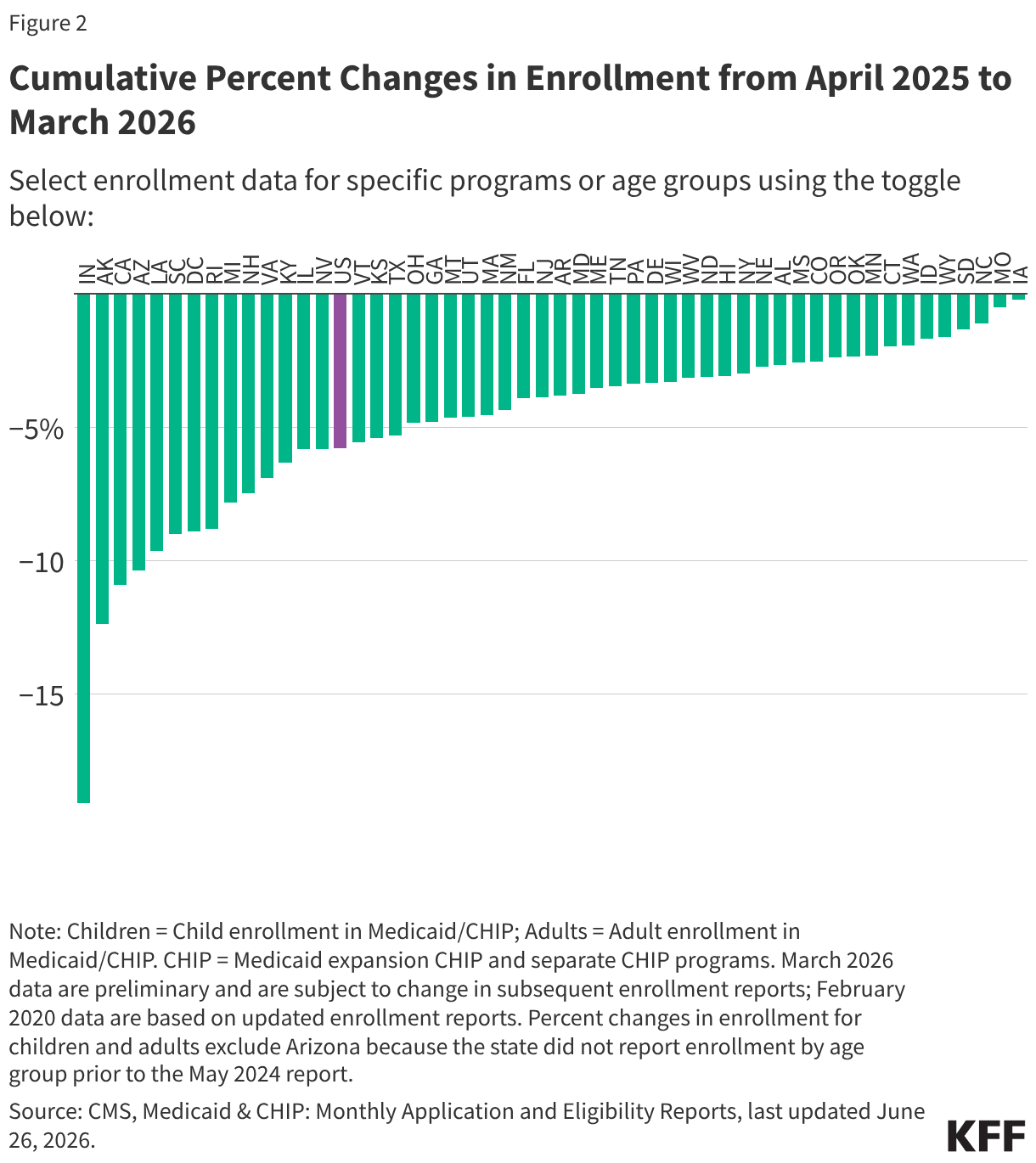
The operational chronology of the post-pandemic Medicaid landscape is defined by distinct phases of expansion, stabilization, and contraction.
- February 2020: Established as the pre-pandemic baseline month, representing the operational status of state rolls just prior to the implementation of federal continuous enrollment protections.
- April 2023: States formally began resuming disenrollments as the continuous enrollment provision expired, launching a complex, multi-month administrative process to review millions of active cases.
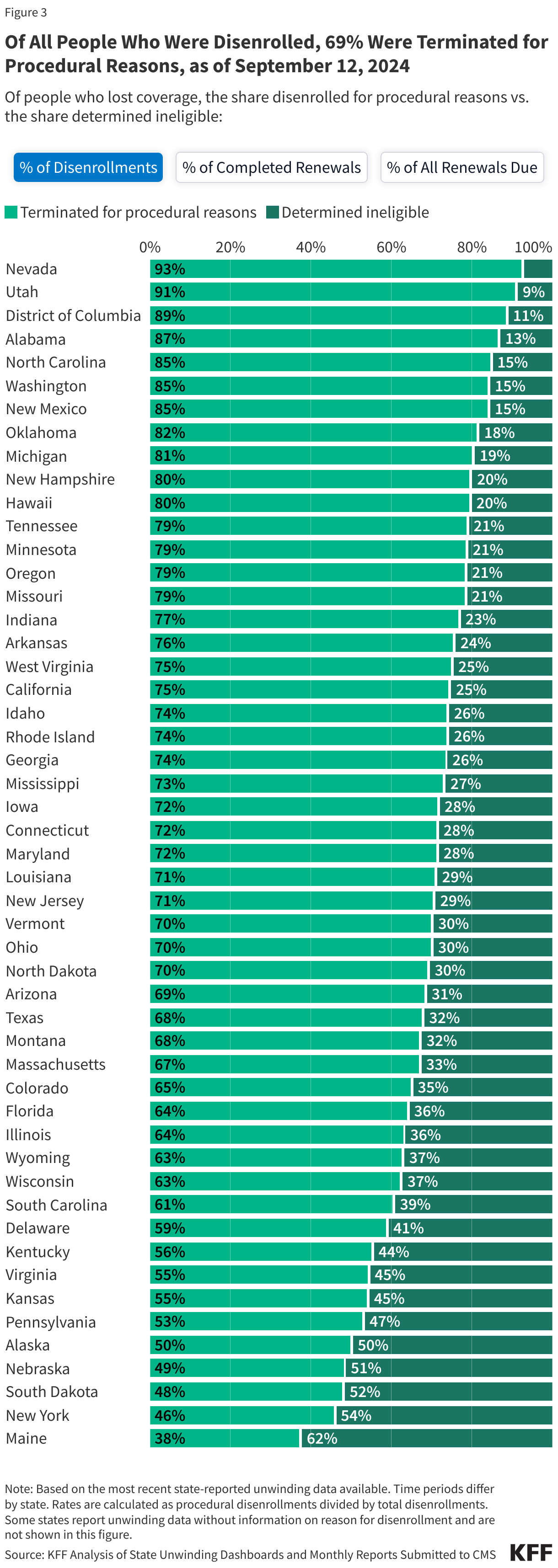
- Throughout 2023 and 2024: State agencies processed renewals using ex parte (automated) data-matching systems where possible, while issuing renewal packets for cases requiring manual verification. Millions of enrollees lost coverage—predominantly due to procedural reasons rather than explicit determinations of ineligibility.
- September 2024: State-level data collection for the unwinding period largely concluded. With nearly all states finishing their initial rounds of redeterminations, tracking organizations finalized their comprehensive archives, noting that outcomes had been reported for roughly nine out of ten pre-unwinding beneficiaries.
- July 2026: The most recent reporting period for current enrollment trends, illustrating the post-unwinding baseline while incorporating preliminary data subject to future CMS adjustments.
- January 2027: The scheduled implementation window for major structural changes mandated by the 2025 federal budget reconciliation law.
Current Enrollment Trends and Key Data Points
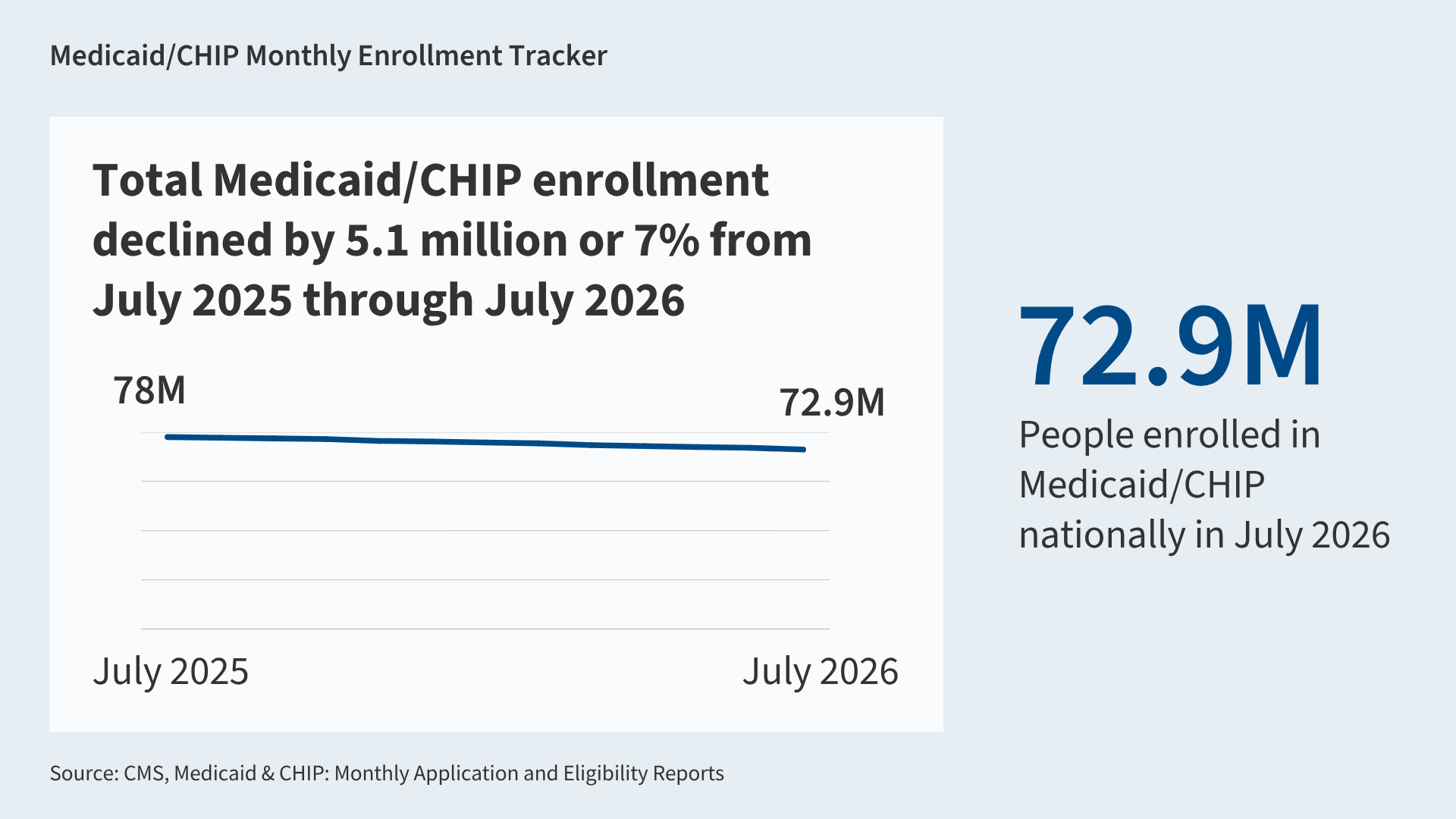
As of the latest reporting period ending in July 2026, CMS monthly indicators capture full-benefit enrollees across the United States. Analysts emphasize that while these reports provide invaluable, up-to-date metrics on general trends for adults and children, they deliberately exclude individuals receiving limited benefits—such as family planning-only packages—and cannot isolate granular shifts within specific eligibility pathways, including the ACA Medicaid expansion group.
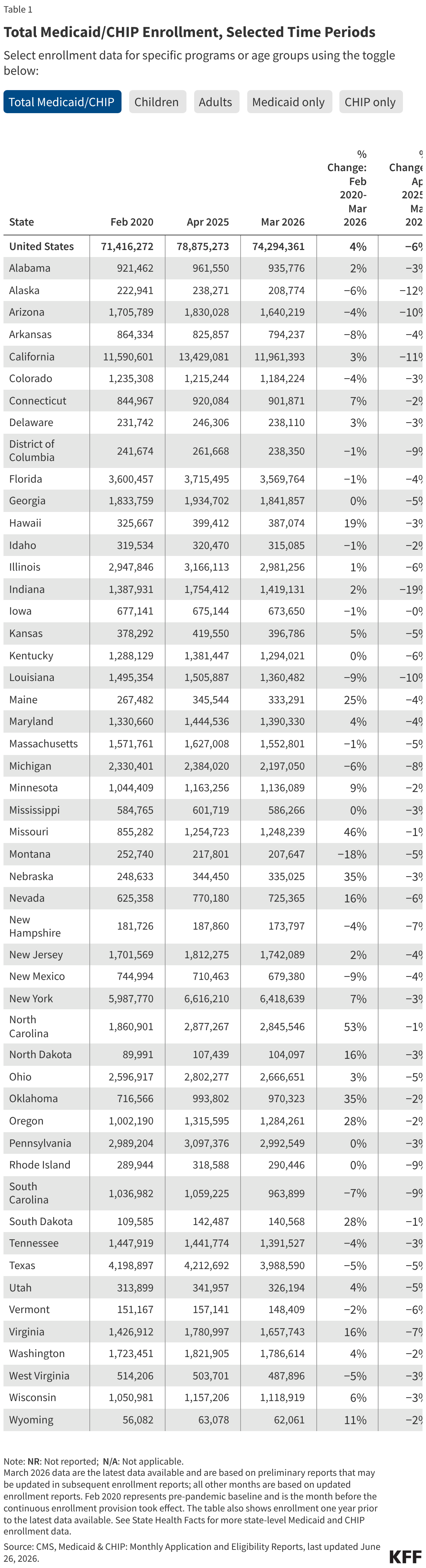
The data underscores persistent variations in program participation. Full-benefit totals continue to reflect the aftermath of the unwinding, balanced against normal economic ebbs and flows that drive eligible populations toward public coverage. Because Arizona data remained incomplete for certain months regarding adult and child breakdowns, national totals omit that jurisdiction to preserve analytical integrity. Furthermore, July 2026 figures rely on preliminary state submissions that are routinely updated as agencies finalize their reporting reconciliations.
Retrospective Analysis of the Unwinding Period
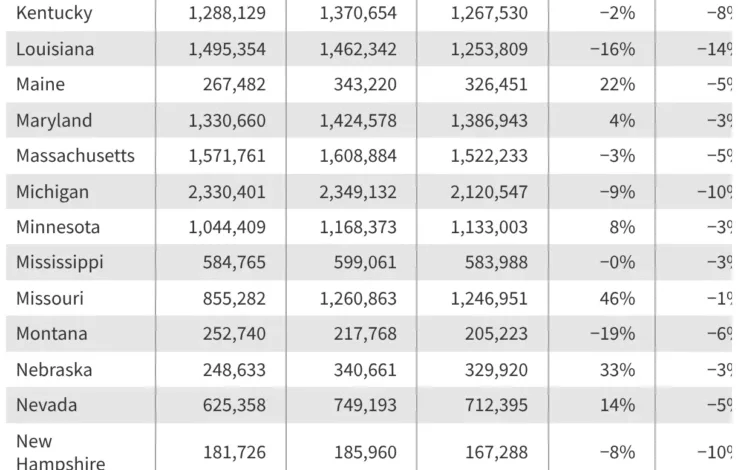
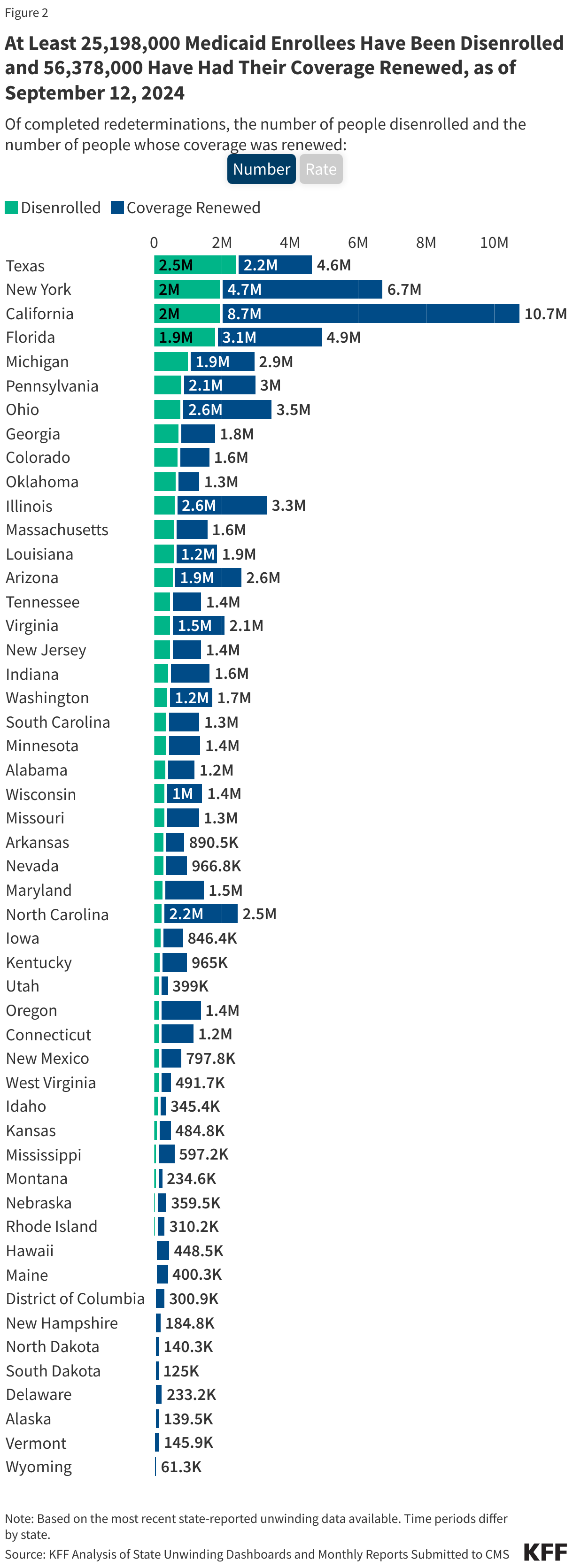
Comprehensive data compiled up to September 2024—the definitive closing window for tracking the primary unwinding phase—reveals the sheer scale of the administrative challenge faced by state health departments. Out of the tens of millions of individuals subjected to redeterminations, comprehensive outcomes indicate that at least 56,378,000 enrollees successfully had their coverage renewed, while a minimum of 25,198,000 individuals were formally disenrolled from the program.
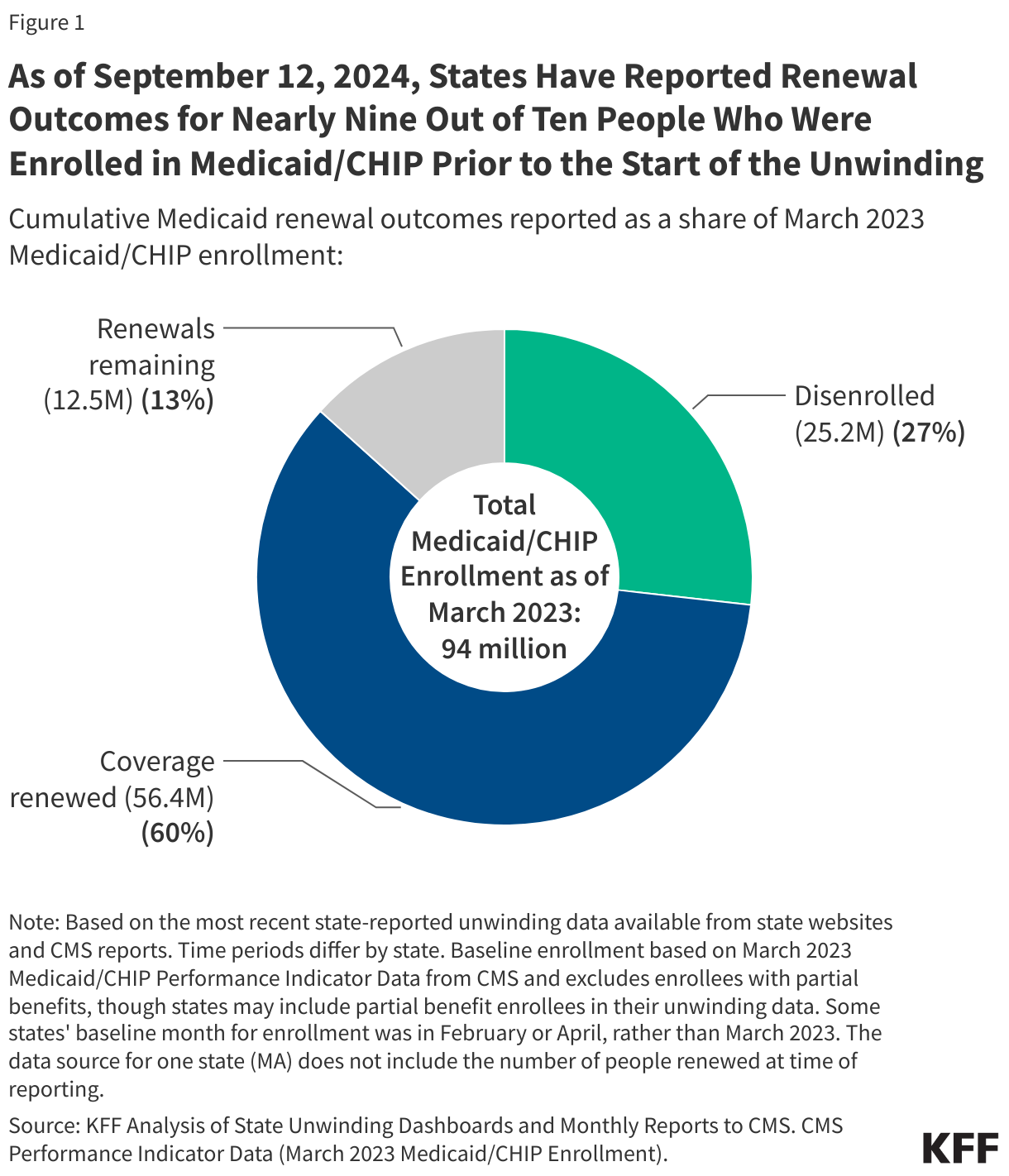
A striking feature of the unwinding was the vast divergence in state-level disenrollment rates. Administrative efficiencies, local outreach efforts, and state policy decisions created a wide spectrum of outcomes. Data compiled from state dashboards and CMS reports showed disenrollment rates ranging dramatically from a high of 57% in Montana to a low of 12% in North Carolina.
Furthermore, the mechanics of the renewal process exposed significant vulnerabilities concerning procedural disenrollments—situations where individuals lost coverage simply because they failed to complete or return paperwork, rather than because an agency affirmatively determined they earned too much money to qualify. Cumulative metrics demonstrated that of all individuals disenrolled during the unwinding, approximately 69% were terminated for procedural reasons. When calculated as a share of all completed renewals, procedural terminations accounted for roughly 21% of cases, while representing about 20% of all renewals due overall.
On the positive side of the renewal ledger, states heavily leveraged ex parte renewals whenever state and federal data sources (such as wage databases and SNAP program records) allowed agencies to automatically verify ongoing eligibility without requiring direct consumer intervention. Overall, approximately 61% of individuals who successfully retained their Medicaid coverage during the unwinding were renewed through these automated, administrative ex parte processes, sparing millions of families the burden of navigating complex paperwork.
Federal Versus State-Level Reporting Discrepancies
Policy analysts frequently highlight operational discrepancies between cumulative renewal metrics published directly by CMS and those maintained independently by state agencies on local unwinding dashboards. Federal reports published by CMS often carry a reporting lag of several months and may rely on case-level rather than individual-level tracking for certain jurisdictions. Conversely, many state health departments maintained hyper-local, real-time dashboards that incorporated updated reconciliations months ahead of official federal data releases. Consequently, researchers examining historical unwinding outcomes often cross-reference state portals to capture a more complete picture of pending cases, administrative backlogs, and corrected metrics.
Future Outlook and Policy Implications
Looking ahead, the trajectory of Medicaid and CHIP enrollment is poised to face new downward pressures. The passage of the 2025 federal budget reconciliation law introduced significant statutory modifications to the program. Most notably, the legislation mandates that non-disabled adults in the Medicaid expansion group, alongside participants in specific Section 1115 demonstration waiver programs, must comply with stringent work and reporting requirements beginning in January 2027.
Public health experts and policy researchers anticipate that these new administrative hurdles will lead to a measurable reduction in Medicaid enrollment over the ensuing decade compared to baseline projections under prior law. While proponents argue that work requirements promote self-sufficiency and economic mobility, critics and healthcare advocates express deep concern that mandatory reporting burdens will trigger a secondary wave of procedural disenrollments, stripping health coverage from vulnerable individuals who are otherwise eligible but struggle with administrative compliance.
As state and federal authorities prepare for the 2027 enforcement deadlines, ongoing tracking of monthly CMS indicators and dedicated work-requirement monitors will remain essential tools for policymakers, healthcare providers, and researchers striving to understand the evolving accessibility of the American healthcare safety net.
Related posts: