The debate surrounding vegetable and seed oils has intensified significantly in recent years, propelled by viral social media trends, the rise of alternative eating regimens such as the carnivore diet, and a growing public interest in holistic health. Critics on digital platforms frequently characterize these cooking oils using pejorative terms such as "toxic sludge," "motor oil," and "the hateful eight," while blaming them for a wide array of chronic diseases, ranging from obesity and anxiety to depression and ulcerative colitis. Conversely, mainstream nutritional scientists and dietary organizations maintain that vegetable oils are generally harmless, occasionally health-promoting, and preferable to many saturated animal fats when consumed responsibly. This persistent divergence in opinion highlights a broader challenge in modern nutritional science: translating complex biochemical realities into accessible, digestible information for the general public.
To understand the origins of this controversy, it is helpful to examine the historical trajectory of cooking fats in the human diet. Animal fats, including butter and tallow, have been consumed for millennia, deeply integrated into traditional culinary practices across various cultures. In contrast, most modern vegetable and seed oils—derived from crops such as corn, soybeans, canola, sunflower, and safflower—were developed or scaled up during the 20th century. Initially championed as economical and heart-healthy alternatives to traditional animal fats, these oils quickly saturated the global food supply. However, the subsequent backlash, particularly through platforms like TikTok and various wellness blogs, mirrors historical skepticism that has accompanied virtually every major innovation in food processing since the industrial revolution.
The core arguments presented by critics of vegetable oils typically center on two main pillars: the historical novelty of these products and the intensive chemical processing required to extract oil from crops with inherently low fat content. Unlike olives, avocados, and coconuts—fruits naturally abundant in lipids that can be mechanically pressed with minimal intervention—grains and seeds like corn and soybeans yield very little fat per volume. For example, a single cup of green olives contains approximately 20 grams of fat, whereas a cup of corn contains roughly 2 grams. Consequently, industrial manufacturers employ a multi-step extraction procedure that often involves high heat, mechanical pressing, chemical solvents such as hexane, deodorization, and bleaching.

This extensive industrial processing strips away naturally occurring antioxidants, polyphenols, and other stabilizing nutrients. Furthermore, under certain conditions—such as prolonged commercial deep-frying or industrial refining—small fractions of unsaturated fats can be altered into trans fatty acids, also known as partially hydrogenated fats. While health authorities generally agree that trans fats pose legitimate health risks, the Food and Drug Administration (FDA) took decisive action in 2018 by officially banning manufacturers from adding industrially produced trans fats to processed foods. Nevertheless, the presence of these processing methods remains a central point of contention for critics who argue that the resulting oils are inherently unnatural and harmful to human physiology.
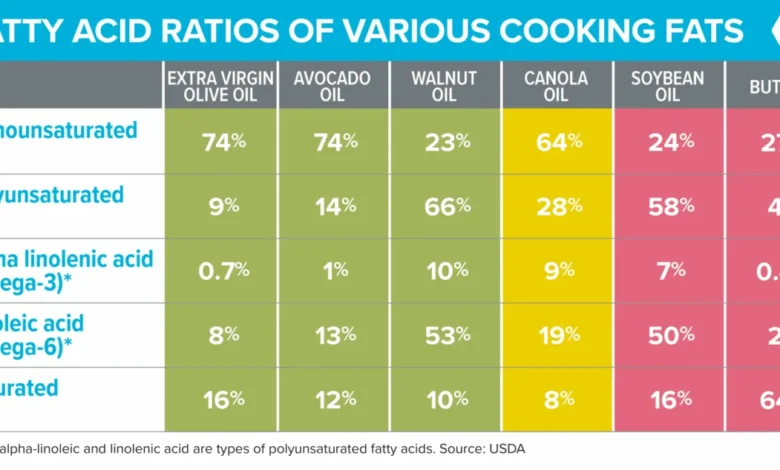
Nutritional science organizations, including groups like Precision Nutrition and major academic research bodies, advocate for a more nuanced perspective that categorizes oils based on their degree of processing and fatty acid profiles. Extra virgin olive oil (EVOO) consistently emerges as a benchmark for cardiovascular health. Derived from the mechanical pressing of olives without the use of heat, EVOO preserves a high concentration of monounsaturated fatty acids (MUFAs) and beneficial polyphenols. Numerous epidemiological studies support its protective qualities; notably, a large-scale prospective study involving over 22,000 adults in Southern Italy found that individuals who consumed higher quantities of olive oil experienced a significantly lower all-cause mortality rate over a 13-year period compared to those with minimal consumption. Additional research links regular olive oil intake to reduced risks of stroke, cardiovascular disease, and specific markers of chronic inflammation, alongside improvements in low-density lipoprotein (LDL) cholesterol profiles when substituted for saturated fats.
In contrast, refined vegetable oils occupy a more ambiguous space in nutritional guidance. Expeller-pressed canola oil, produced mechanically without chemical solvents, retains some beneficial compounds such as alpha-linolenic acid (a plant-based omega-3 fatty acid) and phytosterols, which can positively influence blood cholesterol. When compared directly to extra virgin olive oil, expeller-pressed canola generally ranks lower due to a less robust body of long-term clinical research and a more neutral biochemical profile, though it remains a budget-friendly option with a high smoke point. However, highly refined canola, soybean, and corn oils undergo extensive processing that diminishes their original micronutrient content, leaving behind isolated fatty acids that are more vulnerable to oxidation.
A major focal point in the seed oil debate involves the ratio of omega-6 to omega-3 fatty acids. Critics often point out that the typical Western diet contains significantly higher proportions of omega-6 fats—abundant in many seed oils—relative to omega-3s, theoretically promoting chronic systemic inflammation. However, contemporary reviews by organizations such as the American Heart Association and Harvard Health indicate that whole-food sources of omega-6 fatty acids, such as nuts and seeds, are robustly associated with reduced risks of cardiovascular disease, stroke, and overall mortality. The primary distinction, nutritionists emphasize, lies in the delivery vehicle: nuts and seeds are packaged with protective fiber, protein, minerals, and antioxidants, whereas highly refined oils are stripped of these protective compounds.

The debate also frequently contrasts refined vegetable oils with butter. Proponents of butter argue that saturated fats were unfairly demonized during the low-fat diet crazes of the late 20th century, which often promoted margarine products rich in harmful trans fats. While moderate consumption of saturated fat is generally accepted, excessive intake—exceeding 10 percent of total daily calories—is widely shown to elevate LDL cholesterol and increase cardiovascular risk. Conversely, while refined vegetable oils are prone to oxidation and are frequently consumed in the context of ultra-processed foods, substituting saturated fats with polyunsaturated fats has been shown in various clinical analyses to lower the incidence of coronary events. Ultimately, dietary authorities view both butter and highly refined vegetable oils as items to be consumed in moderation rather than relied upon as primary health-promoting fats.
To synthesize these complex findings into practical dietary habits, health professionals recommend prioritizing minimally processed whole foods, such as avocados, olives, nuts, seeds, and fatty fish, which naturally supply beneficial fats alongside essential micronutrients and fiber. For cooking and culinary applications, extra virgin olive oil and cold-pressed avocado oil represent optimal choices due to their favorable fatty acid compositions and high antioxidant content. For budget-conscious consumers, expeller-pressed canola oil or high-oleic sunflower and safflower oils serve as reasonable, neutral alternatives when used moderately. Ultimately, reducing the intake of ultra-processed foods—which often contain hidden refined oils, excess sodium, and added sugars—remains a more impactful public health strategy than hyper-focusing on eliminating specific cooking oils from home kitchens.